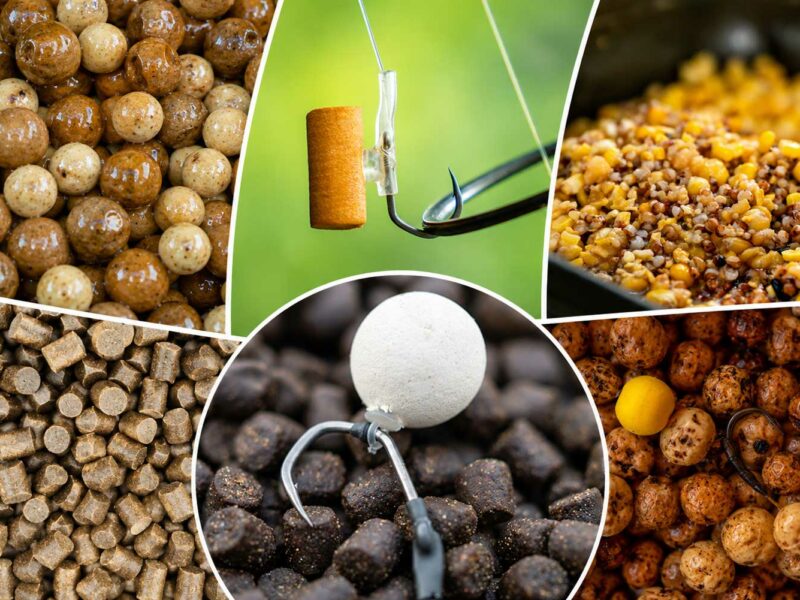
What are Wafter Boilies and when are they better than pop-ups or bottom baits?
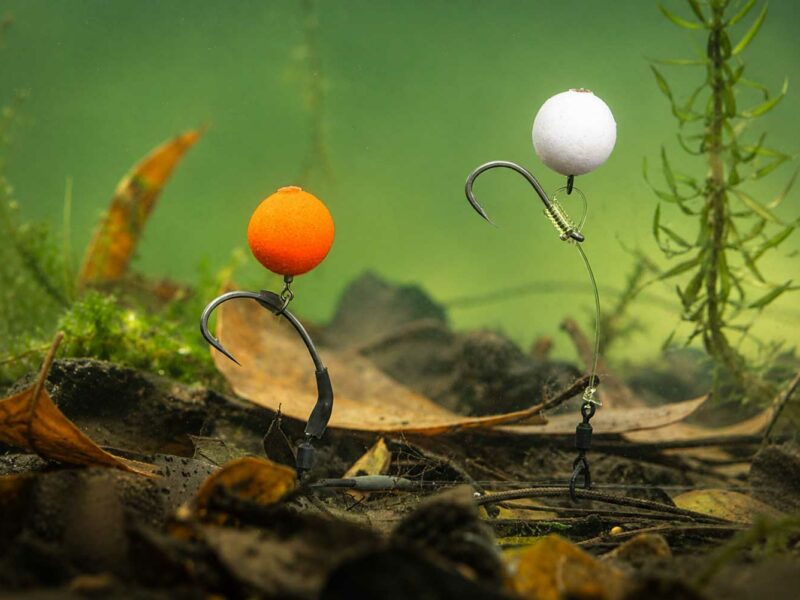
Wafter Boilies are critically balanced carp hookbaits. They do not sit heavily on the bottom like a standard boilie and they do not rise strongly like a pop-up. A wafter has just enough buoyancy to offset part of the hook and bait weight. That makes the hookbait behave almost weightlessly in the water. Carp can inhale it more easily, the bait enters the mouth more cleanly and the hook often catches more securely in the lower lip.
The big advantage: a wafter often looks like a normal feed boilie, but behaves very differently when inhaled. A carp expects the weight of a standard boilie and applies the suction force it already knows. Because the critically balanced wafter is lighter than expected, it moves more easily into the mouth. That is what makes Wafter Boilies one of the most important modern carp hookbaits.
What does wafter mean?
The term wafter comes from English carp fishing and describes an almost weightless, critically balanced hookbait. It is a bait that neither sinks heavily nor floats freely. Instead, bait and hook work together as a very light, balanced unit.
Wafters are their own category between a standard sinking boilie and a buoyant pop-up boilie. They are not simply weak pop-ups, and they are not normal bottom baits. A wafter is designed to look natural while behaving much lighter when carp inhale it.
Wafter, pop-up or standard boilie – the direct comparison
The difference between bottom bait, wafter and pop-up directly decides how your hookbait is presented on the lakebed. A normal boilie sits heavily on the bottom. A pop-up rises clearly above it. A wafter stays subtle and close to the bottom, but is light enough for carp to inhale very easily.
| Bait type | Behaviour | Position | Best use |
|---|---|---|---|
| Bottom bait / standard boilie | sinks clearly and sits heavily on the bottom | directly on the bottom | firm bottom, active carp, established feeding spots |
| Wafter Boilie | critically balanced, feather-light, almost weightless | close to the bottom or slightly above the hook | cautious carp, pressured waters, short rigs, natural presentation |
| Pop-Up Boilie | highly buoyant and must be pinned down | several centimetres above the bottom | silt, weed, Chod Rig, Spinner Rig, visual presentations |
Why Wafter Boilies can produce more bites
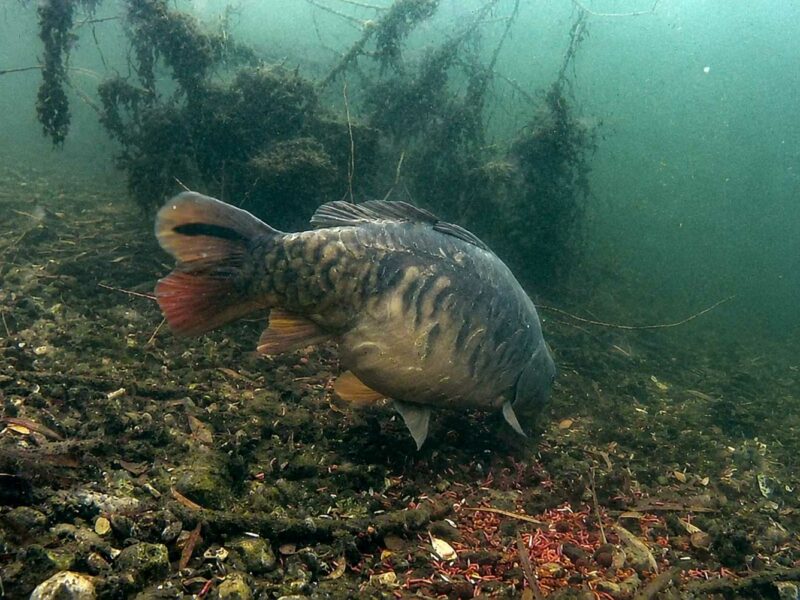
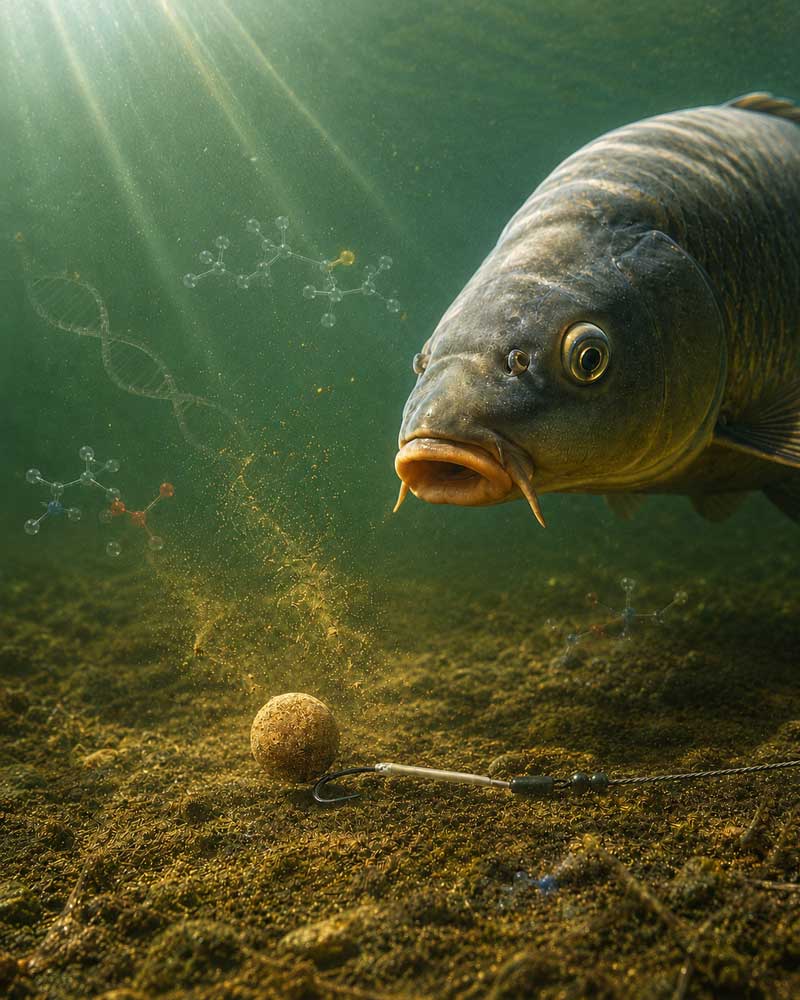
The simple explanation is that a wafter is lighter and easier to inhale. The better explanation goes deeper. Carp take in food by suction. If they have eaten many boilies before, they learn how heavy a boilie is and how much suction force is needed. A wafter looks like a normal boilie, but it is lighter than expected.
The carp applies the suction force it knows from a standard boilie. The critically balanced wafter reacts faster, lifts more easily from the bottom and travels deeper into the mouth. When the carp tries to eject the bait, the hook may already have taken hold. That is why wafters can be so effective for experienced fish and on pressured waters.
When are wafters better than standard boilies?
- For cautious carp: the bait feels lighter and is taken more naturally.
- On heavily fished waters: wafters look like normal boilies, but behave differently when inhaled.
- On slightly soft bottom: the bait sinks in less than a normal bottom bait.
- On short rigs: the critically balanced effect is stronger because the bait has less movement range.
- In winter and spring: slow-feeding carp often take lighter hookbaits more confidently.
When are wafters better than pop-ups?
Pop-ups are highly visible and very effective when the bait needs to sit above silt, weed or debris. But they are not always the best choice. On firm or medium-hard bottom, a pop-up can look too obvious or sit too high. A wafter stays closer to the bottom and often looks more natural.
On pressured waters, carp can recognise bright pop-ups as a danger signal. A wafter is more subtle. It sits close to the feed like a normal boilie, but is easier to inhale. That is why wafters are often the better choice when carp feed carefully and avoid obvious pop-ups.
What wafter size is best for carp?
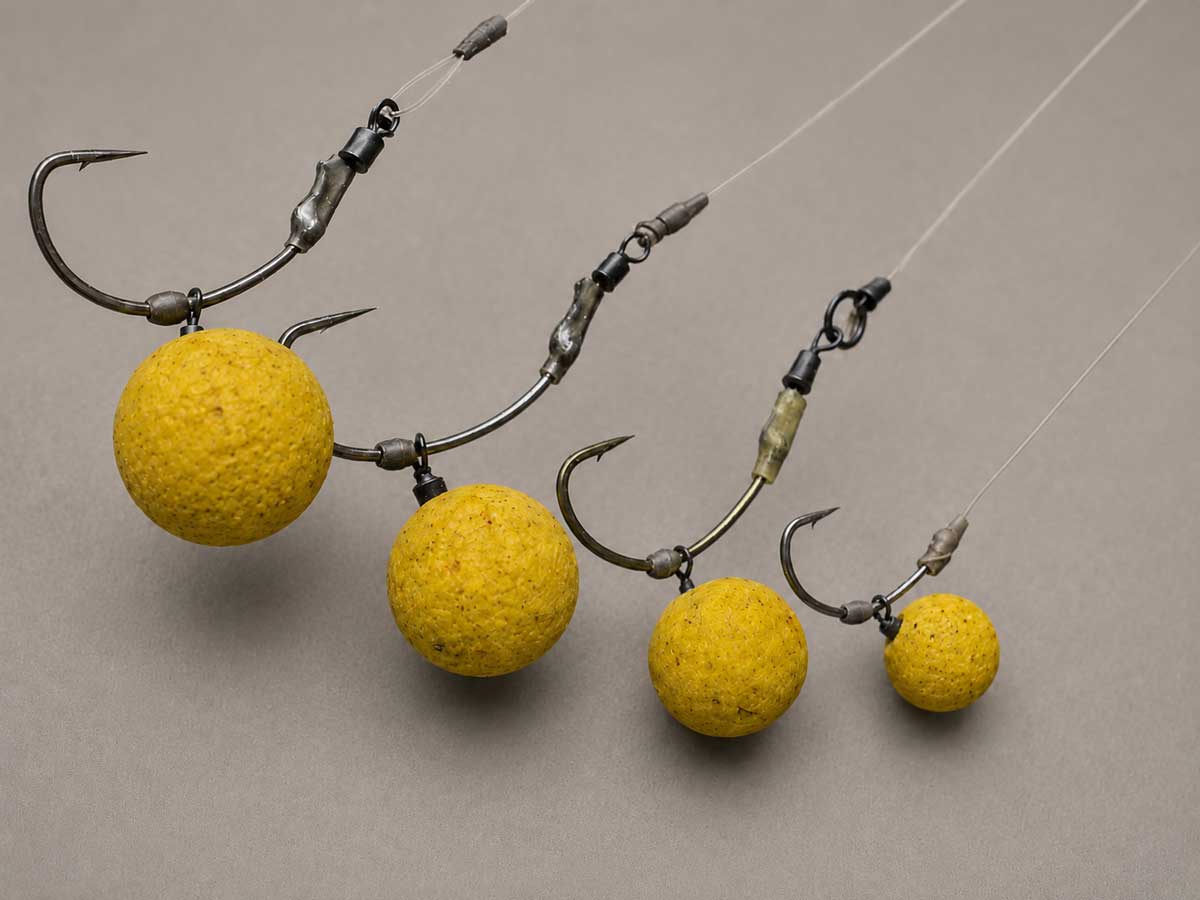
The right wafter size depends on target fish, season, hook size, feed situation and nuisance fish. As an all-round size for carp, a 15 mm wafter with a size 6 hook is a strong starting point. Smaller wafters are often better in winter or for cautious fish. Larger wafters make sense when fishing more selectively for bigger carp.
| Wafter size | Matching hook size | Typical situation |
|---|---|---|
| 10–12 mm | size 8 or 10 | winter, clear water, cautious carp, Method Feeder |
| 15 mm | size 6 | all-round size for most carp anglers and seasons |
| 18 mm | size 4 or 6 | bigger carp, selective fishing, high nuisance fish pressure |
| 20 mm+ | size 4 | big carp, lots of nuisance fish, larger feed boilies |
Always test in water: place the wafter and the intended hook in water. The setup should sink extremely slowly or hover almost neutrally. If it drops quickly, the wafter has too little buoyancy or the hook is too heavy. If it floats up, the wafter has too much buoyancy or the hook is too light.
Round wafter or dumbell wafter?
Round wafters look like normal boilies. They are especially subtle when you are feeding boilies and want the hookbait to blend into the baited area. They work very well on a classic Hair Rig, Knotless Knot, Blowback Rig and simple bottom-bait style rigs.
Dumbell wafters are barrel-shaped and are often used on a Bait Screw, D-Rig, Spinner Rig or Ronnie Rig. They mount cleanly, rotate well and move freely when inhaled. They are very popular in modern carp fishing with compact hookbaits and efficient rigs.
Fluoro wafters or two-tone wafters add an extra visual trigger. Yellow, white, pink or washed-out colours can work well on cloudy days, over light bottom or for instant sessions. On heavily pressured waters, subtle washed-out colours often look more natural.
How do you fish with wafters?
Wafters are almost always used as hookbaits. The bait can be mounted on the hair, on a Bait Screw, with bait floss or on a D-Rig. Placing a wafter directly on the hook is possible, but rarely ideal, because movement, hooking mechanics and balance can suffer.
| Rig | Best for | Why it works |
|---|---|---|
| Hair Rig / Knotless Knot | round wafters, beginners, classic bottom presentations | simple, reliable and natural, very good for 12–18 mm wafters |
| Spinner Rig / Ronnie Rig | dumbell wafters, Bait Screw, cautious carp | fast hook rotation, free bait movement, strong hooking mechanics |
| D-Rig | dumbell wafters, fluoro wafters, stiffer hooklinks | moving hookbait, good rotation and clean hook holds |
| Method Feeder Rig | small wafters 8–10 mm | short hooklink, fast pickup, very good for carp, bream and tench |
Method Feeder Wafters – small wafters for carp, bream and tench
Method Feeder Wafters are small, critically balanced hookbaits for modern Method Feeder fishing and cage feeder fishing. They are especially effective when carp, big bream or tench feed directly on the spot. The wafter does not sit heavily in the groundbait and does not rise high like a pop-up. Instead, it hovers slightly above the feed, making it very easy for fish to inhale.
Especially 10 mm Method Feeder Wafters are a strong all-round size for carp, big bream and tench. They work well with short Method Feeder hooklinks, bait bands, bait screws or small hair rigs. While the fish feed on pellets or groundbait, the lightly buoyant wafter sits directly above the feed and is often taken automatically.
The colour of the wafter can add another trigger. Yellow, orange, white or pink stand out over dark groundbait, while natural brown or washed-out colours are less suspicious on pressured waters. For a safe start, an 8–10 mm wafter with the right hook size and a short hooklink is a very reliable Method Feeder presentation.
What is the best rig for wafters for beginners?
For beginners, the classic Hair Rig with Knotless Knot is the best wafter rig. It is easy to tie, rarely tangles and works reliably with round wafters. A 15 mm wafter with a size 6 hook and a short to medium hair is a very strong starting point for many situations.
If you want to use dumbell wafters or Bait Screws, you can later move on to a Spinner Rig or D-Rig. At the beginning, however, it is more important to test the balance properly: wafter + hook should sink extremely slowly in water. Only when this balance is right does the rig really work correctly.
Snowman or wafter – which works better?
Snowman and wafter aim for a similar result, but solve it differently. In the classic Snowman presentation, a sinking boilie sits below and a pop-up sits above it. The pop-up removes weight from the boilie, lifts the presentation visually and brings the whole bait combination closer to weightless. A wafter, on the other hand, is already balanced as a single hookbait and does not need a pop-up as a counterweight.
The Snowman is strong when you feed normal boilies but want the hookbait to be slightly more visible and lighter. The sinking boilie brings food value, flavour and confidence. The pop-up on top adds buoyancy, visual attraction and easier inhalation. Especially for bigger carp, firm bottom and classic boilie fishing, the Snowman is a very proven presentation.
The wafter is the subtler option. It often looks like a normal boilie or dumbell, but is balanced so that it behaves very lightly with the right hook. That is especially strong for cautious carp, short rigs, Method Feeder, D-Rig, Spinner Rig and situations where a visible pop-up would be too obvious.
| Presentation | Setup | Strength | When better? |
|---|---|---|---|
| Snowman | sinking boilie below + pop-up above | combines feed boilie, buoyancy and visual attraction | when you feed boilies and want the hookbait to be more visible and lighter |
| Wafter | one single critically balanced hookbait | natural, subtle and very easy to inhale | for cautious carp, pressured waters, short rigs and Method Feeder |
Practical rule: Snowman is the better choice when you want to improve a normal boilie visually and in terms of buoyancy. Wafters are the better choice when the hookbait should stay compact, natural and subtle. Both presentations can be very strong — but they are not the same.
How can I make wafters myself?
Wafters can be made or adjusted in three ways: with cork sticks inserted into standard boilies, with matching hookbaits from the manufacturer or with cork dust in your own mix. The water test is always essential, because hook shape, hook size, bait diameter and buoyancy must work together.
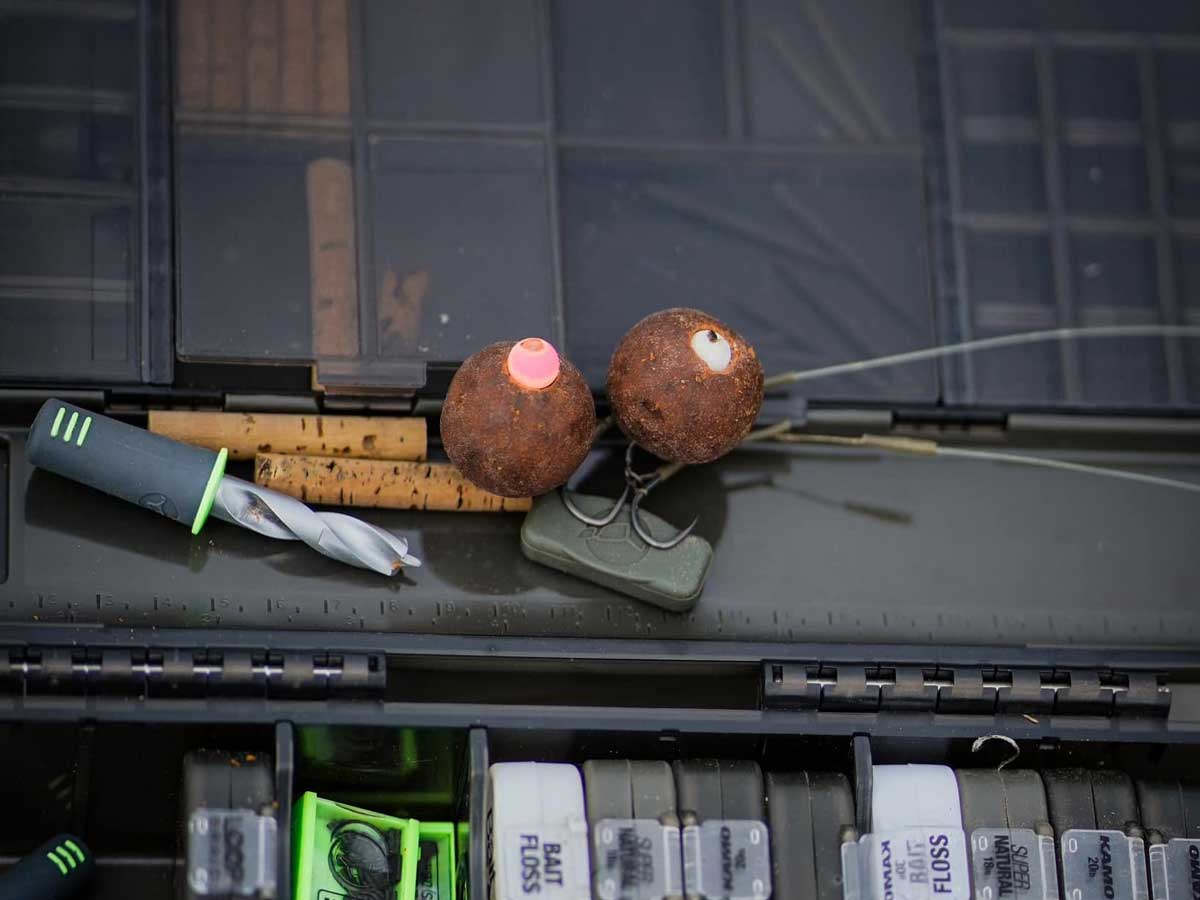
Method 1: bait drill and cork sticks
The easiest method: drill a normal boilie with a bait drill, insert a cork stick and then test the bait in water with the hook you want to use. This creates a critically balanced hookbait that matches the feed boilie visually and in flavour.
This method also works with larger particle baits such as tiger nuts. It is important not to use too large a cork stick. The bait should not float; it should sink slowly together with the hook.
Method 2: matching wafters from the manufacturer
Many boilie manufacturers offer matching wafters for their feed boilies. This is the cleanest solution if colour, flavour, diameter and hookbait behaviour should match the feeding strategy exactly. With high-quality bait ranges, a matching wafter is often more reliable than a modified boilie.
Method 3: cork dust in your own mix
If you roll your own boilies, you can produce wafters with cork dust. Cork dust creates buoyancy. The more cork dust is in the mix, the more buoyant the bait becomes. For wafters, significantly less cork dust is used than for pop-ups.
| Bait type | Cork dust / cork content | Important |
|---|---|---|
| Standard boilie | 0 % | sinks normally and sits heavily on the bottom |
| Wafter Boilie | around 10–25 %, depending on mix and hook size | must sink slowly with the hook, not float up |
| Pop-Up Boilie | around 35–50 %, cork ball core or microspheres | should float clearly and will later be pinned down |
The exact amount depends heavily on the base mix. Fishmeal, birdfood, milk proteins, eggs, liquid ingredients, drying time and hook size all change the balance. That is why the test method is more important than a fixed percentage: place the wafter in water with the hook you will use and adjust until it sinks extremely slowly.
Do fish eat wafters?
Yes. Wafters are eaten by carp and other coarse fish when size, flavour, presentation and feeding spot all fit together. For the fish, a wafter is not an artificial trick bait, but a bait that looks like food and behaves very lightly when inhaled. That is exactly why wafters work for Method Feeder, classic carp fishing and cautious fish.
The important point is that the wafter should not be too bright or too heavily flavoured for the situation. In many cases, a naturally coloured, well-balanced wafter with the right liquid or dip is stronger than an extremely bright bait with no connection to the feed.
What attracts carp best when using Wafter Boilies?
With Wafter Boilies, the same attraction principles apply as with other carp hookbaits: soluble food signals, suitable flavours and a believable taste profile. Strong combinations include free amino acids, betaine, krill, mussel, liver, fish hydrolysate, molasses, hemp, sweet corn, Scopex, fruit flavours and garlic — depending on the season and the water.
Sweet and fruity wafters often work very well in summer. In winter, garlic, krill, mussel, Scopex, betaine and highly soluble liquids are interesting. On heavily pressured waters, subtle washed-out wafters with natural extracts can be stronger than very bright standard colours.
Buy Wafter Boilies – large selection at Carp Austria
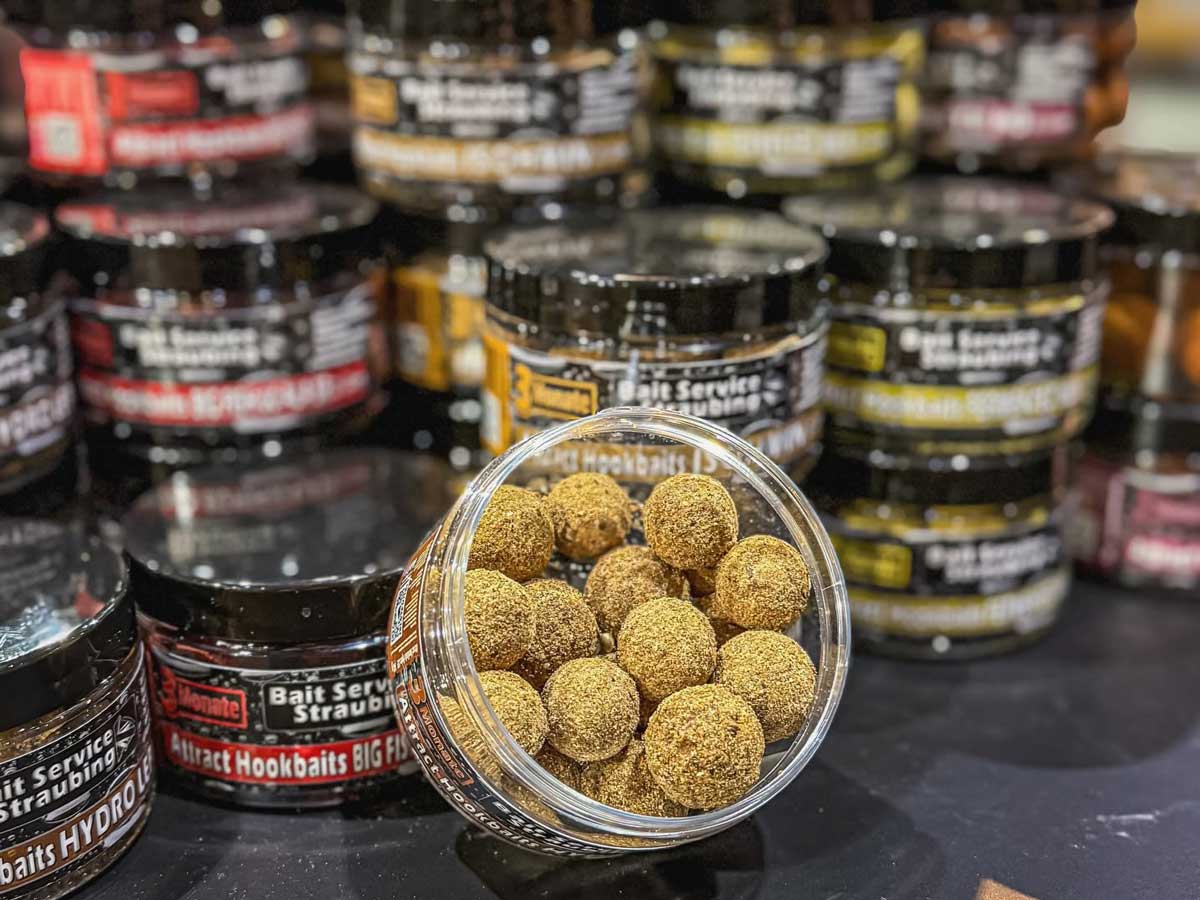
You do not choose wafters by photo alone. Balance, texture, size, colour and the right rig decide whether the bait really works. At Carp Austria, you will find a large selection of Wafter Boilies and carp fishing baits: round wafters, dumbell wafters, fluoro wafters, washed-out wafters, Method Feeder Wafters, pop-ups, boilies, liquids, dips, soaks and matching rigs.
You can directly compare which wafter size fits which hook, which colour makes sense for your water, which bait fits pop-up, boilie, Snowman or Method Feeder presentations and which manufacturers offer matching hookbaits for their feed boilies. This direct comparison is often more valuable than any product description.
Scientific background and practical basis
Klefoth, T. & Arlinghaus, R. (2013) — Research on carp feeding behaviour and learning ability. Relevant for conditioned bait uptake, angling pressure and the behaviour of experienced fish around hookbaits.
Arlinghaus, R. & Meyer, J. (2001/2002) — Work on carp feeding behaviour and the importance of different stimulus factors in carp baits. Relevant for texture, bait feel, feeding behaviour and rig mechanics.