Pellets for Carp – Halibut, Trout, Amino & Expander Pellets Explained
Pellets for carp – why they are so versatile
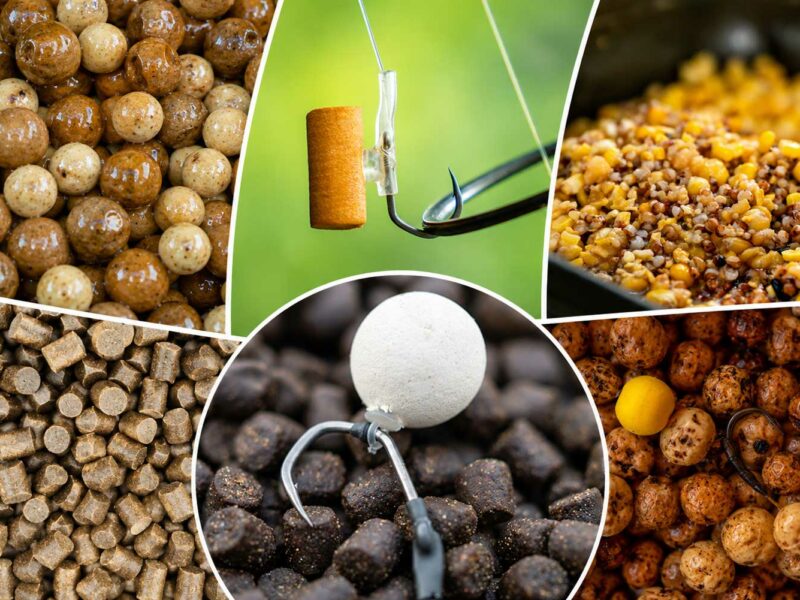
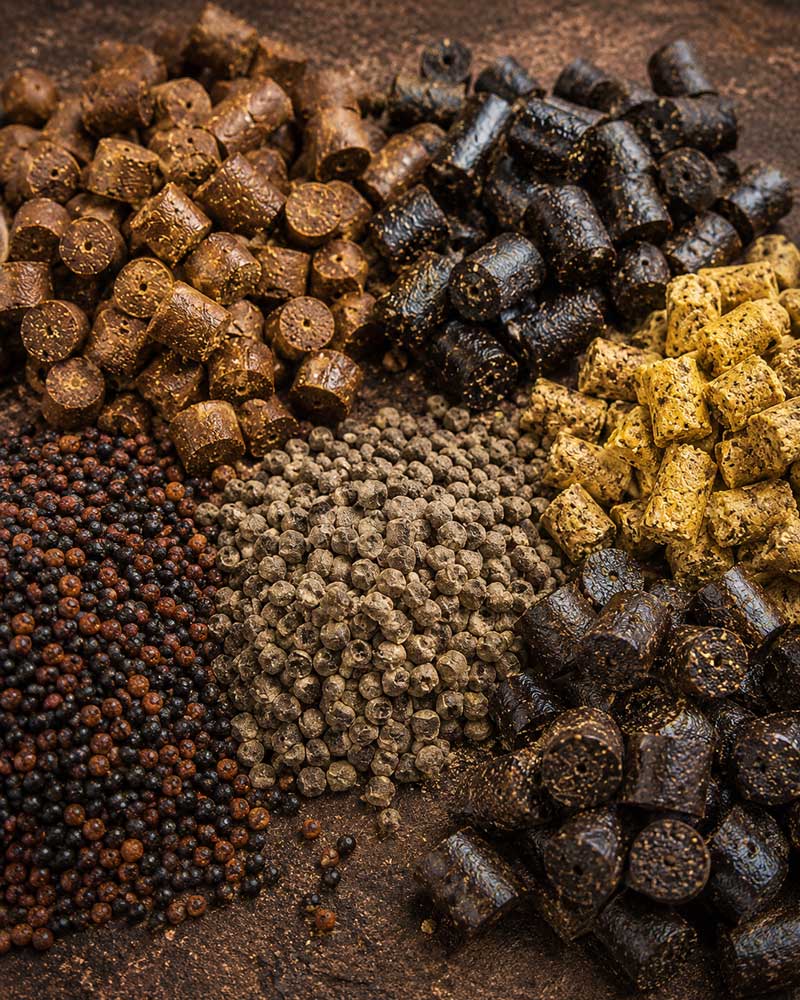
Pellets are among the most versatile baits in carp fishing. They can work quickly, make larger baiting campaigns more affordable, fit perfectly into a PVA bag and, depending on the type, even serve as a stable hookbait on a Hair Rig. That is exactly why they deserve a closer look: halibut pellets, trout pellets, carp feed pellets, amino pellets, expanders and micro pellets all behave very differently in the water.
This guide explains which carp pellets make sense for which situation, how to mount pellets on a Hair Rig, which sizes are effective in a Method Feeder or spod mix, and how pellet strategy changes with season, water temperature and angling pressure.
What are carp pellets?
Pellets are compressed or extruded feed items made from fishmeal, plant proteins, cereals, oils, amino acids, minerals and other feed ingredients. In carp fishing, they are used as loose feed, as part of a spod mix, in Method Feeder fishing, in PVA bags or as hookbaits.
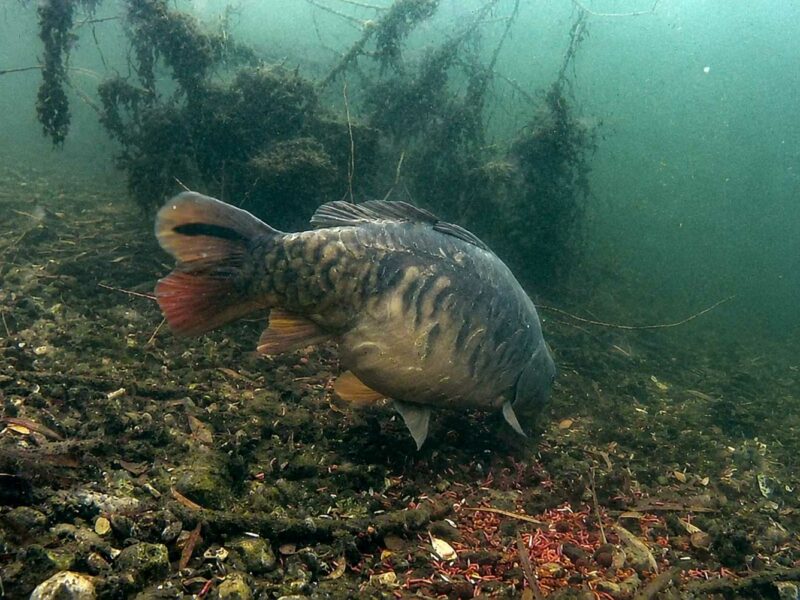
Their strength lies in the combination of structure and breakdown behaviour. Small micro pellets can quickly create a food cloud, while large halibut pellets or hook pellets stay stable for much longer. By mixing different sizes, you can build a baited area that does not just work for a few minutes after casting, but stays active over a longer period.
Important: pellets are not automatically better than boilies. They usually break down faster, create feeding activity quickly and are often cheaper. Boilies, on the other hand, are more selective, stay intact longer and are often the better planned hookbait. In practice, the combination is often strongest: pellets as active feed, and a boilie, wafter or larger pellet as the hookbait.
Pellets or boilies – which is better for carp fishing?
Pellets and boilies play different roles on a baited area. Pellets usually work faster, break down more quickly depending on their size and composition, and bring early activity into the swim. Boilies stay stable longer, are more selective and are better as a planned hookbait for longer sessions. So the real question is not “pellets or boilies?”, but: what job should the bait do?
The simple rule is this: pellets are the engine, boilies are the anchor. Pellets activate the swim, release soluble signals and keep carp searching. Boilies provide larger, more stable food items and a hookbait that still presents cleanly after several hours.
Advantages of pellets compared with boilies
- Faster attraction: micro pellets, amino pellets and small fishmeal pellets release soluble attraction quickly and can create a fast food cloud.
- Excellent for short sessions: when no baited area is established, pellets often work faster than whole boilies.
- More economical for heavier baiting: sinking carp feed pellets or suitable fish feed pellets are often cheaper than boilies for building bigger baited areas.
- Very strong in Method Feeder and PVA fishing: 2–4 mm pellets can be lightly dampened and used directly in a Method Feeder. Dry micro pellets also work brilliantly in a PVA bag.
- Staggered breakdown: a mix of 2 mm, 6 mm and 15 mm pellets can keep the swim working in several phases.
- More fish stay occupied: small pellets force carp to search, suck and keep feeding, which can increase feeding competition.
- Great with particles: pellets combine very well with hemp, maize, tiger nuts, boilie crumb and liquids.
Disadvantages of pellets compared with boilies
- Shorter hookbait life: many pellets break down faster than boilies. As a hookbait, standard feed pellets are therefore less reliable.
- Less selective: smaller pellets often attract silver fish, bream, tench, gobies or smaller carp as well.
- The hookbait can disappear: if a pellet is too soft or breaks down too quickly, the rig may sit empty.
- Oil-rich pellets are temperature-dependent: halibut and trout pellets with a high oil content work better in warm water. In colder water, more soluble or lower-oil pellets are usually easier to control.
- PVA is sensitive to moisture: damp pellets or water-based liquids can melt PVA too early.
- Overfeeding happens quickly: lots of small pellets look harmless but can still add up to a significant amount of feed.
- Storage matters: oil-rich pellets can turn rancid if stored badly. Keep them cool, dry and airtight.
Advantages of boilies compared with pellets
- Longer stability: boilies generally stay on the Hair Rig much longer than standard pellets.
- More selective: bigger, harder boilies are less likely to be picked up by nuisance fish.
- Better hookbait control: bottom baits, wafters, pop-ups and snowman presentations can be used more precisely.
- Stronger for long sessions: on overnight sessions, 24-hour trips or campaigns, boilies are usually the more predictable hookbait.
- Better for distance baiting: whole boilies are easier to fire with a throwing stick or catapult and are easier to deliver cleanly with a Spomb.
- Clear feed strategy: a boilie combined with a matching wafter or pop-up can create a very clean signal on the baited area.
Disadvantages of boilies compared with pellets
- Slower initial effect: whole boilies usually release fewer soluble signals than small pellets at the start.
- Higher cost: for large baiting campaigns, boilies are noticeably more expensive than carp feed pellets or fish feed pellets.
- Less feeding activity: a boilie-based swim can be clean and selective, but often creates less search activity than a mix of micro pellets, particles and boilie crumb.
- Standard bait on pressured waters: on heavily fished venues, carp can become cautious around certain boilie colours, sizes or flavour profiles.
- Sometimes too selective: when carp are feeding lightly, a small pellet or Method Feeder approach can bring bites faster.
When are pellets the better option?
- on short sessions without an established baited area
- when fishing a Method Feeder
- in PVA bags or PVA mesh
- in summer and autumn when fish are active
- when you want fast feeding activity
- when you want to build a bigger baited area more economically
- as an addition to particles, boilie crumb and liquids
When are boilies the better option?
- on longer sessions
- as a stable hookbait over many hours
- when there are lots of nuisance fish, crayfish or gobies
- when you want to target bigger carp more selectively
- when baiting at range with a throwing stick or catapult
- when you want a clean hookbait presentation with a pop-up, wafter or snowman
- when building a baited area over several days
The strongest strategy: combining pellets and boilies
In practice, the combination is often stronger than choosing only one bait. Pellets bring quick activity, while boilies provide selective food items and a more stable hookbait. A very effective mix can look like this: micro pellets for the first cloud, 6–8 mm pellets for medium-term activity, boilie crumb for structure, and a wafter or boilie as the hookbait.
For short sessions, a small PVA bag of micro pellets and boilie crumb is often enough. In summer and autumn, a spod mix of pellets, particles and a few whole boilies can keep a swim active for much longer. Where there are lots of nuisance fish or crayfish, the hookbait should still be a stable boilie, wafter or large hook pellet.
Key takeaway: pellets start the feeding situation, boilies keep the presentation stable. Used together, they combine fast attraction with reliable hookbait control.
All pellet types at a glance
Halibut pellets – rich in fishmeal, rich in oil and highly noticeable
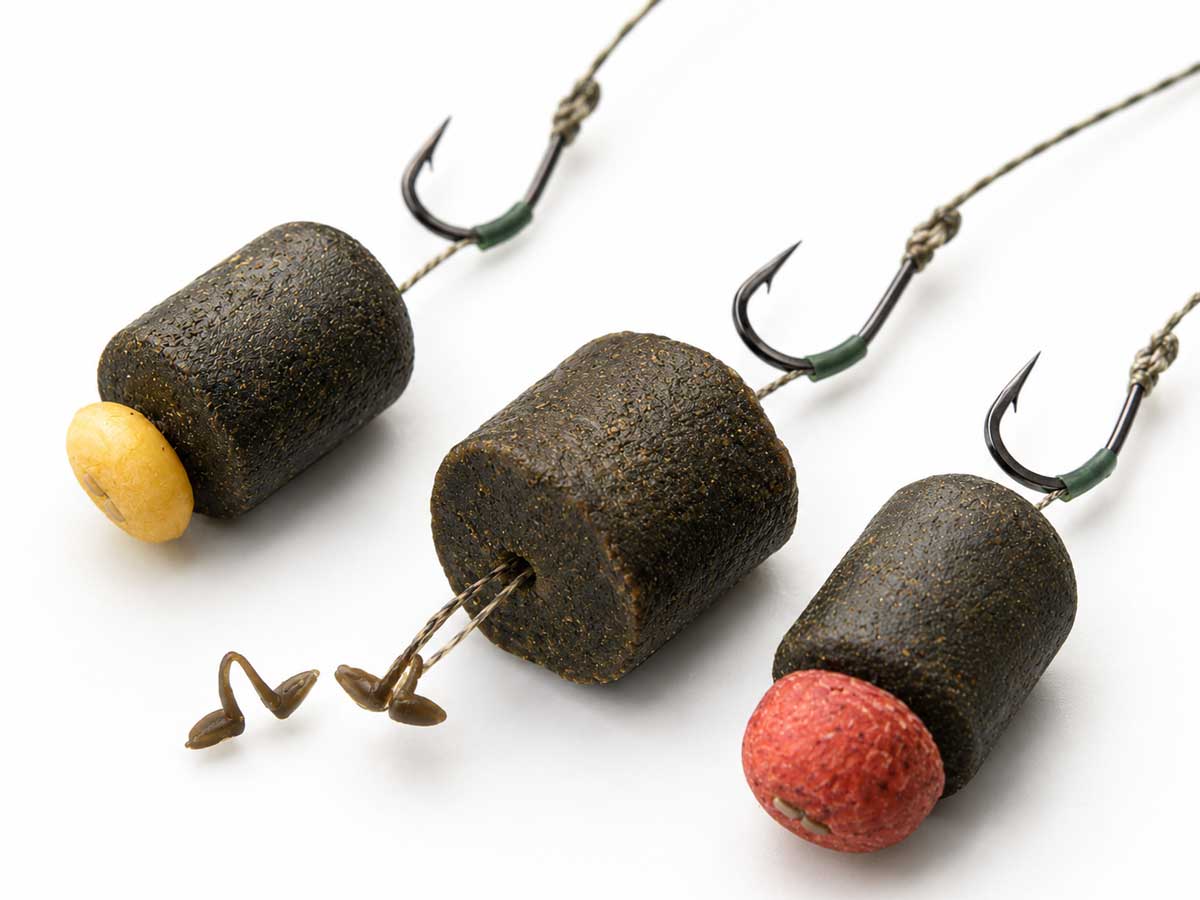
Halibut pellets are among the best-known pellets in carp fishing. They are usually based on fishmeal, fish oil and protein-rich feed ingredients. This creates a strong maritime smell that clearly differs from cereal-based or plant-based pellets.
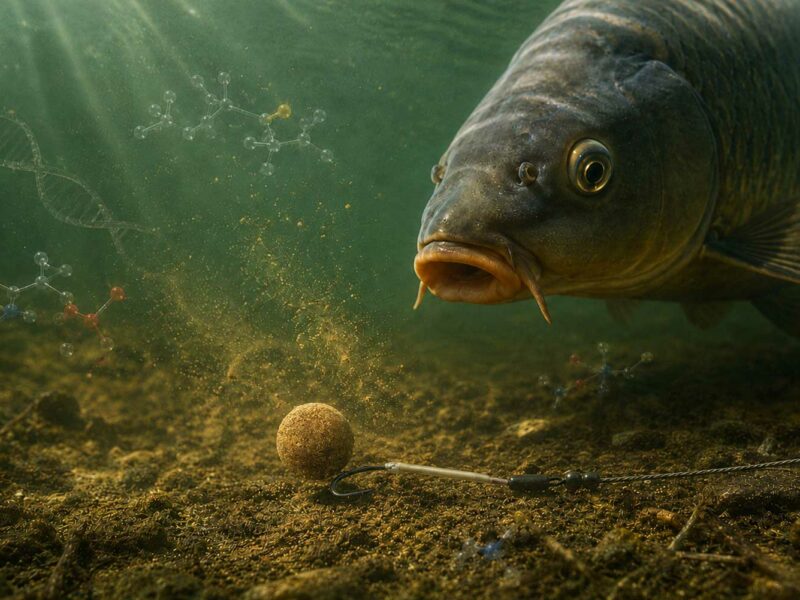
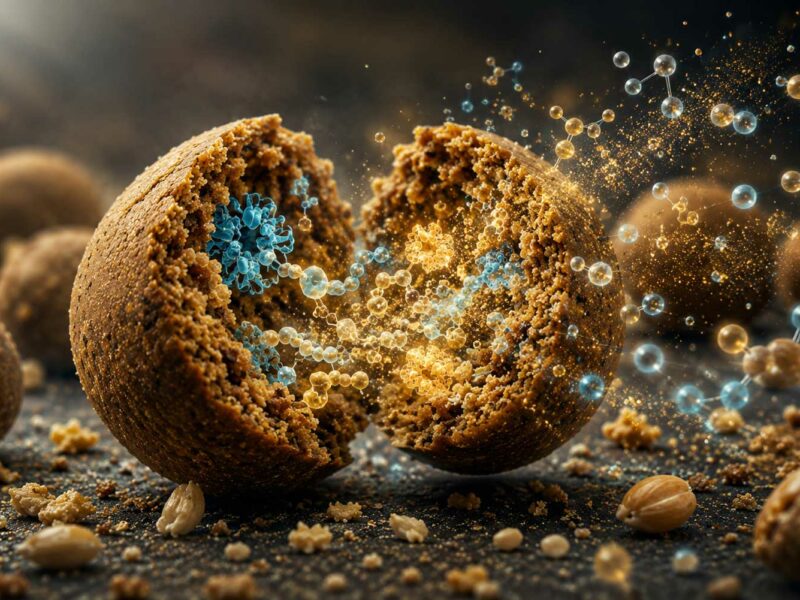
Why halibut pellets can work: When the pellet comes into contact with water, soluble ingredients start to leach out. At the same time, oil-rich components can create a visible slick in warmer water. This combination of smell, taste, structure and feeding activity makes halibut pellets especially interesting for active carp.
Important limitation: oil-rich pellets work less strongly in cold water than in summer. Below roughly 10–12°C, oils spread far less efficiently. In cold water, small amounts of amino pellets, micro pellets, Robin Red pellets or sinking carp feed pellets are often more predictable because water-soluble ingredients become available faster.
Size strategy: small halibut pellets of 2–6 mm work quickly in spod mixes, PVA bags or Method Feeder fishing. Medium sizes of 6–12 mm are useful as feed. Larger pellets of 14–25 mm are more selective and can be used as hookbaits on a Hair Rig if they are stable enough or sold pre-drilled.
Marine halibut hook pellets as hookbaits
Hook pellets are made specifically for Hair Rig presentation. They are more stable than standard feed pellets and are often pre-drilled. This allows them to be mounted cleanly with a pellet stop or bait floss. The exact hookbait life depends on brand, size, water temperature, flow and nuisance fish activity. For longer sessions, large stable hook pellets are much safer than small feed pellets.
Trout pellets and carp feed pellets – a cost-effective base for baited areas
Trout pellets and sinking carp feed pellets are available from many feed suppliers, agricultural stores and fish feed outlets. For carp anglers, they are interesting when larger baiting amounts are needed or when a swim should stay active for several hours.
The right choice matters: for bottom fishing, you usually need sinking pellets. Floating feed has other uses and is not automatically suitable for bottom rigs, Method Feeders or spod mixes.
Trout pellets are usually more fishmeal- and protein-based, often more aromatic and can work very well in small amounts as a feed booster. Carp feed pellets are more focused on cyprinids and feed efficiency, usually milder in smell and often more economical for larger baiting amounts.
For hookbait use, normal feed pellets are usually not the first choice because they can become too soft or break down too quickly depending on the type. Hook pellets, large pre-drilled halibut pellets, wafters, boilies or soft pellets are usually more reliable.
Amino pellets – fast signals from water-soluble ingredients
Amino pellets contain a high level of water-soluble components such as amino acids, hydrolysates, fish protein, liver extract, yeast extract or similar feed ingredients. Their strength is not long hookbait life, but fast feeding activity.
When amino pellets are lightly dampened, they often become sticky and formable. This allows them to be used as a paste or soft feed around the hookbait, in a Method Feeder or in small feed balls. Especially on short sessions without an established baited area, this fast-working behaviour can be a real advantage.
Cold water: amino pellets can be more useful at low temperatures than heavily oiled pellets because water-soluble ingredients remain more available than heavy oils. Still, in winter the rule is: little feed, small portions and accurate presentation.
Expander pellets – strong for Method Feeder fishing
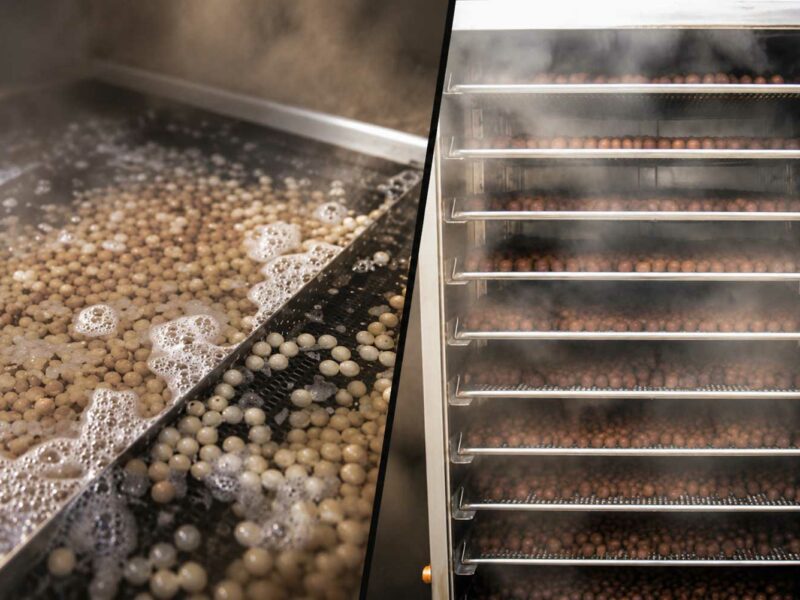
Expander pellets are light, soft pellets that are prepared with water before use. Many anglers use a pellet pump for this. Under pressure, the pellet absorbs water, changes weight and becomes softer. This makes it very interesting for Method Feeder fishing, commercial-style venues and short, accurate carp sessions.
The advantage: a well-prepared expander can be mounted directly on the hook and looks very natural over the feeder. Depending on preparation, it can sit just above the feed, sink slowly or work very softly on the bottom. This subtle presentation makes expander pellets strong for cautious fish.
Without a pellet pump: expanders can also be prepared in a bag or small container with water. The result is less consistent, but it can be enough for short sessions. Important: not too wet, not too soft, check regularly.
Soft pellets – directly on the hook
Soft pellets are soft hookbaits that can be pressed directly onto the hook or presented with a spike. They are a simple solution if you want to fish without a classic Hair Rig or present very close to the feeder in Method Feeder fishing.
Their hookbait life depends on brand, hardness, water temperature and nuisance fish activity. In warm water or where there are many silver fish, soft pellets should be checked and replaced regularly. For long sessions, they are less stable than large hook pellets or boilies, but they work faster and more subtly.
Micro pellets – fast food cloud in Method Feeder, PVA and spod mix
Micro pellets of 1–4 mm are among the most important pellet sizes in modern carp fishing. They absorb water quickly, create a fine feed structure and can be used very accurately in Method Feeders, PVA bags, stick mixes or spod mixes.
Method Feeder: lightly dampen 2–4 mm pellets, drain off excess water and let them rest for a few minutes. The aim is a damp, slightly sticky consistency that holds on the Method Feeder but opens cleanly in the water.
PVA bag: dry micro pellets, boilie crumb and small halibut pellets are excellent PVA fillings. Water-based liquids can melt PVA too early. Oily or clearly PVA-friendly liquids are safer.
Spod mix: micro pellets bring quick activity into the mix. Combined with larger pellets, particles and boilie crumb, they create a baited area with several working phases: an instant cloud, medium-term feeding activity and longer-lasting food items.
Robin Red pellets, krill pellets and speciality pellets
Speciality pellets focus on specific profiles: spicy, fishy, fruity, mussel-based or protein-rich. They are interesting when you want to move away from simple fish feed pellets or offer a different signal on heavily fished venues.
Robin Red pellets provide a spicy profile with paprika and spice character. They can be especially interesting in cooler water, in autumn or when fish are under pressure. Krill pellets provide a marine protein profile, GLM pellets focus on green-lipped mussel, while fruit pellets can stand out in summer or on venues where fishmeal baits are heavily used.
Again, the name alone does not decide. Water temperature, angling pressure, fish stock, nuisance fish, feed quantity and venue type determine whether a pellet really fits the situation.
Pellets as hookbaits – Hair Rig presentation
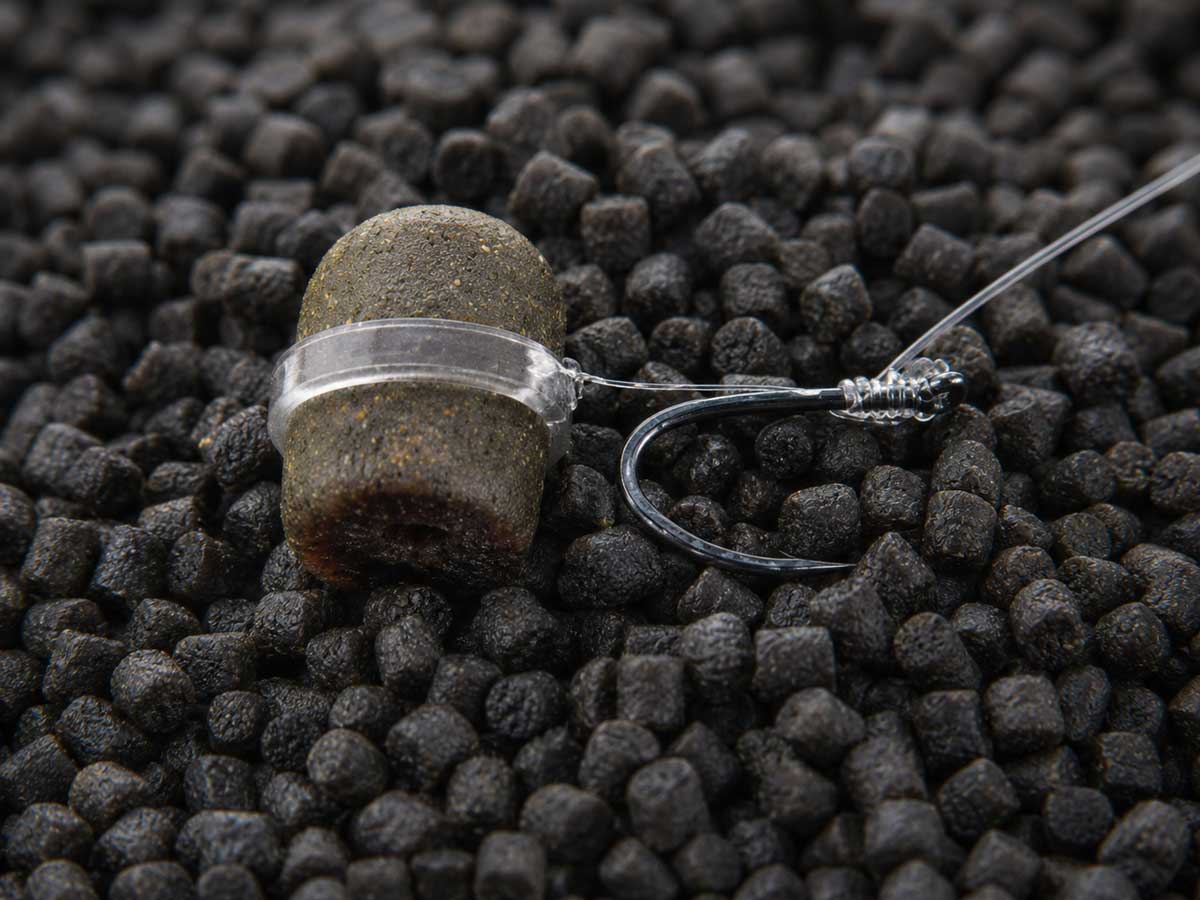
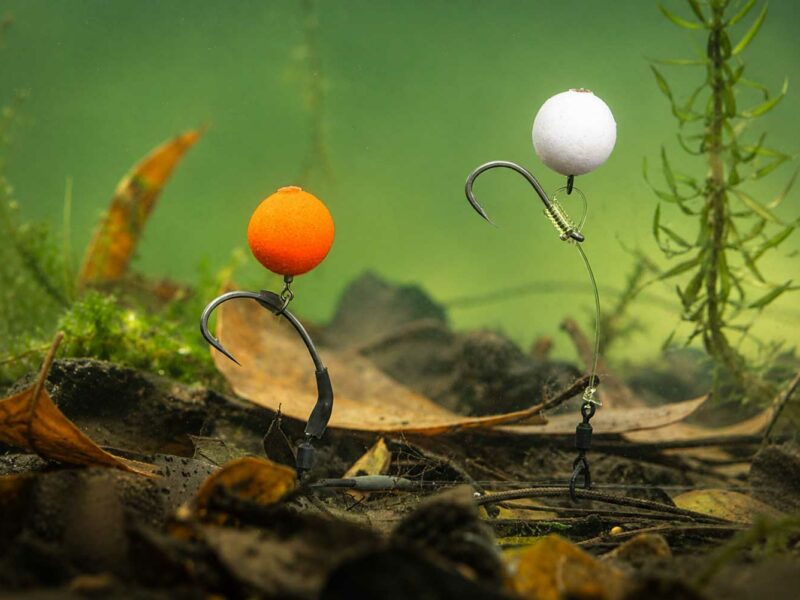
Pellets work as hookbaits when the presentation matches the hardness of the pellet. The most common mistake is pushing hard pellets directly onto the hook. This often causes them to split, hold badly or present poorly. Hard pellets usually belong on a Hair Rig. Soft pellets, expanders or soft hook pellets can be fished directly on the hook or with a spike depending on the method.
Three proven mounting methods
Pellet band / bait band: a small silicone ring is stretched around the pellet and attached to the hair. This method is used a lot in feeder fishing, is quick and flexible and works with many pellet shapes. With soft or very smooth pellets, check regularly that the band still sits correctly.
Pellet stop: pre-drilled pellets are threaded onto the hair and secured with a stop. This is especially clean with large halibut pellets, hook pellets or stable self-drilled pellets. A thin boilie drill works well for drilling.
Spike: a small plastic or metal spike is pushed into soft pellets, expanders or soft hook pellets. This is quick and subtle, but only works with pellets that do not split.
Practical tip: a small rubber stop on the hair can prevent the pellet from sliding up towards the hook. A single piece of fake corn or a small pop-up above the pellet can also help balance the rig and add a visual trigger.
Pellets in PVA bags and PVA mesh
Pellets are one of the best fillings for PVA bags and PVA mesh. They are compact, easy to dose and deliver feed directly to the hookbait. Micro pellets, small halibut pellets, boilie crumb, stick mix and dry particle ingredients work especially well.
PVA bag mix: a strong base is made from 2–4 mm micro pellets, crushed boilies, a little fishmeal stick mix and a few larger pellets. The bag melts on the bottom and leaves a small, active feeding zone directly around the hookbait.
Liquids: water-based liquids can melt PVA too early. Oily or clearly PVA-friendly liquids are safer. If pellets are dampened, they need to dry sufficiently before PVA use or be prepared with PVA-friendly additives.
Method Feeder with pellets
The Method Feeder is one of the strongest pellet applications. The idea is simple: dampened micro pellets or small feed pellets are pressed around the feeder. In the water, the feed cone opens and the hookbait lies directly in the active feeding zone.
Preparing pellets: lightly dampen 2–4 mm pellets, drain off excess water and let them swell for a few minutes. The right consistency is damp, formable and slightly sticky, but not mushy. If the pellets are too wet, they break down too fast or stick too heavily. If they are too dry, they will not hold on the feeder during the cast.
Good hookbaits: expander pellet, small wafter, mini boilie, soft pellet or pop-up. Where there are lots of silver fish, harder hookbaits are safer. For cautious carp, a soft expander directly on the feed cone can look more natural.
Pellets in the spod mix – staggered breakdown
The greatest strength of pellets is staggered breakdown. When you combine different pellet sizes, the baited area works in several phases:
- 1–3 mm micro pellets work quickly and create an early food cloud.
- 4–8 mm pellets keep feeding activity going in the medium time window.
- 12–20 mm pellets stay on the bottom longer and are more selective.
- Boilie crumb adds structure, taste and larger food particles.
- Particles such as maize, hemp or tiger nuts keep fish feeding in the area for longer.
A good spod mix does not need as many ingredients as possible. It needs well-matched components with different working times. Pellets, boilie crumb, particles and a small amount of liquid are often enough.
Pellets in boilie mix – micro pellets as structure openers
Micro pellets can also be used in boilie mix. Small amounts in the dough can open the structure and speed up the release of soluble ingredients. This is especially interesting for freezer baits that should work faster.
Dosage matters. Too many pellets can weaken rolling, binding and stability. Small amounts of around 2–3% are a useful test range. If you roll your own boilies, always test the mix in a small batch first.
Pellets by season
Pellets by venue type
Gravel pits and clear excavation lakes: feed less, but more accurately. Micro pellets, boilie crumb and a few larger pellets are often enough. Where there are many crayfish or gobies, stable hook pellets, boilies or protected hookbaits are safer.
Club waters with high angling pressure: small amounts of pellets in a PVA bag or Method Feeder can be better than a large baited area. Subtle presentation and clean rig mechanics matter more than volume.
Rivers such as the Danube, Mur, Drau or March: flow, gobies and feed drift must be considered. Larger pellets, boilie crumb and heavier spod mixes stay in place better. Very fine micro pellets can drift away quickly in strong current.
Pay lakes and heavily fished commercial waters: carp know many standard baited areas. Small, precise pellet portions, PVA bags, single hookbaits or unusual pellet profiles can be stronger than large amounts of standard feed.
Plant-based pellets – maize, cereals, hemp and birdfood
Besides fishmeal and halibut pellets, there are plant-based pellet variants made from maize, wheat, soya, pea protein, hemp, birdfood or spices. They can be milder, contain less oil and look more natural in cooler water or on cautious venues.
Plant-based pellets are especially interesting when many anglers feed very fishy pellets or boilies. A maize-based, nutty or spicy pellet can stand out clearly from the standard without looking unnatural.
Hemp pellets, maize pellets or birdfood pellets work well alongside particle baits, because they support similar natural food profiles: maize, hemp, tiger nuts, cereals and fermented particles.
Catfish pellets and large pellets – useful for carp?
Catfish pellets are usually very large, protein-rich and strongly fishy. They can also attract carp, but they do not make sense in every situation. Large pellets are more selective, last longer and are less likely to be picked up by small fish. At the same time, they add a lot of feed and can quickly be too much when fish activity is low.
For big carp on warm venues, rivers or heavily fished lakes, large pellets can be an interesting selective feed item. As everyday feed for every session, they are often too coarse. A better option is the combination: a few large pellets, plus micro pellets, boilie crumb and possibly particles.
Buying pellets – tackle shop, feed supplier or fishing show?
For large baiting amounts, sinking carp feed pellets or suitable fish feed pellets from feed suppliers can be economically interesting. For hookbaits, PVA, Method Feeder use and specialist profiles, tackle shops are often better because they offer hook pellets, amino pellets, expanders, Robin Red, krill and GLM variants.
Pay attention to freshness. Rancid, musty or badly stored pellets lose a lot of attraction. Pellets should be stored dry, cool and airtight. Oil-rich types are more sensitive than simple cereal or fish feed pellets.
Rule of thumb: feed suppliers for a cost-effective base and larger amounts. Tackle shops for hookbaits, specialist pellets, PVA and Method Feeder applications. Fishing shows for direct comparison, advice and new bait mixes.
Combining pellets, boilies and particles
Pellets work quickly, boilies stay stable longer, and particles keep carp occupied. Together, they create a baited area with several feeding triggers: soluble signals, structure, searching behaviour and selective hookbaits.
- Instant session: PVA bag with micro pellets, boilie crumb and a wafter.
- Summer baited area: halibut pellets, particles, boilie crumb and a few whole boilies.
- Autumn strategy: fishmeal boilies, krill or halibut pellets and larger hookbaits.
- Method Feeder: micro pellets as a base, expander or small wafter as the hookbait.
- Pressured venue: small pellet amounts, natural particles and subtle hookbaits.
You can find more about natural food signals in the particle bait guide. If you combine pellets with boilies, the boilie guide and the article about feeding boilies will also help.
Common mistakes when fishing with pellets
- Too much feed: pellets often work quickly. Too much feed can fill carp before the hookbait is picked up.
- Wrong size: micro pellets work fast but do not last long. Large pellets last longer, but do not fit every situation.
- Too wet in PVA: water-based moisture can melt PVA too early.
- Hard pellets directly on the hook: they often split. A Hair Rig, pellet band or pellet stop is better.
- Overrating oil-rich pellets in winter: in cold water, water-soluble signals are often more important.
- Old or rancid pellets: poor storage can clearly reduce feed value and attraction.
Compare carp pellets at Carp Austria
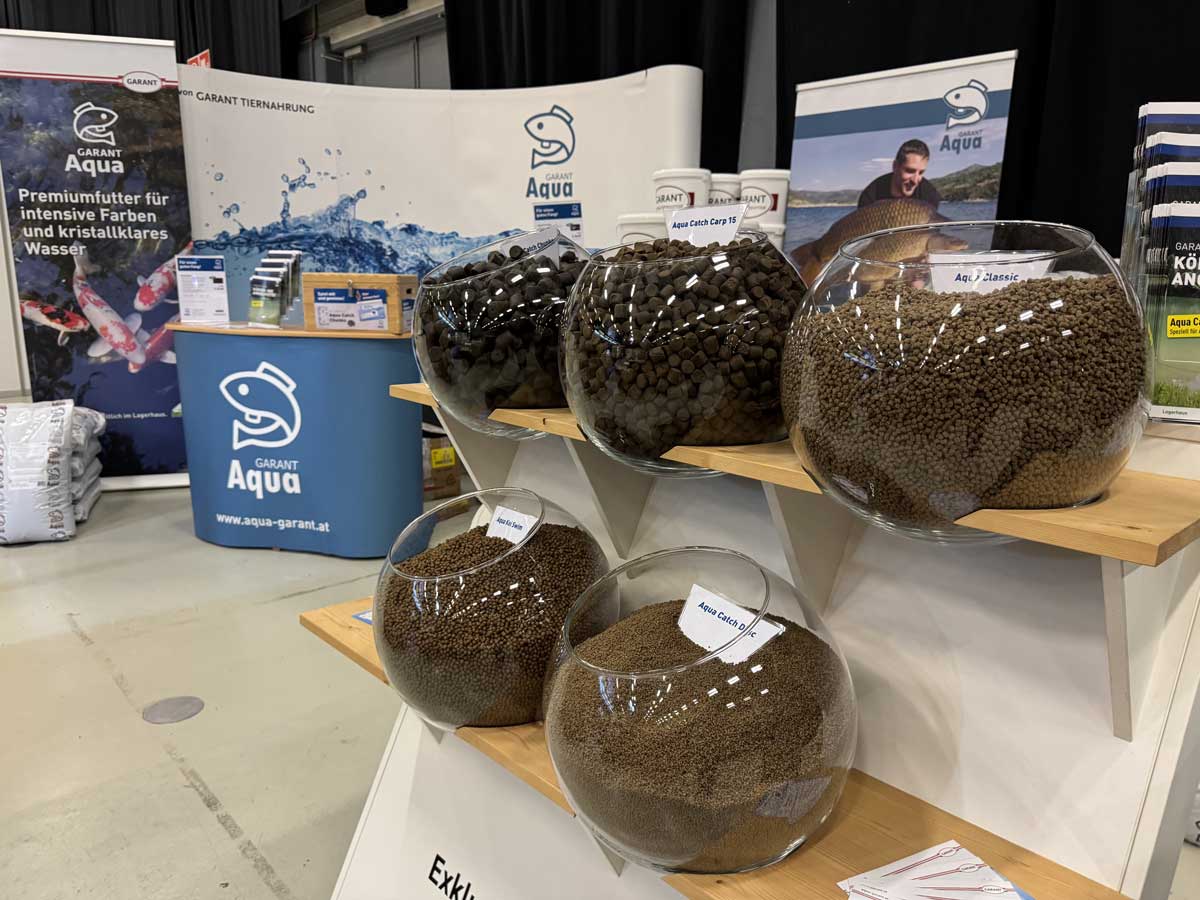
Do you want to know which pellets suit your water? At Carp Austria, you can compare halibut pellets, amino pellets, carp feed pellets, micro pellets, Method Feeder mixes, boilies, liquids and hookbaits directly. You can see the structure, smell the difference and get answers from manufacturers, bait services and experienced carp anglers.
At the Arena Nova Wiener Neustadt, you will find exhibitors from the fields of carp bait, pellets, boilies, pop-ups, wafters, particles, liquids and feed mixes, depending on the current exhibitor list. That is what makes the show valuable for carp anglers: you do not buy from a product photo alone, but compare baits live and find out faster what suits your water, your season and your feeding strategy.
→ Get your tickets: Arena Nova, Wiener Neustadt
Conclusion: carp pellets are feed, bait and strategy
Pellets are much more than cheap extra feed. Used correctly, they can activate a baited area quickly, improve Method Feeder presentations, make PVA bags highly accurate and, as hook pellets, even target bigger carp more selectively.
The key is choosing the right type: micro pellets for quick activity, amino pellets for water-soluble signals, halibut pellets for warm periods and fishmeal-based baited areas, expanders for Method Feeder fishing and large hook pellets for stable hookbait presentation. If you understand size, breakdown and mounting, you no longer fish pellets randomly — you fish them with purpose.
Compare pellets, boilies and carp baits live
At Carp Austria, you will find manufacturers, bait services and specialists covering carp pellets, boilies, particles, pop-ups, wafters, liquids and modern hookbait systems.