What are boilie attractants?
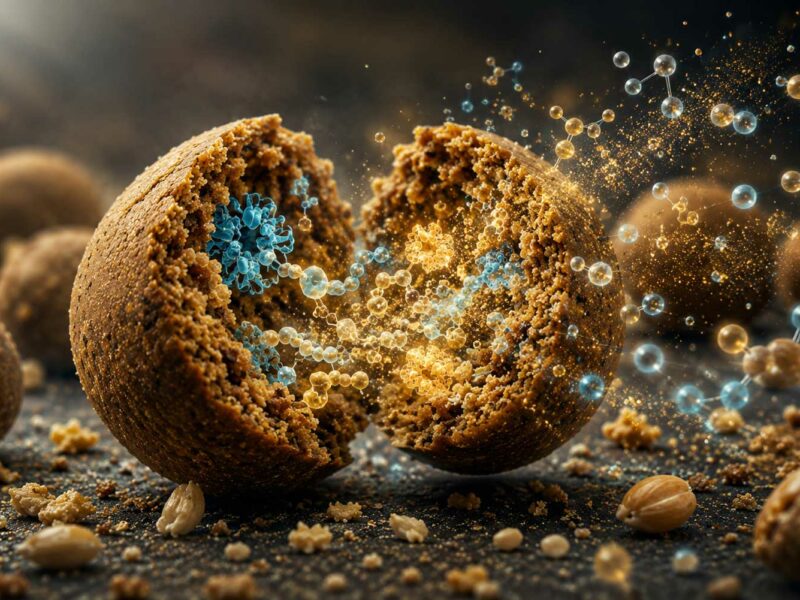
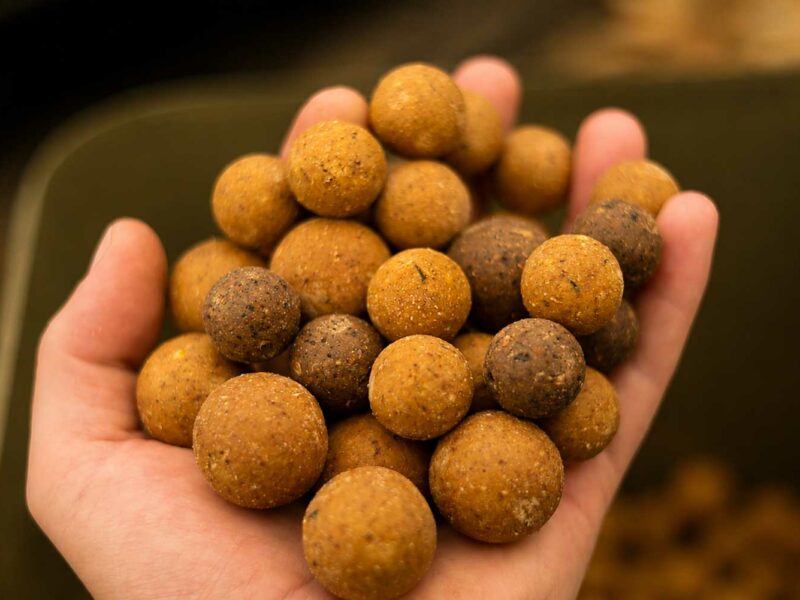
Boilie attractants are water-soluble or volatile food signals that carp detect through smell and taste. They do not only decide whether a carp finds the bait, but also whether it accepts the boilie in the mouth or ejects it again. A good boilie therefore has to do more than simply smell strong.
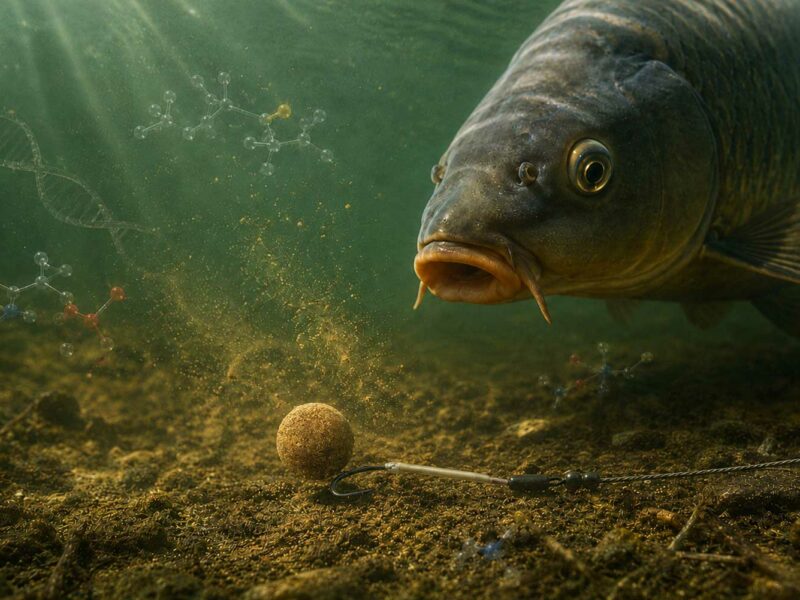
A carp often smells your boilie long before it sees it. It follows the dissolved signal, takes the bait into its mouth and decides in fractions of a second whether to swallow or eject it. These three processes — attraction from distance, feeding activation and final acceptance — are controlled by different types of attractants. A boilie that smells intense but provides no real palatability can still be spat out.
That is why the key question is not: which single attractant is the strongest? The real question is: which combination addresses smell, feeding behaviour and taste at the same time? This is where simple flavour boilies differ from modern carp baits built with free amino acids, betaine, DMPT, natural extracts, liquids and real feeding signals.
Attractant, feeding stimulant, palatability trigger – three functions, one boilie
In bait development, three attractant functions matter: attractant, feeding stimulant and palatability trigger. Each function works at a different stage of carp feeding behaviour, with a different sense and from a different distance.
| Function | Range | Sense / point of action | Goal |
|---|---|---|---|
| Attractant long-range pull |
far | smell · olfactory · long-range effect | make carp notice the bait · start food search |
| Feeding stimulant stimulant |
close / direct | smell + taste · feeding zone | increase feeding motivation · trigger active feeding |
| Palatability trigger palatant |
in the mouth | taste · gustatory · mouth cavity | swallowing instead of ejection — the final decision |
A boilie can smell excellent and still be ejected if palatability is missing. A boilie with strong palatability but no attractant may never be found. The art is to combine all three functions in one bait. This is the difference between a carp bait that is actively eaten and one that only creates short interest.
How carp detect attractants – smell as distance sense, taste as final check
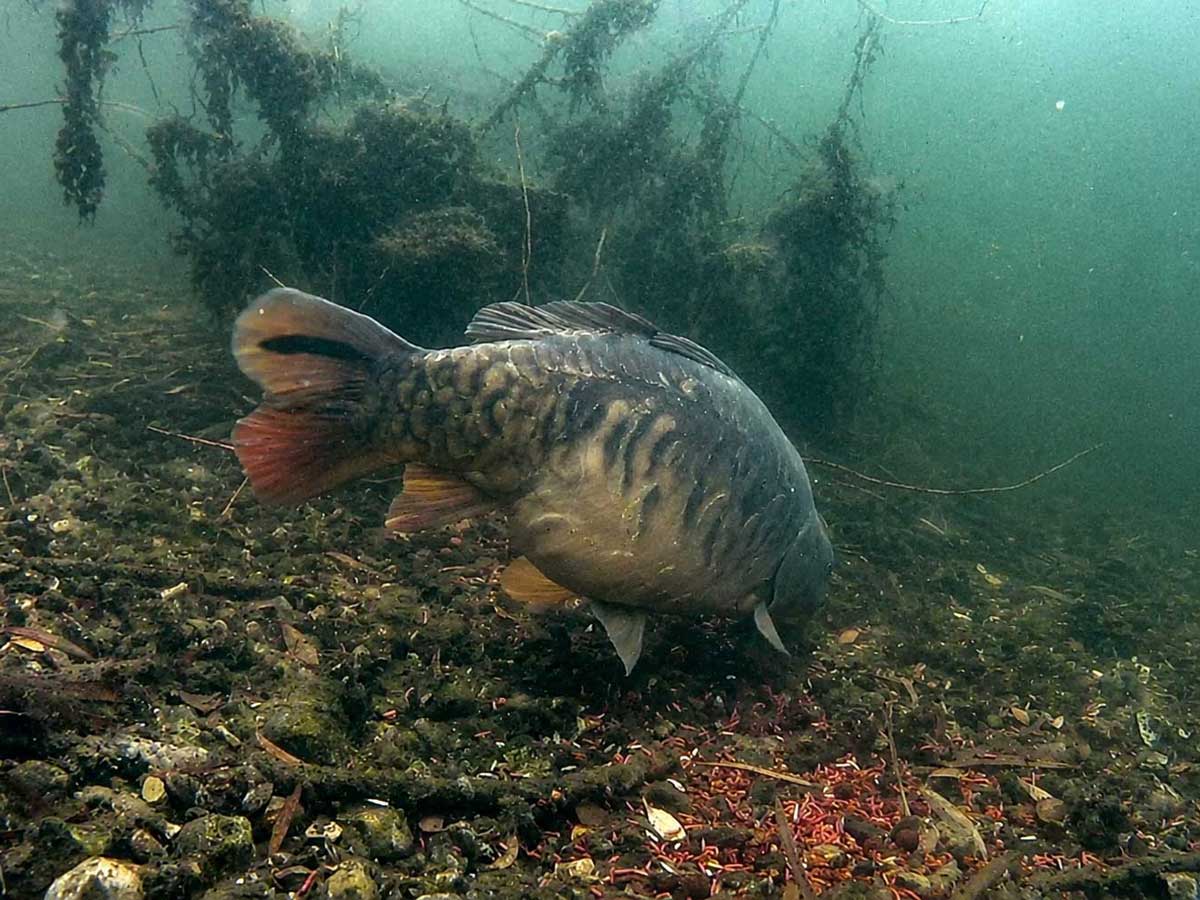
Carp have two chemical senses that work independently from each other: smell and taste. Both systems differ in range, function and selectivity. This interaction explains why some boilie attractants create strong attraction but still do not trigger reliable bait acceptance.
The sense of smell – long-range signal for food search
The sense of smell is the carp’s distance sense. Dissolved substances diffuse from the boilie into the water and create an attraction cloud that spreads with undertow, temperature and water movement. Carp detect these substances through the olfactory epithelium in the nasal sac — specialised tissue that continuously analyses water.
Smell mainly triggers search behaviour: the carp becomes active, moves toward the source and checks the area. Scientific work by Kasumyan & Døving describes this distinction clearly: smell and taste should not be treated as the same system. Smell guides the search, while taste decides final bait evaluation.
The sense of taste – final decision in the mouth
The carp’s sense of taste is highly developed. Taste buds are not only found inside the mouth cavity, but also on the lips, barbels and other body areas. Carp therefore check food not only with the mouth, but already through direct contact with the bait and its surroundings.
This sense decides final acceptance. A carp can pick up a boilie and eject it immediately if the taste does not fit or the texture feels suspicious. For modern carp baits this means: smell brings the carp to the bait. Taste decides whether it eats it.
The chemistry behind it – why some attractants work farther than others
Not every substance spreads through water at the same speed. The physical and chemical properties of an attractant decide how far it works, how quickly it is released and whether it works more through smell or taste.
Molecular weight and water solubility: Small, highly water-soluble molecules diffuse faster and farther. Free amino acids, betaine and DMPT are especially interesting because they move into water quickly and can be detected well by fish. Larger compounds such as proteins and peptides diffuse more slowly. They work more at close range and as palatability triggers.
Volatility and polarity: Certain volatile components such as esters, aldehydes or sulphur-containing compounds can strongly address the sense of smell. Polar, ionic compounds such as amino acids in water are particularly well recognised by fish receptors.
| Substance | Effect | Chemistry / practice | Range |
|---|---|---|---|
| Free amino acids | All 3 levels | small · polar · highly water-soluble · smell and taste | far + close |
| DMPT | long-range trigger | sulphur-containing · very strong fish attractant · dose sparingly | very strong |
| Betaine | feed acceptance | N-trimethylglycine · sugar beet · water-soluble · heat-stable | medium–far |
| Natural extracts | palatability | complex · peptides · amino acids · natural food signals | close–medium |
| Synthetic flavours | scent | olfactorily strong · often little real palatability | far, short |
| Peptides / proteins | palatability | larger · slower diffusion · longer effect on the spot | close, long |
Amino acids – the most important natural attractants in boilies
Free amino acids are one of the best-supported attractant types for carp. They work because they represent natural food signals and are detected by fish through chemical receptors. In carp they are especially interesting because they can work through both the sense of smell and the sense of taste.
Amino acids that are particularly relevant for carp include glycine, L-arginine, L-glutamic acid, L-alanine, L-hydroxyproline and taurine. Not every amino acid works in the same way. Some substances can be interesting olfactorily, but be evaluated differently through taste. This is exactly why smell and taste must be considered separately.
Free amino acids are not bound into proteins or peptides. They diffuse directly from the boilie into the water and quickly create a chemical signal. Bound amino acids in proteins must first be released by enzymes or hydrolysis. That is why hydrolysates, predigested meals and enzymatically prepared ingredients can be especially interesting.
Practical dosage: depending on the product, 5–25 g free amino acids per kg boilie mix can be a sensible range. Sources can include liver extract, amino liquids, worm extract, fish hydrolysate, predigested fish meals or specialist amino acid blends. Overdosing does not make sense. An unnaturally strong concentration signal can slow cautious carp down instead of activating them.
Betaine – the classic from aquaculture
Betaine, chemically N-trimethylglycine, is a natural derivative of the amino acid glycine and occurs, among other sources, in sugar beet molasses. It is water-soluble and has been used for decades in fish nutrition to improve feed acceptance.
For carp, betaine is interesting because it can be recognised as a natural food signal. It is not a miracle substance, but it is a very proven building block in modern boilie recipes. Betaine is especially useful when combined with free amino acids, natural extracts and a suitable flavour.
Not all betaine is the same. For boilies, crystalline betaine anhydrous is the most useful form. Betaine HCL is also sold, but is much less interesting for carp bait use. Liquid molasses products can also contain betaine, but are usually less concentrated than pure betaine anhydrous.
- Betaine anhydrous: water-free, crystalline, soluble and the most useful form for boilies
- Betaine HCL: hydrochloride salt, much less suitable for carp baits
- Betaine molasses: liquid, cost-effective, but usually less concentrated
Practical dosage: 5–10 g betaine anhydrous per kg boilie mix is a sensible base dosage. 10–20 g per kg boilie mix is the classic range for stronger attractant mixes. In clear water, a lower dosage is often cleaner; in coloured water, a higher dosage can make sense. Betaine should be dissolved well in the liquid phase or egg mix before the dry mix is worked in. This distributes it more evenly through the boilie.
Betaine is heat-stable – losses come from leaching, not heat
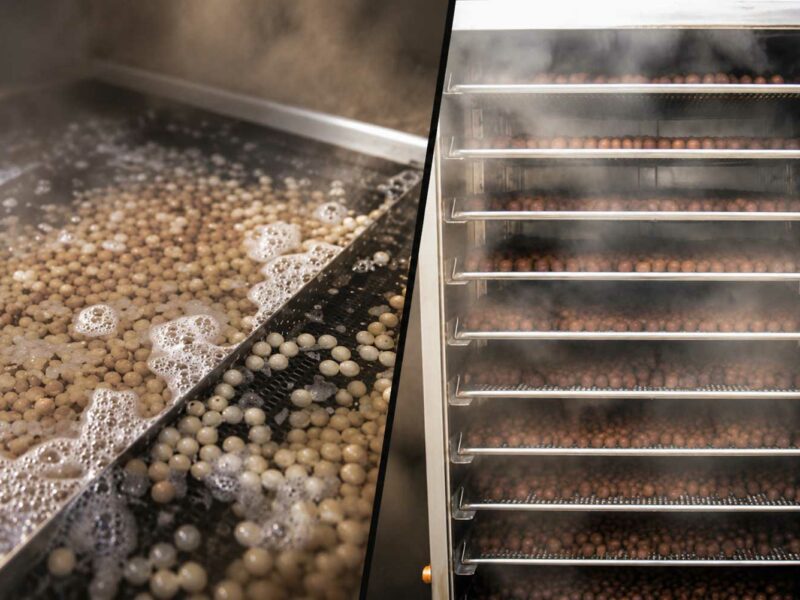
Betaine is not destroyed by boiling heat. Betaine is heat-stable at boiling temperatures around 100 °C. Its zwitterion structure remains intact at this temperature. If betaine is lost during boiling, it is not through thermal breakdown but through water solubility and diffusion into the boiling water.
This is an important distinction: betaine in the boiling water is lost betaine — but not burnt or destroyed betaine. When boilies are steamed, betaine is kept better inside the bait because there is no direct water contact. For high-quality mixes with betaine anhydrous, steaming is therefore especially interesting: the effect is preserved better not because of a lower temperature, but because less betaine is washed out.
For practice this means: if you use betaine in boilies, you do not need to fear 100 °C heat. What matters is whether the boilie is lying in water or being cooked in steam. During boiling, betaine can migrate from the boilie into the water. During steaming, it stays much better inside the bait.
DMPT – very strong fish attractant, but dose sparingly
DMPT, dimethylpropiothetin, is a sulphur-containing compound that is regarded as a very strong fish attractant. It is not a classic flavour and not an amino acid, but a so-called thiobetaine. Such compounds occur naturally in marine organisms and can be detected strongly by fish.
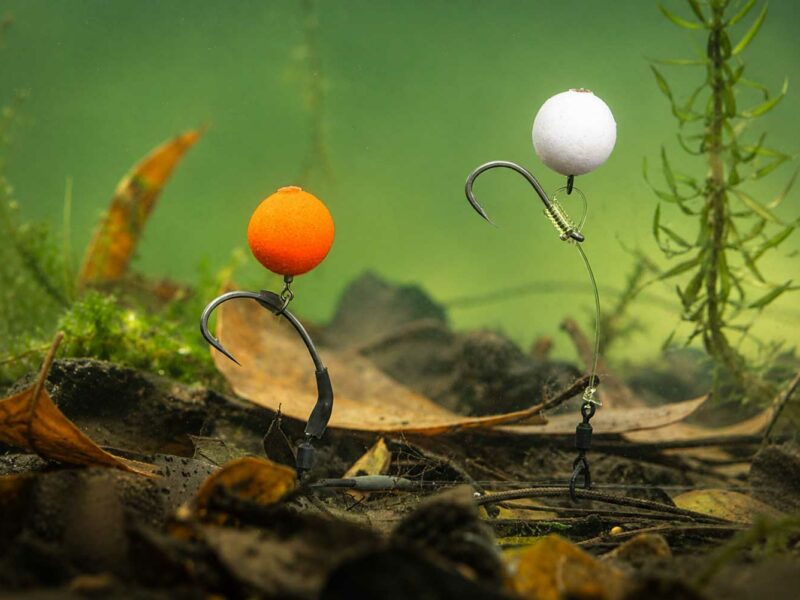
In practice, DMPT is mainly used where a very strong long-range signal is desired — for example in pop-ups, dips, soaks or special hookbaits. For normal feed boilies, DMPT is not automatically necessary. Dosage and combination with other substances are decisive.
Practical dosage: 1–3 g DMPT per kg boilie mix is usually enough. More is not automatically better with DMPT. Concentrations that are too high can feel unnatural and achieve the opposite effect. Anyone using DMPT should follow manufacturer information and dose cleanly.
Important: depending on the product, declaration and classification, different legal and feed-related rules may be relevant for DMPT. Anglers and manufacturers should always check the current product declaration and legal classification of the specific product.
Betaine + DMPT – not competitors, but a system
A common misunderstanding is: betaine or DMPT — as if they were competing products. In a boilie, both substances can work together sensibly. DMPT can act as a very strong, short-term long-range trigger. Betaine supports feed acceptance and can give the bait a more familiar food signal.
| Substance | Primary function | How it works |
|---|---|---|
| DMPT | acute long-range trigger and feeding stimulant | fast · strong · short-term · especially interesting for pop-ups, dips and hookbaits |
| Betaine | feed acceptance and food signal | stable · water-soluble · heat-stable · especially strong in combination with amino acids |
| Together | broader attractant system | DMPT creates a fast trigger · betaine supports acceptance · amino acids and natural extracts complete smell and taste |
Natural palatants – when the carp recognises its food
Natural extracts from actual carp food often provide especially strong palatability triggers. Carp know worms, mussels, crayfish, snails, larvae and other bottom food from their natural feeding behaviour. The amino acid profiles of such food sources are therefore especially credible.
Synthetic flavours can create attention. Natural extracts, however, often deliver what really matters in the mouth: taste, peptides, amino acids and familiar food signals.
| # | Source | Why effective | Practical use |
|---|---|---|---|
| 1 | Crayfish extract | strong natural palatability trigger · protein-rich · credible bottom-food signal | crayfish extract, crayfish meal, krill combinations |
| 2 | Worm extract | broad natural amino acid profile · very familiar food signal | worm extract in boilie, dip or soak |
| 3 | Mussel extract / GLM | natural food signals · free amino acids · proven in fishmeal and premium mixes | GLM powder, mussel liquid, hookbait mix |
| 4 | Liver extract | peptides, amino acids and strong feeding signals · especially suitable for fishmeal mixes | liver extract, liver meal, amino liquid |
The advantage of natural palatants lies in their credibility. Carp can become used to striking synthetic smells or avoid certain bait profiles. Natural food signals often work more consistently because they resemble real food sources.
Synthetic flavours – range, but not automatically feed acceptance
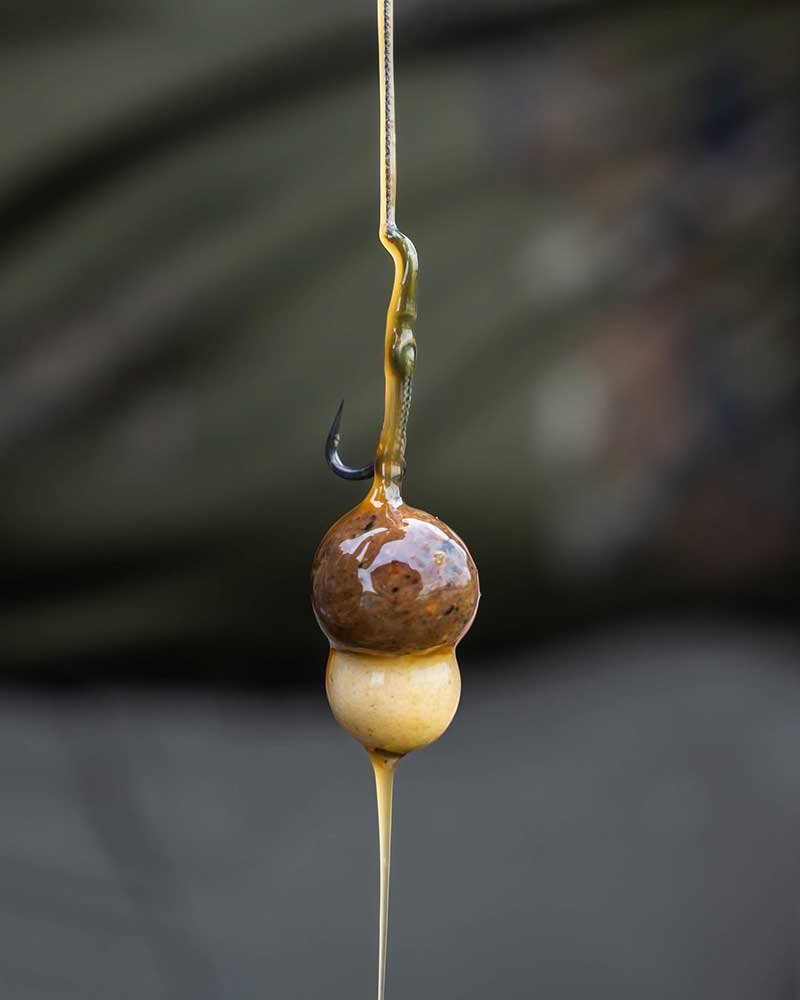
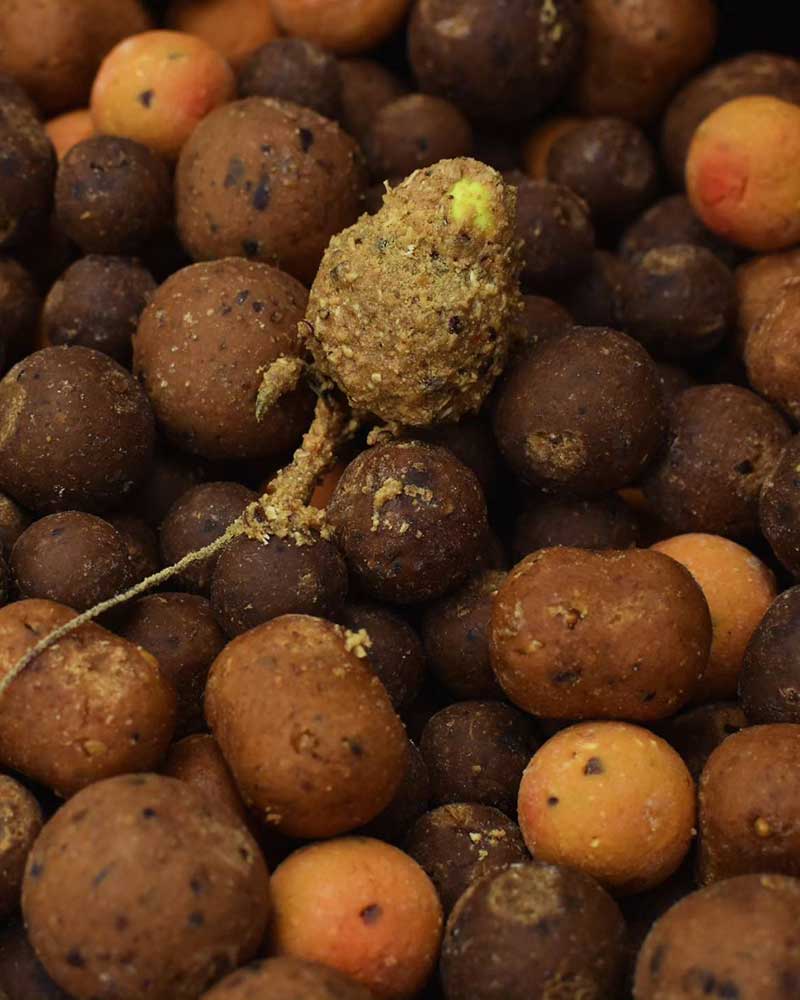
Synthetic flavours give many boilies their typical scent: fruit, Scopex, milk, nut, spices, garlic or creamy aromas. They mainly work through the sense of smell. Their strength is fast long-range attraction and a striking first impression.
Their weakness is often taste. A boilie can smell strongly of flavour and still fail to convince the carp in the mouth. That is why synthetic flavours should not carry the entire attraction of a boilie on their own. They work best together with amino acids, betaine, liquids and natural extracts.
Used well, flavours are still valuable: as recognition markers, as short-term boosters in dips or soaks and as an addition to a natural attractant system. The decisive factor is not maximum scent strength, but the balance between smell, feeding stimulant and palatability trigger.
The combination effect – why interaction matters more than a single attractant
Single substances work. Combinations often work better. The reason is biologically logical: natural food never consists of one chemical compound only. Crayfish, worms, mussels, larvae and snails always release a mixture of amino acids, peptides, salts, fats and other substances.
A modern boilie should imitate this natural principle. It is not one extreme flavour that decides, but a balanced profile of fast, medium and slow-release attractant components.
- Betaine + amino acids: proven combination of feed acceptance and water-soluble food signals
- DMPT + flavour: strong long-range trigger plus olfactory character
- Free amino acids + natural extract: fast diffusion plus real palatability
- Amino acid blend instead of one single substance: broader signal, more receptors, more natural profile
This explains why well-developed boilie recipes often catch more reliably than random single-substance combinations. The decisive factor is not as much attractant as possible, but the right combination in the right dosage.
Which attractant when – water temperature and season
Water temperature affects diffusion speed and therefore the range of all attractants. Cold water slows distribution. Warm water accelerates diffusion, but also means that attractants are used up or broken down more quickly.
| Season | Recommended attractant strategy | Why |
|---|---|---|
| Winter | highly soluble signals: betaine, free amino acids, light liquids, small amounts, concentrated soaks | cold water diffuses slowly · carp feed little · short feeding windows |
| Spring | worm, crayfish, mussel and liver extracts · natural food signals · easily digestible boilies | after the cold period, carp actively search for natural food |
| Summer | fresh boilies, flavour + natural extract, liquids, fast attraction, check baits regularly | warm water speeds up diffusion and breakdown · boilies lose active signals faster |
| Autumn | fishmeal, krill, liver, GLM, betaine, amino acids, protein-rich mixes | carp build energy reserves · high feeding motivation · many attractant profiles work |
Compare boilie attractants directly at Carp Austria
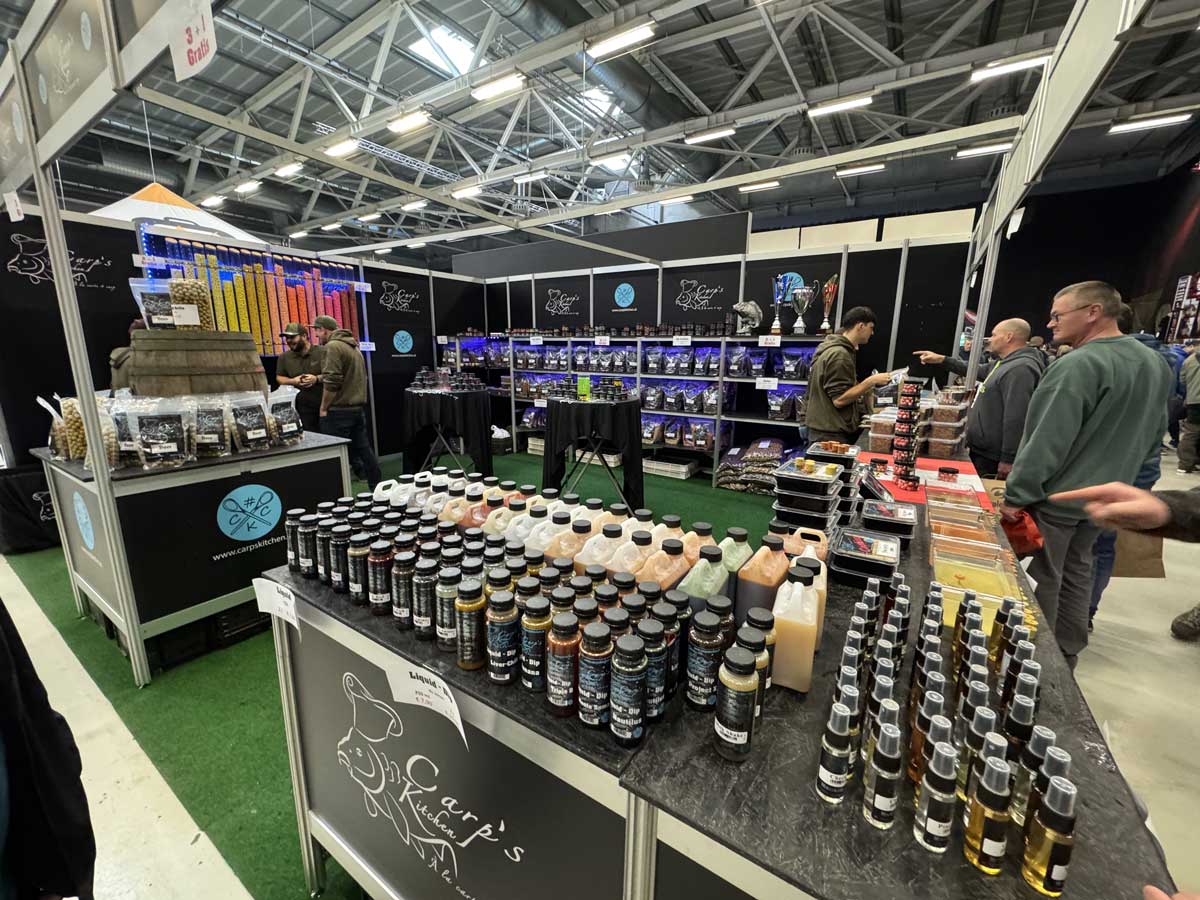
Which attractant suits which venue? How much betaine belongs in which mix? When do free amino acids, DMPT, liver extract, mussel, krill, crayfish or fermented liquids really make sense? No product text answers these questions as well as a direct comparison with manufacturers.
At Carp Austria you will find boilies, pop-ups, wafters, liquids, dips, soaks, feeding boilies and modern attractant systems directly on site. You can smell products, compare them, test them and talk to manufacturers about ingredients, processing, dosage, season, venue type and use case.
Especially with boilie attractants, direct comparison makes the difference. You can smell whether a liquid is only strongly flavoured or whether it contains genuine water-soluble food signals such as amino acids, liver, mussel, krill, crayfish or fermented ingredients. You will also find strong fair offers and can often buy boilies, pop-ups, wafters, liquids and attractant systems directly on site at especially good prices.
Which manufacturers show boilie attractants at Carp Austria?
Boilie attractants are easiest to understand when you compare them directly with the bait systems of manufacturers. That is why it is worth looking at the boilie brands and carp bait manufacturers at Carp Austria. There you will find brands, bait producers and specialists presenting their boilies, pop-ups, wafters, liquids, dips, feeding boilies and attractant systems directly.
For carp anglers, this is a clear advantage: you do not only see individual ingredients, but understand how boilie, hookbait, liquid, dip, feeding boilie and attractant system work together. This turns theory into a real bait strategy for your venue.
→ Discover boilie brands & carp bait manufacturers at Carp Austria
→ Get tickets for Carp Austria
→ Boilies – ingredients, attractant logic and bait making
→ Feeding boilies – what really belongs in good feed bait
→ Enzymes in boilies – what proteases and amylases really do
→ Carp bait – all bait types compared
Scientific sources
Kasumyan, A.O. & Morsi, A.K. (1996) — Taste sensitivity of common carp Cyprinus carpio to free amino acids and classical taste substances. Journal of Ichthyology 36, 391–403. Evidence for a broad gustatory response spectrum in common carp.
Kasumyan, A.O. & Døving, K.B. (2003) — Taste preferences in fish. Fish and Fisheries 4, 289–347. Foundational review on the role of taste and chemical food evaluation in fish.
Kasumyan, A.O. et al. (2009) — Studies on the separate effects of smell and taste in fish species. Relevant for distinguishing attraction from actual bait ingestion.
Nakajima, K. et al. (1989) — Studies on DMPT as a strong fish attractant in feeding trials.
Arlinghaus, R. & Meyer, J. (2001/2002) — Work on carp feeding and the relevance of different stimulus factors in carp baits.