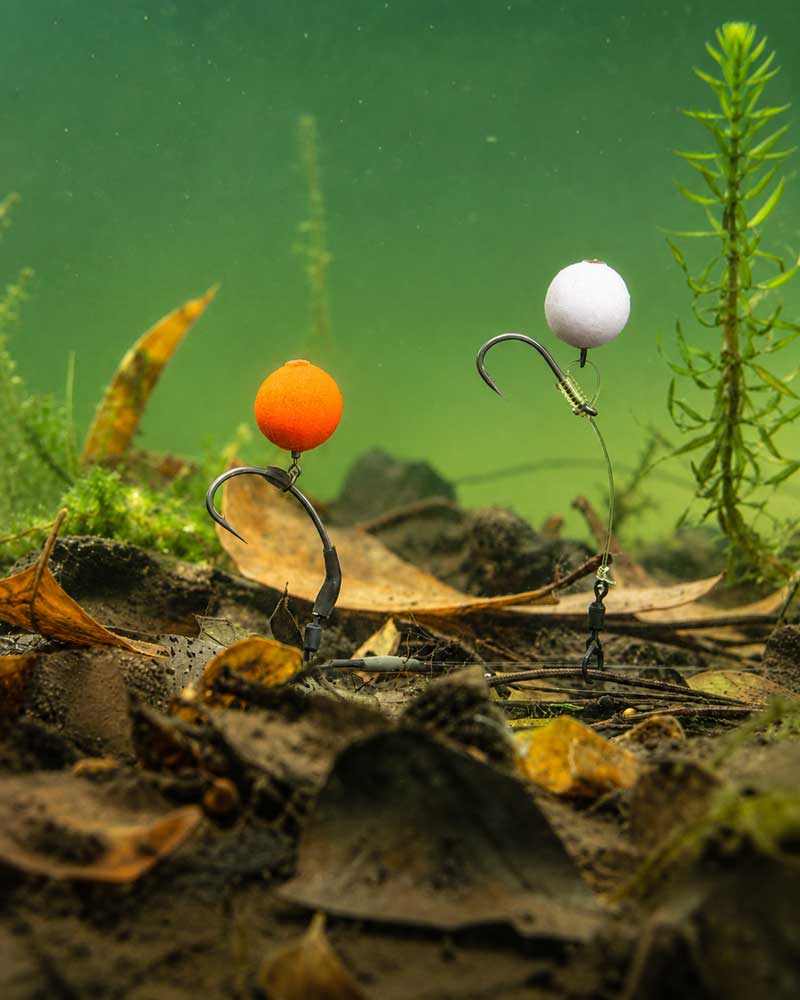
Pop-Up Boilies for Carp – When They Beat Sinking Boilies
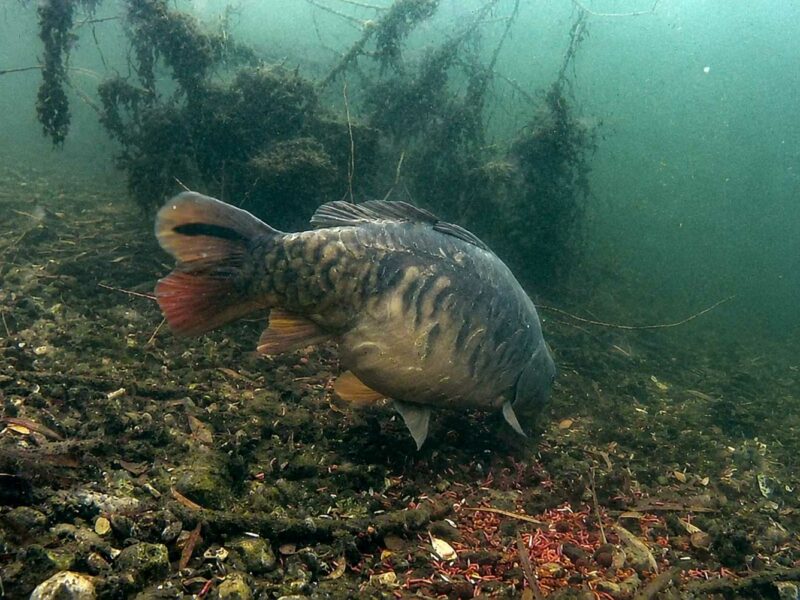
There is one rule many experienced carp anglers know from the bank: the biggest carp in a lake rarely feed blindly in the middle of a dense baited area. They often hold off to the side, circle the spot, inspect single items and react far more carefully than smaller fish. This is exactly where Pop-Up Boilies can be so effective: a buoyant hookbait does not disappear in silt, does not get buried in weed and stands out clearly above the surrounding feed.
Pop-Up Boilies are therefore not just an alternative to sinking boilies. In certain situations, they are the better carp hookbait: over soft bottom, weed, leaves, silt, cautious fish, cold water, clear water or whenever one single visual trigger is stronger than a dense bait carpet. This guide explains when Pop-Ups make sense, which colour to choose, how to set buoyancy correctly and which rig really suits each situation.
What Are Pop-Up Boilies – and Why Do They Float?
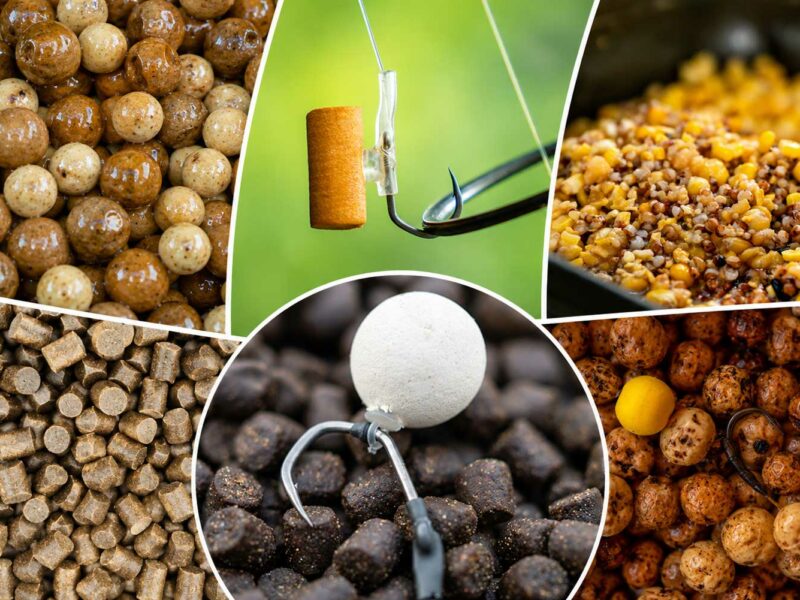
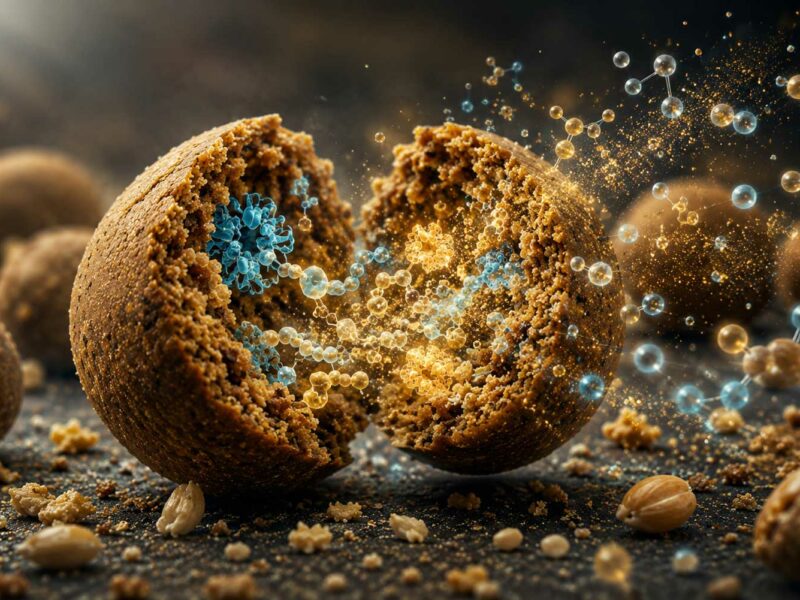
A Pop-Up Boilie is a buoyant carp hookbait. Unlike a feeding boilie, only four things really matter in a Pop-Up: colour, UV activity, flavour and buoyancy. Nutritional value and protein are completely irrelevant — a Pop-Up is not meant to feed the carp, it is meant to hook it. That opens a wide range of production methods: from traditional boilie mix with cork dust, to cork ball Pop-Ups, industrial Pop-Ups made with microspheres and fully synthetic foam baits. For the purpose of a hookbait, all of these versions can work if buoyancy, colour, UV and flavour fit the situation.
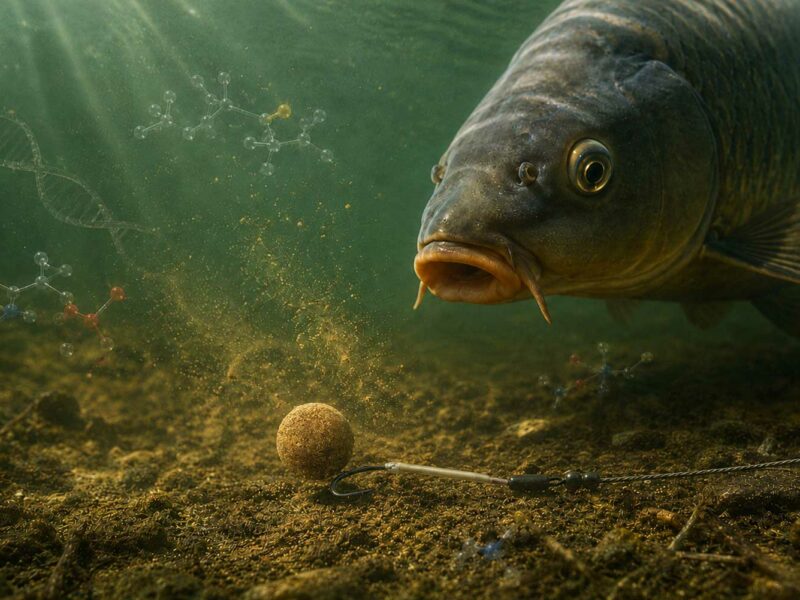
The key advantage lies in the way a carp takes in food. Carp suck food items in from a short distance. An almost weightless Pop-Up hovering above the bottom lifts more easily than a boilie lying flat on the lakebed. It can travel deeper into the carp’s mouth before the rejection reflex begins. That is the physical reason why Pop-Ups, when mounted correctly, often hook so reliably.
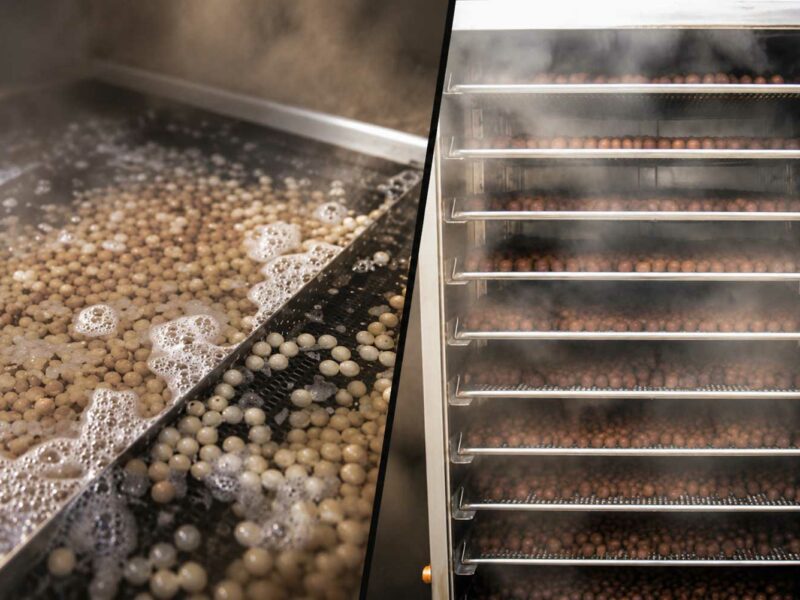
Traditional DIY Pop-Ups are made with cork dust: larger amounts of cork dust are added to the boilie dough depending on the desired level of buoyancy. Another classic method is to use cork balls as a core and wrap them in the chosen boilie mix. Industrial production often uses microspheres or glass bubbles. This creates the uniform, light and often very smooth surface seen on many branded Pop-Ups. Fully synthetic foam versions are also available. What they all have in common: buoyancy keeps the bait above the bottom. Attraction comes from colour, UV, flavour and presentation.
What matters in a Pop-Up: colour, UV activity, flavour and buoyancy. Nutritional value, protein or amino acids play no role in the actual function of the hookbait. A fully synthetic foam bait can be just as effective for this purpose as a carefully made boilie-based Pop-Up, as long as visibility, aroma, buoyancy and rig presentation are right. The exact production methods and what industrial Pop-Ups really contain are explained further down.
How Carp See Pop-Ups – Colour, UV and Contrast
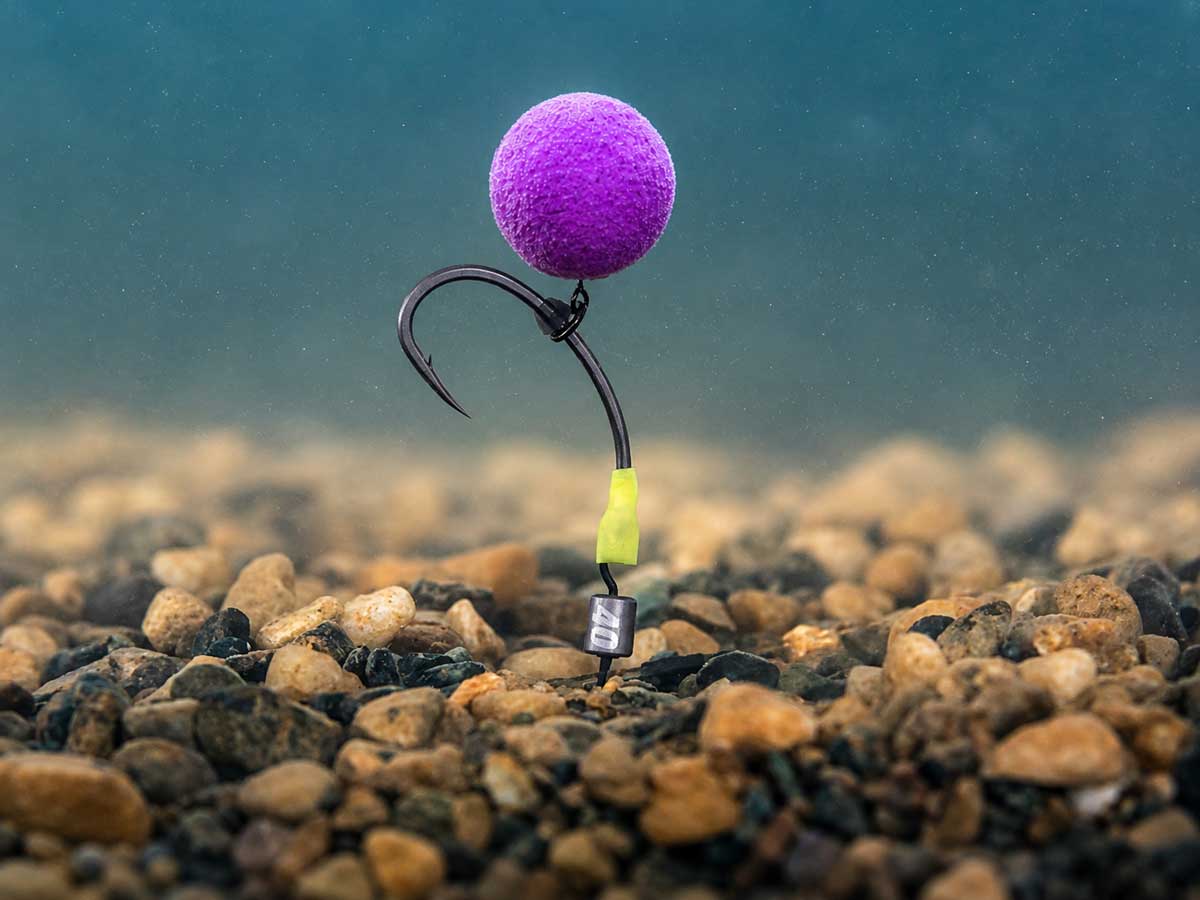
Carp belong to the cyprinid family. Studies on related species such as rudd and goldfish show strong colour vision with short-wavelength and UV-near perception. For Pop-Up Boilies, this means colour, contrast and UV activity can appear very different underwater than they do to us. A bait that simply looks yellow, pink or white to the human eye can create a much stronger signal underwater depending on light, turbidity and depth.
UV-active Pop-Ups in pink, yellow, orange, chartreuse or white are especially interesting when a visual single hookbait is needed. The colour alone is never the full story. The real context is decisive: clear or coloured water, available light, depth, bottom colour, baiting pressure, angling pressure and the fish’s previous experience.
Colour and water depth: not all colours remain equally visible underwater. Red and orange tones lose signal strength as depth and turbidity increase. Bright contrasts, blue tones, white and UV-active colours can remain visible for longer in clear water. The practical rule: use red and orange more in shallow water or when visibility is good, UV yellow and chartreuse in greenish water, pink and white as strong trigger colours in clear water, and washed-out tones for cautious carp and heavy angling pressure.
Why Pop-Ups Often Catch the Biggest Carp
Large old carp have experience. Angling pressure, hook experience and repeated encounters with rigs can change their behaviour. Not every big carp recognises every hook, but many larger fish feed more selectively, inspect baits for longer and are harder to catch than younger carp. This is why clean presentation, discreet mechanics and a precisely placed hookbait often matter more than the amount of feed.
A big carp that finds a baited spot does not always feed like a small fish. It may circle, watch, suck in single particles and blow them out again. Often, it will not pick up a bait from the middle of a dense carpet of feed, but from the edge or just above the baited area. This is exactly where a Pop-Up Boilie can show its strength.
The advantage of the Pop-Up: it hovers above the baited area. It stays visible when a sinking boilie disappears into silt, leaves or weed. It can be taken as a single trigger even when the fish is not feeding actively. And with the right rig, it can be presented so that the carp feels very little resistance.
The conditioning aspect: through repeated feeding, carp learn the weight and behaviour of boilies. A Pop-Up hovering above the bottom behaves differently from a bottom bait. On heavily fished waters, where carp may already associate bright Pop-Ups with danger, washed-out colours such as beige, cream or natural white can break that pattern. They look less aggressive while still using the same physical pick-up advantage. If even subtle Pop-Ups are avoided, a balanced boilie or wafter is often the more discreet alternative: close to the bottom like a normal feeding boilie, but almost weightless.
Three clear situations where Pop-Ups can systematically beat sinking boilies:
- Silty and soft bottoms — sinking boilies can sink in and lose visibility. A Pop-Up sits cleanly above them.
- Weedy bottoms — sinking boilies disappear in weed. A Chod Rig or chod-friendly system presents the Pop-Up cleanly above weed, leaves or silt.
- Winter and early spring — carp feed little and selectively. A visible, small single hookbait may be tested sooner than a bait that has to be actively searched for.
All Pop-Up Rigs Compared
Spinner Rig (Ronnie Rig) – the Most Versatile Pop-Up Rig
The Spinner Rig — also known as the Ronnie Rig — has changed Pop-Up fishing significantly. The hook is not fixed rigidly to the hooklink, but sits freely on a small swivel. When a carp sucks in the Pop-Up, the hook can rotate very freely and turn into a strong hooking position. That movement is exactly what makes the rig so effective.
The big advantage: the Spinner Rig presents the Pop-Up very close to the lakebed. The bait does not rise unnaturally high, but hovers cleanly just above the bottom. For cautious carp, this often looks far more natural than a high-standing Pop-Up. At the same time, the hook remains aggressively aligned and can take hold quickly.
Why the Spinner Rig works so well: the Pop-Up can move freely, the hook point works down quickly, the hook turns well and the bait stays close to the bottom. That makes the Spinner Rig suitable for many situations: clear lakes, hard bottoms, light silt, baited spots, single-hookbait fishing and Snowman-style presentations.
Typical components: Spinner Swivel or Ring Swivel, stiff or semi-stiff hooklink material, hook bead or shrink tube, a wide-gape hook with the right eye, plus Tungsten Putty for fine balancing. The Spinner Rig can be fished with a safety clip, inline lead or helicopter system as long as presentation and fish safety are set up correctly.
Chod Rig – the Specialist for Weed and Silt
The Chod Rig is the solution when the lakebed is difficult: deep silt, leaves, weed, soft debris, old weed beds or uneven bottom. When normal rigs do not settle cleanly, the Chod Rig shows its strength. It presents the Pop-Up above the bottom instead of letting it disappear inside it.
The principle: the rig consists of a very short, curved fluorocarbon or stiff hooklink with a wide-gape hook. This short hook section sits on a moving ring swivel that can slide on a helicopter or chod-friendly system. As the lead settles, the rig can position itself so the Pop-Up is presented cleanly over silt, weed or leaves.
Important: a classic Chod Rig needs a helicopter or chod-friendly system to work correctly. With a normal safety clip, the chod principle does not function in the same way. If you want the benefits of a curved stiff Pop-Up section with more flexibility, the Hinged Stiff Rig is often the better option.
Compact tying guide: curve a short stiff hooklink, choose a wide-gape hook, attach the Pop-Up to a rig ring or bait screw, mount a ring swivel, set stop beads for the movement range and test the presentation height in water.
Hinged Stiff Rig – More Versatile Than a Chod Rig
The Hinged Stiff Rig is the classic predecessor of many modern Pop-Up presentations. It works with a short curved stiff section, but also includes a hinge. The two-part rig consists of a longer boom section and a short curved chod section, connected by a ring swivel.
The advantage: the Hinged Stiff Rig offers strong hooking mechanics, but does not have to be used exactly like a pure Chod Rig. Depending on the setup, it can be combined with a safety clip, inline lead or other lead systems. This makes it more flexible when the bottom is not extremely difficult but a clean Pop-Up presentation is still needed.
The trick: use Tungsten Putty on the swivel or loop knot to balance the Pop-Up. Use only enough Putty so the bait just sinks or hovers close to the bottom. The almost weightless hookbait is pushed away from the lead by the stiff section and appears much less suspicious.
Multi Rig – Change Pop-Ups Fast and Stay Mobile
The Multi Rig is one of the fastest and most practical Pop-Up rigs. It is especially useful when you need to stay flexible: stalking, short sessions, actively searching for fish or testing different colours and hook sizes.
The principle: a loop is tied in the hooklink material, the Pop-Up is mounted in that loop and the hook can be changed without tying a completely new rig. Mount the Pop-Up, insert the hook, align everything, and the rig is ready. The loop length determines how high the Pop-Up sits above the bottom.
Ideal for: stalking, visible carp, new waters, short tests, quick colour changes and situations where mobility is more important than maximum weed or silt performance. In very soft bottom, heavy weed or leaves, a Chod Rig or chod-friendly setup is usually stronger.
Snowman – Combining a Sinking and a Buoyant Boilie
The Snowman presentation is not a separate rig, but a bait combination: a larger sinking boilie on the hair, with a smaller Pop-Up Boilie above it. The result looks like a snowman — the lower, larger bait sits on the bottom, while the smaller upper bait lifts the combination.
Why the Snowman is so effective: the sinking boilie keeps weight and hook close to the bottom. The Pop-Up balances part of that weight and creates a critically balanced presentation. The bait still sinks, but very slowly and lightly. This allows a carp to take it in with less suction force. At the same time, the bright or contrasting Pop-Up is often the first part of the combination the carp sees.
In this presentation, a Pop-Up bait is mounted above a sinking boilie on the hair. The weight of the bottom bait and the hook is balanced by the Pop-Up. The hookbait stands out more clearly on the bottom and can still be taken more naturally than a fully buoyant hookbait.
Especially popular in rivers: Snowman presentations are often used in river carp fishing. They offer a strong visual trigger while keeping the bait well balanced. Classic high-riding Pop-Up rigs can be more problematic in current, drifting weed and algae. A Snowman stays closer to the bottom and is often more robust in practical use.
Critically Balanced Pop-Up – the Underrated Key
A normal buoyant Pop-Up rises as far as its buoyancy allows. In some situations, this can look too high and unnatural. A critically balanced Pop-Up, on the other hand, hovers just above the bottom or sinks extremely slowly. That makes it much easier for a carp to suck in.
The principle: Tungsten Putty, small weights or the right combination of hook, rig and Pop-Up increase the total weight just enough so the bait no longer rises strongly, but just hovers or sinks slowly. This balance must be tested again for every hook size, Pop-Up size and water depth.
Important: test it in water. Depth, pressure, water absorption, hook weight, bait screw, floss and rig material all change buoyancy. A Pop-Up that hovers perfectly at the start can take on water after several hours or by the next day and sink faster. On longer sessions, the balance should be checked regularly.
The way the bait is mounted affects buoyancy: if the Pop-Up is damaged heavily with a bait screw, boilie needle or floss, more water can enter over time. This changes the weight and reduces buoyancy. Gentler bait attachment and regular checks improve long-term buoyancy.
Pop-Up Sizes – Which Size When?
In practice, 12–16 mm Pop-Ups have become the all-round size. They are large enough to rig cleanly, remain clearly visible and suit many hook and rig sizes. Still, it is worth matching the size consciously to angling pressure, season and visibility.
- 10–12 mm — for cautious carp, heavily fished waters, winter, clear water and small single hookbaits. Less obvious and often less suspicious.
- 14–16 mm — all-round. Good visibility, easy rigging, standard size for many Pop-Up rigs.
- 18–20 mm — for coloured water, selective fishing, bigger carp, distance fishing or situations where maximum visibility is needed.
Attractors in Pop-Ups: some Pop-Up ranges use very intense flavour profiles, sweeteners, acids, betaine, amino complexes or marine attractors. Substances such as DMPT are also discussed in the bait sector. Important: always follow manufacturer information, labelling and product use. In practice, the key question for the angler is whether the Pop-Up keeps floating, smells clean, suits the rig and builds confidence on the water.
When Pop-Ups Are Especially Strong – Seasons and Situations
Pop-Up Production – Four Methods and What Industrial Pop-Ups Really Are
Many commercial Pop-Ups on the market look like very uniform, light balls. That comes from the way they are produced. There are several ways to create buoyancy. For the angler, the same rule applies to all of them: what matters is colour, UV activity, flavour and buoyancy — not protein or nutritional value.
Method 1 — Cork Dust (DIY)
Cork dust is mixed into the boilie dough. The more cork dust is added, the stronger the buoyancy becomes. Cork is light, relatively neutral and has been used for homemade Pop-Ups for many years. If you make your own Pop-Ups, you can control colour, flavour, size, hardness and buoyancy very precisely.
Method 2 — Cork Balls as a Core
With this method, a ready-made cork ball is used as the core and wrapped in the chosen boilie mix. The advantage: buoyancy is easy to calculate. The same cork ball means very similar floating properties. This method is ideal when a proven boilie profile should also be offered as a matching hookbait.
Method 3 — Microspheres / Glass Bubbles
Many industrial Pop-Ups are made with microspheres or small hollow particles. These materials create strong and consistent buoyancy. This explains why many branded Pop-Ups look very smooth, uniform and light. With this production method, attraction mainly comes from colour, UV activity, flavour and surface treatment.
Method 4 — Artificial Baits / Synthetic Foam
Fully synthetic Pop-Ups made from foam contain no classic boilie mix, no eggs and no meals. For the function of a Pop-Up, that is not a disadvantage because the bait is not designed as a feeding boilie. What matters is stable buoyancy, visible colour, UV activity and a flavour that stays on the bait long enough. The advantage of synthetic Pop-Ups is very stable buoyancy and long durability.
Ready-made Pop-Up mixes from tackle shops often use industrial buoyancy materials. They are the easiest solution if you do not want to start from zero. In practice, the key remains the same: the Pop-Up must suit the rig, keep floating and inspire confidence on the water.
Pop-Up Presentation – the Most Important Practical Tips
Presentation height decides success. A Pop-Up that sits too high can look suspicious to cautious carp. Natural food lies on the bottom or moves very close to it. That is why low Pop-Up presentations are often stronger than baits sitting 10 or 15 centimetres above the bottom. This is exactly why the Spinner Rig is so popular: it allows a very low, discreet presentation.
Pop-Up as a single hookbait. Without pre-baiting, one bright Pop-Up can be very strong. Especially in winter, in clear water or on unexpected spots, curious carp often test single hookbaits faster than they commit to a large baited area.
Pop-Up as a topper on a baited spot. A normal boilie or wafter as the main bait and a small Pop-Up as a topper on the same hair create a visible, balanced combination. This Snowman presentation is very strong when fishing over boilies, feeding boilies or particle baits.
Match or contrast the Pop-Up colour. If you feed dark fishmeal boilies, a white, yellow or pink Pop-Up can be used as a topper. The contrast draws attention. If carp are cautious, a matching or washed-out colour can be better because it creates less of a warning signal.
Check buoyancy regularly. Even strong Pop-Ups can absorb water over time and lose buoyancy. During longer sessions, the hookbait should be checked regularly and replaced if needed. This is especially important in deep water, with damaged Pop-Ups or very small hookbaits.
Buy Pop-Up Boilies – Compare Austria’s Biggest Selection at Carp Austria
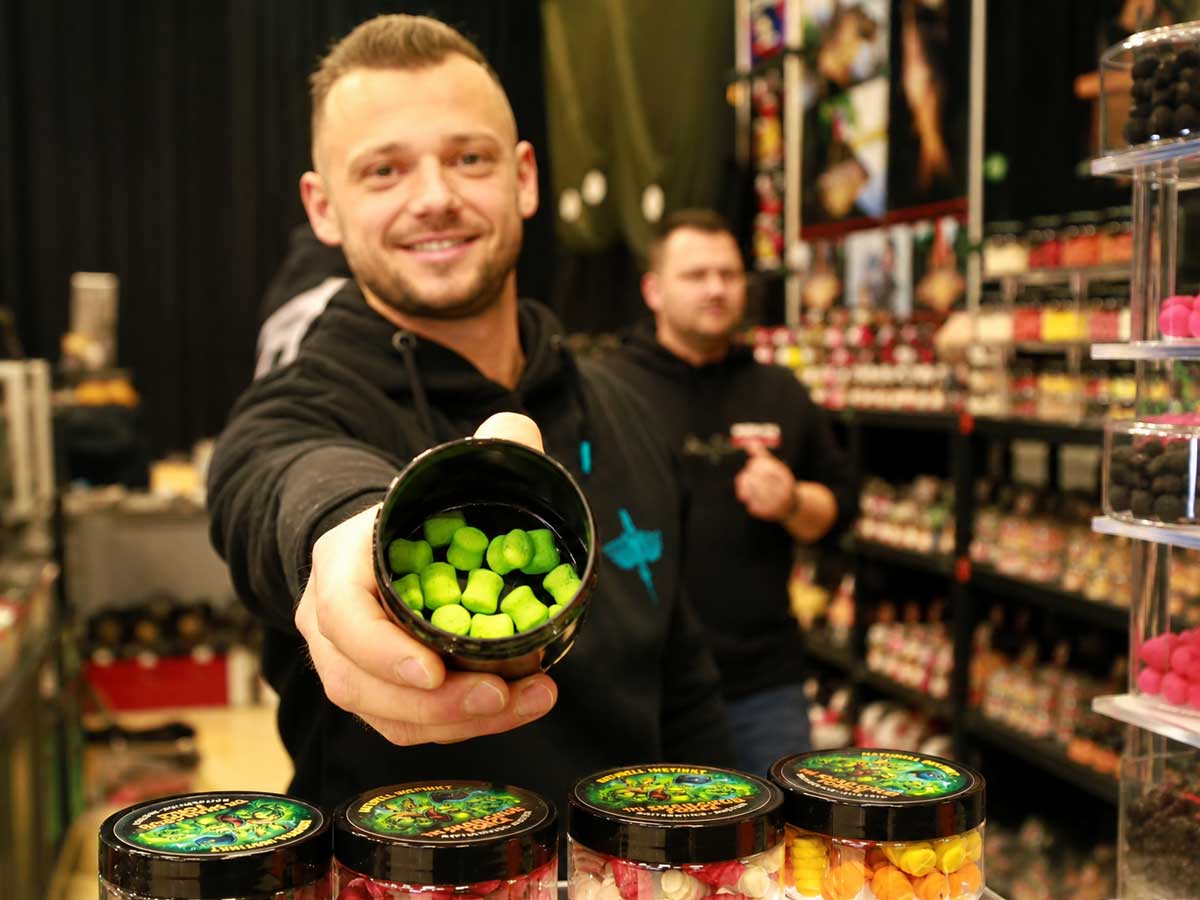
You should not buy Pop-Up Boilies from a photo alone. You hold them in the light, check colour and UV activity, smell the flavour, look at the surface and size, and ask about buoyancy, hardness and durability. At Carp Austria — Austria’s major carp and fishing show — you can compare Pop-Ups, wafters, boilies, hookbaits, liquids and modern carp baits directly.
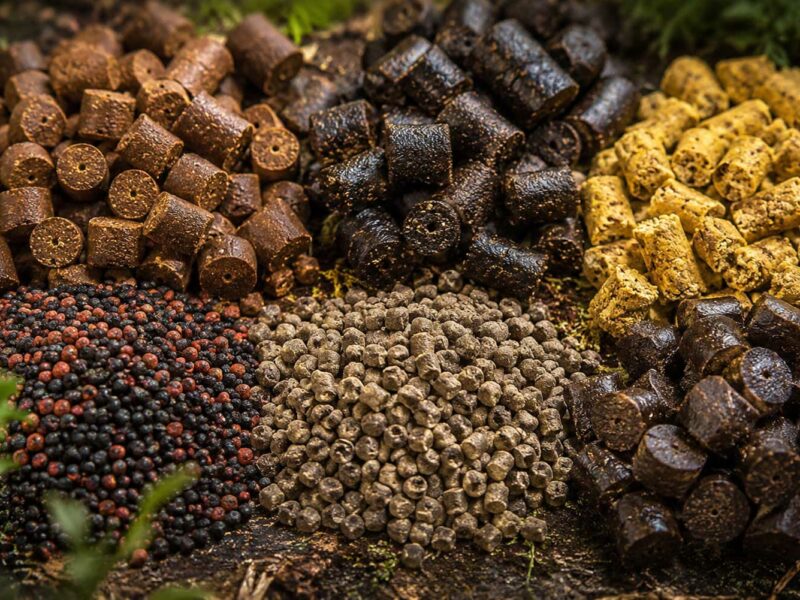
Depending on the current exhibitor list, you will find suppliers from the areas of boilies, Pop-Ups, wafters, liquids, hookbaits, particle baits, pellets and carp baits at Carp Austria. That is what makes the show valuable for carp anglers: you do not buy only from product photos, but compare baits live and find out faster what suits your water and your strategy.
You can ask directly: Which colour for clear water? How long does the buoyancy last? Which rig does the manufacturer recommend? When is a washed-out Pop-Up better than a bright fluo bait? And which combination suits Snowman, Spinner Rig or Chod Rig?
→ Wafter Boilies – balanced carp hookbaits as a subtle alternative
→ Boilies – ingredients, attractor systems and production
→ Carp Baits – all bait types compared
→ Feeding Boilies – what really belongs in good feed
→ Boilie brands at Carp Austria
Scientific Sources
Whitmore, A.V. & Bowmaker, J.K. (1989) — Seasonal variation in cone sensitivity and short-wave absorbing visual pigments in the rudd, Scardinius erythrophthalmus. Basis for short-wavelength and UV-near perception in cyprinids.
Neumeyer, C. (1992) — Tetrachromatic color vision in goldfish: evidence from color mixture experiments. Evidence for complex colour vision in cyprinids.
Klefoth, T. & Arlinghaus, R. (2013) — Work on angling pressure, catchability and learning behaviour in carp. Relevant for cautious fish, bait avoidance and behavioural change under fishing pressure.
Arlinghaus, R. & Meyer, J. (2002) — Contributions on attractor hierarchy, attractor systems and the influence of colour, texture and bait acceptance in carp.