What is the best carp bait?
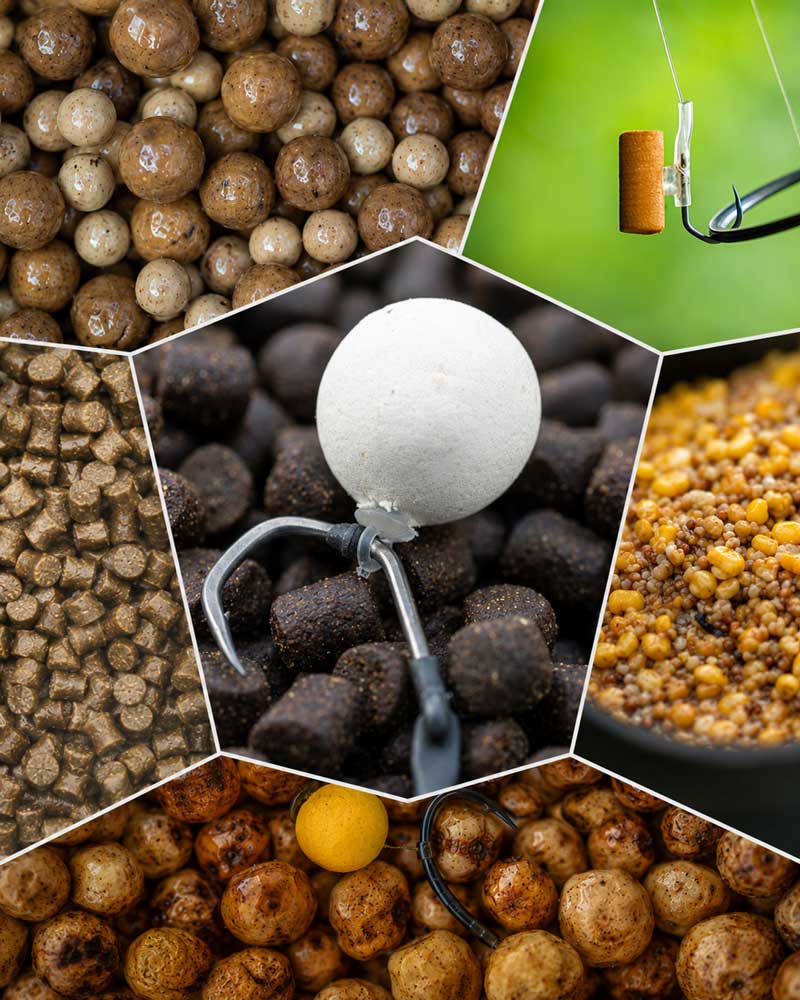
The honest answer: there is no single best bait. There is the right bait at the right time on the right water. Boilies, pop-ups, wafters, particle baits, pellets, paste, boilie chops, natural baits and Zig Rigs do not work by chance — they trigger carp in different ways.
This guide explains the most important carp baits from a practical angling perspective: when they work, why carp respond to them, which season matters most and which strategy still produces bites on heavily pressured waters.
The most important carp baits at a glance
Why carp react to bait in the first place
An important principle before choosing bait: carp do not have a true stomach like predatory fish or mammals. Food moves directly into the intestine. Bile supports fat digestion, but there is no strong acidic stomach environment that breaks down difficult ingredients. Anything the gut cannot process enzymatically is excreted or becomes unnecessary load for the fish.
The consequence for bait choice: digestibility matters more than a high protein percentage on the label. A highly digestible bait with moderate protein can outperform a heavy, poorly digestible bait with an extreme protein value.
The 5 factors — why carp take or reject a bait
For a carp to take and keep a bait, several signals must work together. In practice, five factors are especially important:
1. Appearance — size, shape and colour. Carp learn through experience. If a bait is repeatedly encountered as safe food, confidence can build. This is the idea behind bait DNA: a bait is used consistently over weeks or months until carp accept it as a reliable food source.
2. Smell — a long-range signal in water. Carp detect water-soluble compounds through chemoreceptors. Amino acids, hydrolysates, extracts and soluble food signals are especially important. Oil-based flavours work differently: they may create a slick, but in cold water they are much slower and usually less effective than soluble attractors.
3. Feel / texture — a bait that is too hard or unnaturally heavy can create resistance during suction feeding. Mechanical receptors in the mouth help carp distinguish food from foreign objects. A balanced wafter or softer hookbait feels more natural and is often inhaled deeper.
4. Taste — smell brings the carp to the bait. Taste and mouthfeel decide whether it keeps the bait or ejects it. Natural palatants from mussels, worms, crayfish, liver, yeast or fishmeal are valuable because they sit closer to natural food than simple synthetic flavours.
5. Hunger level — the underrated factor. A hungry carp accepts more risk. A full carp becomes selective. Heavy baiting can reduce bites even when fish are present. They may still be on the spot, but they are no longer feeding actively and only pick individual items.
Attractant, stimulant and palatant — three different mechanisms
Many anglers simply say “attractor”. Good carp baits work on several levels:
Attractant — distance effect. Water-soluble compounds leach from the bait and create a chemical trail. GLM, krill hydrolysate, CSL, liver extract and fish hydrolysates can make carp aware of the bait from distance.
Stimulant — close-range feeding trigger. Free amino acids, betaine and soluble peptides can support feeding behaviour once the fish is near the bait.
Palatant — acceptance in the mouth. Natural extracts from food that carp already recognise — worms, mussels, crayfish, liver, yeast and fishmeal — make a bait more credible. This level often decides whether the carp keeps the bait.
In practice, carp baits work best when they combine several levels: soluble attractors for distance, feeding stimulants for the close range and natural palatants for confidence in the mouth.
Boilies – the universal bait of modern carp fishing
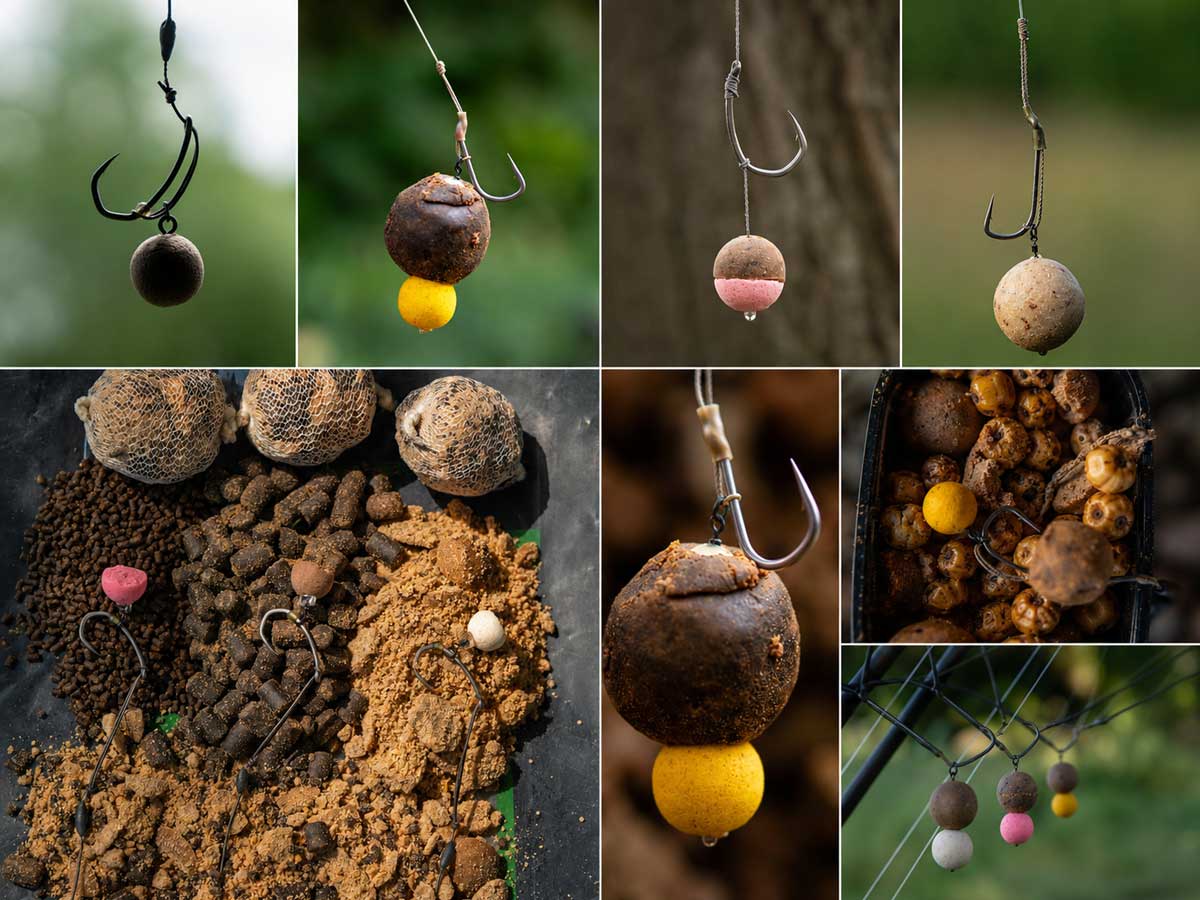
The boilie revolutionised carp fishing in England in the 1970s. Hard enough that small fish cannot destroy it immediately. Nutritious enough that carp actively search for it. Versatile enough to be used in almost every season and on almost every water.
- HNV boilies / High Nutritive Value — LT fishmeal, krill meal, GLM, liver extract and quality proteins. Strong for long-term baiting and big carp. Used consistently, they can build bait DNA and confidence over time.
- Birdfood boilies — birdfood base, porous structure and fast leakage. Useful for instant sessions without an established baited area.
- Milk protein boilies — casein, lactalbumin and milk-based ingredients. Highly digestible, creamy-sweet and especially interesting for winter and spring.
- Fruit boilies — sweet profiles, bright colours and fast attention. A summer classic for actively feeding carp.
- Fishmeal boilies — marine profile, protein, amino acids and strong attraction. Powerful in autumn when carp are actively building reserves.
Boilie sizes: 10–14 mm for winter, spring and cautious carp. 16–20 mm as an all-round size. 20–24 mm for selective big-carp fishing and against nuisance species.
→ Read more about ingredients, attractor systems and production in the complete boilie guide.
Boilie Chops – instant attraction through more surface area
Boilie chops are not a separate bait type, but a processing style. The boilie sausage — the cylindrical dough before rolling — is cut into irregular pieces before boiling instead of being rolled into round balls. The result is a mix of cylindrical and irregular pieces with rough, open cut faces.
The key advantage over round boilies: more surface area. A round boilie releases attractors more slowly through its outer skin. A chop works more aggressively through the open cut face. Different piece sizes also create different breakdown phases: small fragments work quickly, larger pieces keep working for longer.
When boilie chops make the difference:
- Short sessions without pre-baiting — instant leakage compensates for the lack of baiting history.
- PVA bags and stick mixes — chops fill the PVA bag better than round boilies and release attraction directly around the hookbait.
- Spod mix booster — chops combined with hempseed, sweetcorn and pellets create a baited area with fast and longer-lasting activity.
- Combined with whole boilies — chops draw carp in, while whole boilies remain as selective hookbaits.
Make them yourself: cut the boilie sausage into 1–3 cm pieces before boiling, then boil them like normal boilies. Alternatively, chop finished boilies roughly with a knife or scissors. The cut surfaces open the structure and immediately increase leakage.
Pop-Up Boilies – a hookbait for big carp
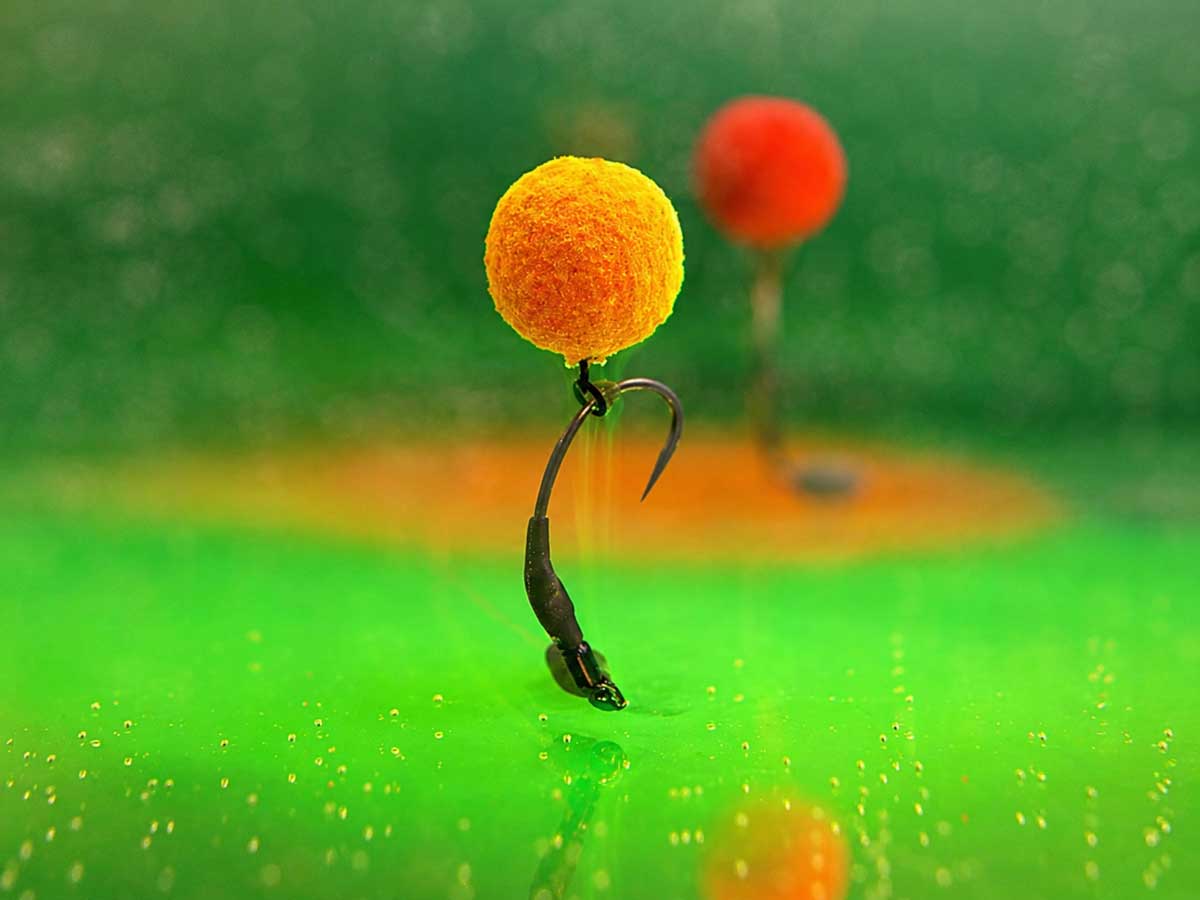
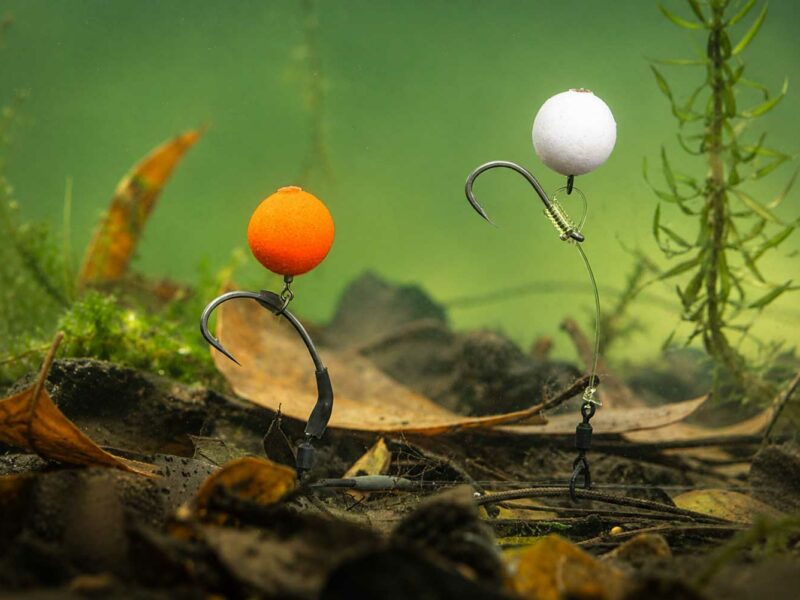
A pop-up boilie floats. Cork dust, buoyant ingredients or a special mix make it lighter than water. Balanced with a small shot or putty, it sits a few centimetres above the lakebed.
Why pop-ups often catch big carp: large, old carp often inspect baited areas carefully. A pop-up sits above silt, weed or loose feed, is visually obvious and can be easier to inhale when the rig is balanced correctly.
Colour strategy by situation:
- Clear, deep water: bright colours such as pink, yellow or chartreuse can give extra visibility.
- Green or coloured water: yellow and pale tones create strong contrast.
- Heavily fished venues: washed-out colours such as beige, off-white or muted yellow often look more natural.
- Shallow clear water: natural tones and subtle presentation often beat aggressive signal colours.
When pop-ups are especially strong: silty or weedy lakebeds, pressured waters, deep areas, snowman rigs, chod rigs and situations where the hookbait should sit visibly above the feed.
Zig Rig – the mid-water bait
Carp are not always on the bottom. On sunny spring days, calm summer evenings or during temperature and oxygen layers, they often hold in the middle or upper layers of the water. The bait is on the bottom, but the fish are above it. The Zig Rig solves that problem.
The principle is simple: the lead rests on the bottom. A long hooklink holds a buoyant hookbait at the chosen depth. The Zig Rig is not a bottom-bait system, but a mid-water system that targets the layer where carp are actually sitting.
Zig Rig baits — what works
- Zig foam — the classic. Black, yellow or black-and-yellow. It does not imitate one exact food item, but triggers curiosity and attention.
- Small pop-ups — useful when you want scent or taste alongside visual attraction.
- Bread — strong for surface fishing and shallow Zigs just below the surface.
- Foam with maggot-style imitation — artificial maggots or larvae-style additions can work in difficult situations.
When and how to use a Zig Rig
The right depth is everything. Mid-water carp often sit on a specific depth line. The wrong hooklink length produces nothing. The right depth can trigger action immediately. Start at half depth and adjust until bites come. An adjustable Zig allows depth changes without rebuilding the rig.
Technical notes: use a lead-clip setup rather than a fixed rig, a long hooklink made from Zig material or fluorocarbon, a light hook and a small hookbait. No big baited area is needed — the Zig Rig is a single-hookbait system that uses curiosity, opportunism and the correct water layer.
Best conditions: sunny spring days, visible carp in mid-water, shallow warm zones, calm summer phases, deep lakes and any situation where bottom baits are being ignored.
Wafters – the underrated hookbait
A wafter is critically balanced. It almost counterbalances the weight of the hook and sits more naturally on the lakebed than a heavy bottom bait. For carp that feed by suction, this matters. Less resistance means the bait is inhaled deeper, the hook turns more easily and the hook hold becomes more reliable.
Best for: soft lakebeds, cautious carp, pressured waters, small baited spots and any situation where the hookbait should sit naturally among the free offerings.
Boilie dough and paste – instant attraction cloud
Boilie dough is uncooked boilie mix: soft, mouldable and fast-leaking. Paste is wrapped around a hookbait. The outside dissolves and creates an immediate attraction cloud, while the boilie or wafter inside keeps working.
Why paste is so effective: it releases soluble ingredients quickly. In cold water or with cautious fish, this immediate activity can be more important than a hard, slow-working hookbait.
Best for: cold water, spring, autumn, difficult venues, short sessions and situations where fish are present but ignore hard baits.
Cookies and specialist shapes — Austrian manufacturers such as Carp’s Kitchen develop their own paste and pellet-style forms such as cookies: flat, pressed baits that dissolve slowly and create a steady attraction cloud. Other variants include Decision Sticks from MM Baitservice, dumbbell paste or snail-like shapes.
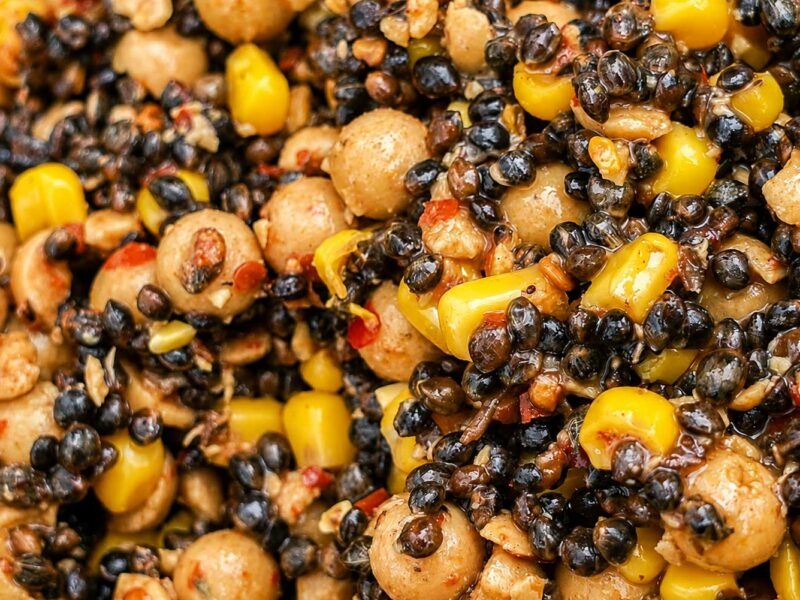
Particle baits – tigernuts, hempseed, sweetcorn and more
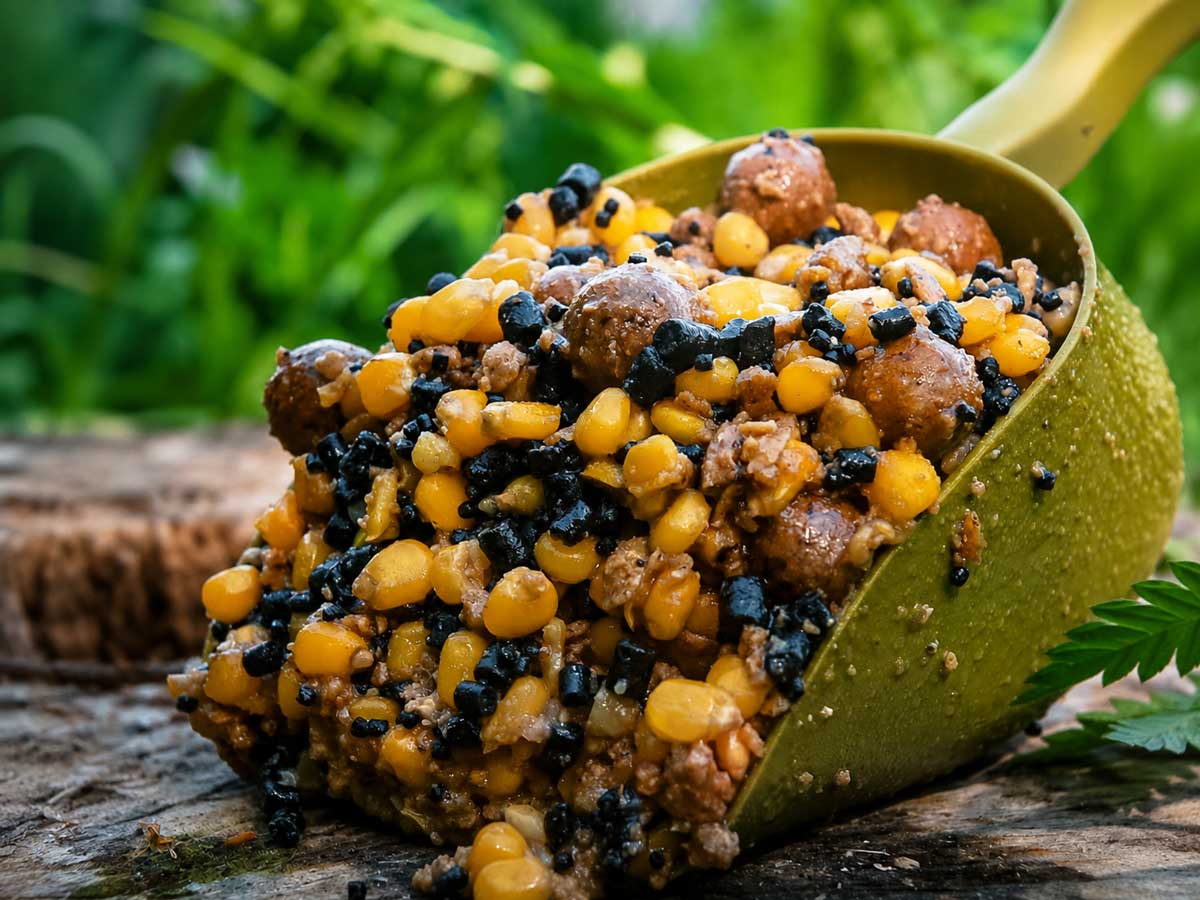
Particle baits are among the oldest and most reliable bait groups in carp fishing. No complicated chemistry, just natural grains, seeds and nuts that appeal to carp through taste, texture and feeding behaviour.
Tigernut — sweet, nutty taste, hard crunch, crayfish-resistant and successful for decades. The cracking sensation is close to natural food such as mussels and snails.
Hempseed — the long-hold magnet. Nutty natural profile, small particle size and plenty of searching activity on the spot. Hemp keeps carp occupied for a long time and works especially well with sweetcorn, boilies and pellets.
Sweetcorn — cheap, visible, sweet and ready to use. The liquid from the tin is an underrated dip for boilies, particles and hookbaits.
Snails and mussels — natural food. On venues with a natural stock, they can trigger carp very directly because they belong to the fish’s normal food spectrum.
→ Read more about particle strategies, fermentation and preparation in the particle bait guide.
Fermented hookbaits – natural ripeness instead of artificial scent
Maize, tigernuts, wheat or boilies can develop a completely different profile through fermentation. During the process, organic acids, free amino acids and soluble compounds are created and become quickly detectable in water. For carp that search the sediment for food, this mature, slightly sour signal can be highly attractive.
Fermented maize is a classic: sweet-sour smell, softer texture and good presentation on a hair rig. No synthetic flavour fully imitates this profile.
→ Fermentation with brine, sugar, sprouting and all particle details are covered in the particle bait guide.
Pellets – Halibut Chunks and Amino Pellets
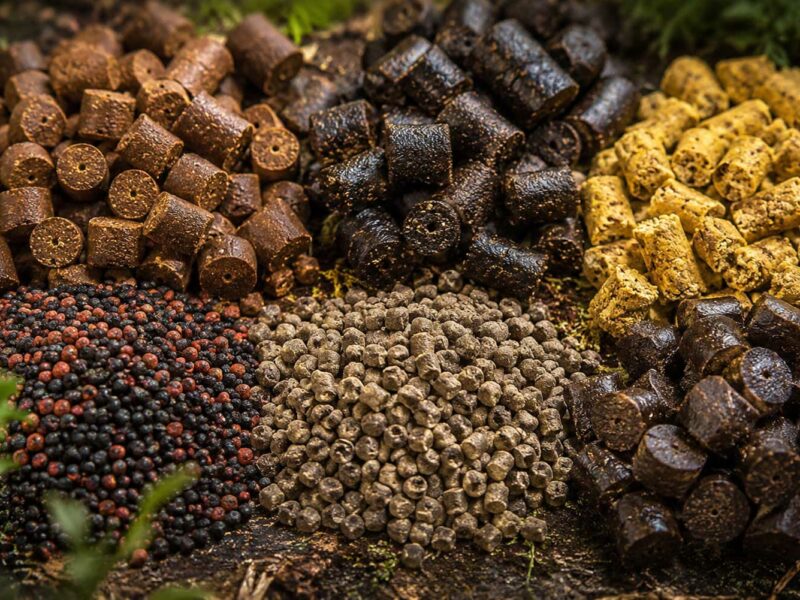
Pellets are compressed food bodies made from fishmeal, protein meals, cereals or plant-based ingredients. Their strength is breakdown: small pellets work quickly, large pellets or chunks last longer. Combining several sizes keeps a baited area active for longer.
Halibut Pellets / Chunks — halibut pellets are oil- and protein-rich. Larger chunks can be used as hookbaits and last longer on a hair rig than small pellets. In warm water, they create a powerful, steady marine attraction.
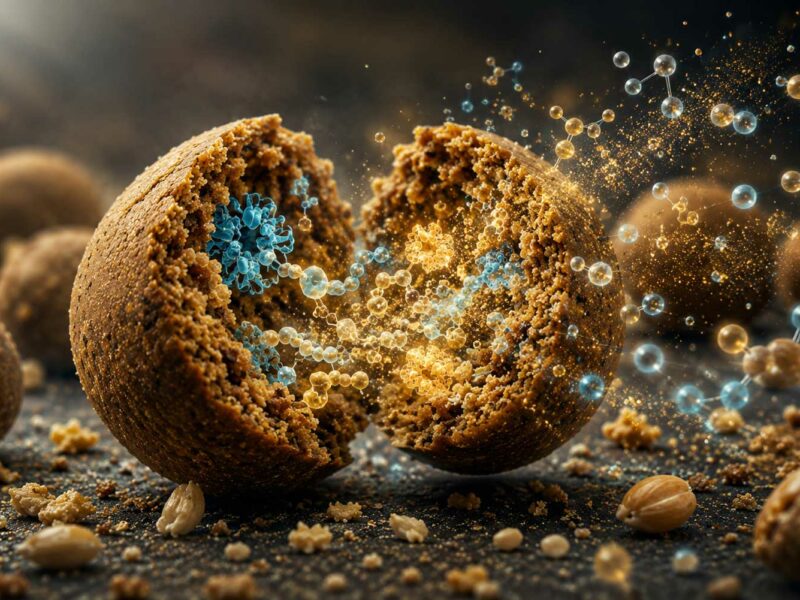
Amino Pellets — pellets with a high level of free amino acids, peptides or hydrolysates. Once dampened, they become sticky and can partly be formed into paste. In water, they break down quickly and create a soluble attraction cloud.
Micro pellets in boilie mix: small pellets inside a boilie mix can open the structure and speed up attractor release.
Pressed particle baits as a PVA alternative — cookies from Carp’s Kitchen or Decision Sticks from MM Baitservice — can be mounted directly on the hooklink and dissolve close to the hookbait. More in the particle bait guide.
Sweetcorn – the underrated classic
Tinned sweetcorn is one of the most reliable and affordable carp baits. Carp respond to its colour, sweetness, soft texture and familiar food signal. For beginners, short sessions and summer fishing, corn remains extremely effective.
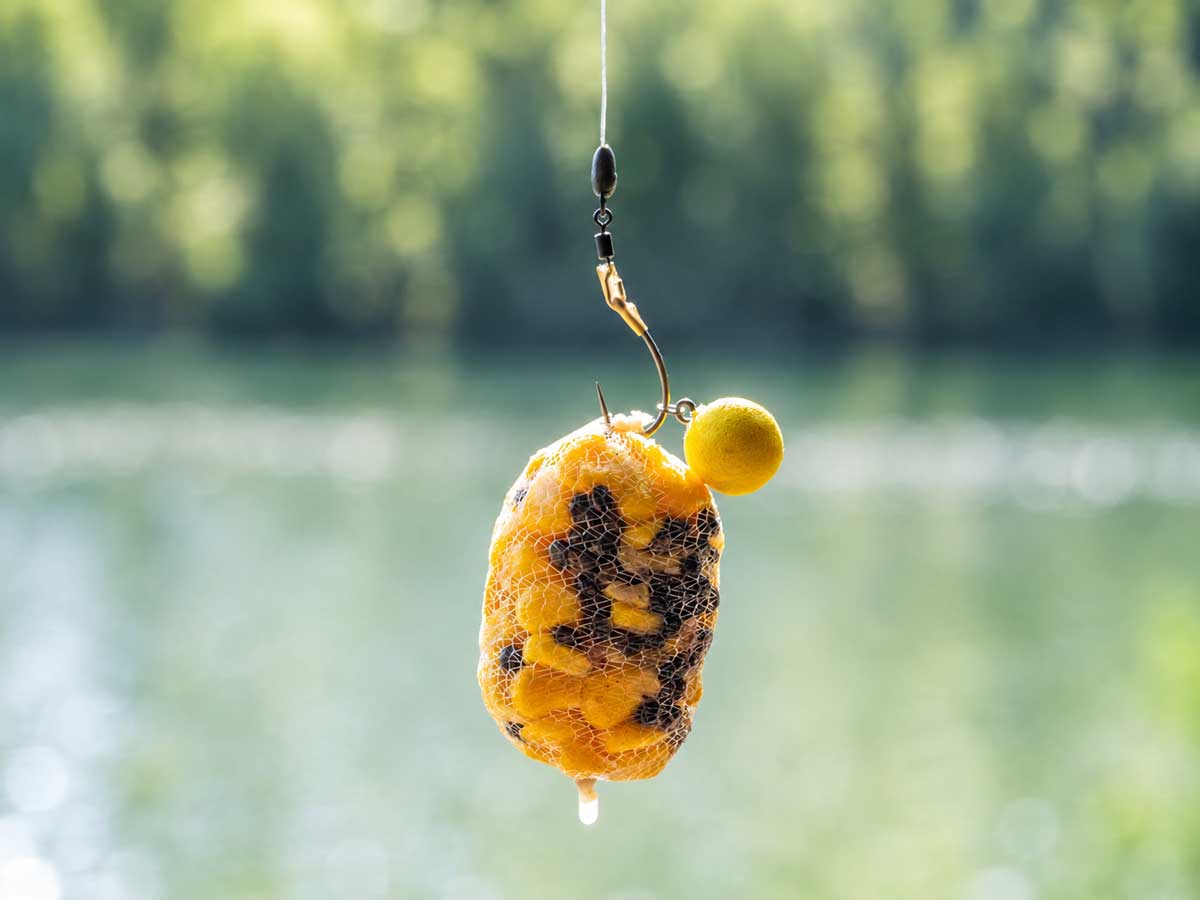
The liquid from the tin is a simple free dip. Soak boilies, particles or hookbaits briefly in the corn liquid to add a sweet attraction trail directly around the bait.
Presentation: a single grain on a hair rig, two to three grains, combined with a boilie as a snowman or used as part of a PVA bag. In summer, sweetcorn with hempseed and pellets is one of the simplest and most reliable baiting mixes.
Limitation: on heavily fished waters, big old carp know corn well. Variations such as garlic corn, curry corn, salted corn or combinations with tigernut, wafter or fake corn can then make the difference.
Carp in pay lakes – different rules
A pay lake is not a normal lake. High stock density, regular angling, bait pressure and repeated capture experience change carp behaviour. Standard baits often work for a shorter time because fish quickly learn to avoid certain patterns.
- Unusual flavours — spice notes, mussel, garlic, liver or fermented profiles can outperform standard flavours.
- Natural baits — worms, snails and sweetcorn are harder to associate with danger than highly standardised boilies.
- Maggots — a classic natural bait for carp, especially in spring and for difficult fish.
- Single hookbait without loose feed — one bait in an unexpected place can beat another obvious baited spot.
- Washed-out colours — subtle beige, cream and brown tones often look more credible on pressured waters than aggressive signal colours.
On difficult days, one bait still often brings bites: worms. No synthetic flavour, no typical boilie pattern, natural movement and a familiar palatant. In winter and early spring, a single lobworm on a hair rig can beat many standard baits.
Artificial baits – the problem solvers
Fake Corn helps when crayfish, signal crayfish or gobies destroy natural baits. Silicone imitation corn is durable, crayfish-resistant and stays on the hair rig for a long time. It becomes especially strong when combined with real corn or nearby particles.
Bait Protector physically protects the hookbait from crayfish and small fish. A mesh or protective material is pulled over the bait without completely changing the presentation.
Carp bait by season
Golden autumn – big fish time
The nights are getting cooler, but the water is not cold yet. Carp feed heavily now to build reserves. Natural protein sources are often reduced after summer. A quality fishmeal boilie with krill meal, liver extract or other natural protein sources fits very well with what many big carp are looking for.
The high-summer oxygen problem: on calm, hot days in shallow, weedy lakes, oxygen levels can fluctuate strongly. At night, plants consume oxygen, and just before dawn carp may stop feeding. Better choices are windward banks, inflows, deeper water or periods after rain and thunderstorms.
Mirror carp vs. common carp — which one bites when?
Studies on catchability show that different carp forms and individuals can react differently to angling pressure. Mirror carp are sometimes considered easier to catch in studies because they may feed more actively and take more risks. In cold water, robust common carp can remain active for longer.
Carp bait by venue type
Old gravel pits and quarry lakes — often rich in mussels. GLM-based boilies, particles and mussel profiles fit well. Feed small amounts consistently rather than dumping large quantities at once.
Deep lakes and excavation lakes — bright pop-ups for deeper areas, Zig Rigs when carp are in mid-water and a few precise baited spots instead of widespread baiting.
Rivers such as the Danube, March or Drava — hard, crayfish-resistant baits. Large boilies, fake corn, tigernuts and robust rigs for current, gobies and crayfish. Expect occasional catfish by-catch.
Heavily fished club waters — individual recipes, subtle colours, single hookbaits, natural baits and bait DNA built over time. Natural palatants such as worms, mussels and snails are especially valuable here.
Angling pressure and learning – what works when nothing bites
Carp can learn from angling experience. They react to hooks, line pressure, baited areas, obvious baits and recurring patterns. This is why some fish become extremely hard to catch on pressured venues — not because they do not feed, but because they avoid dangerous situations.
What helps against learned avoidance: night fishing, subtle presentation, Zig Rigs, single hookbaits in unexpected places, natural palatants instead of standard flavours, rig changes and less bait pressure.
Austria’s biggest carp bait selection — Carp Austria
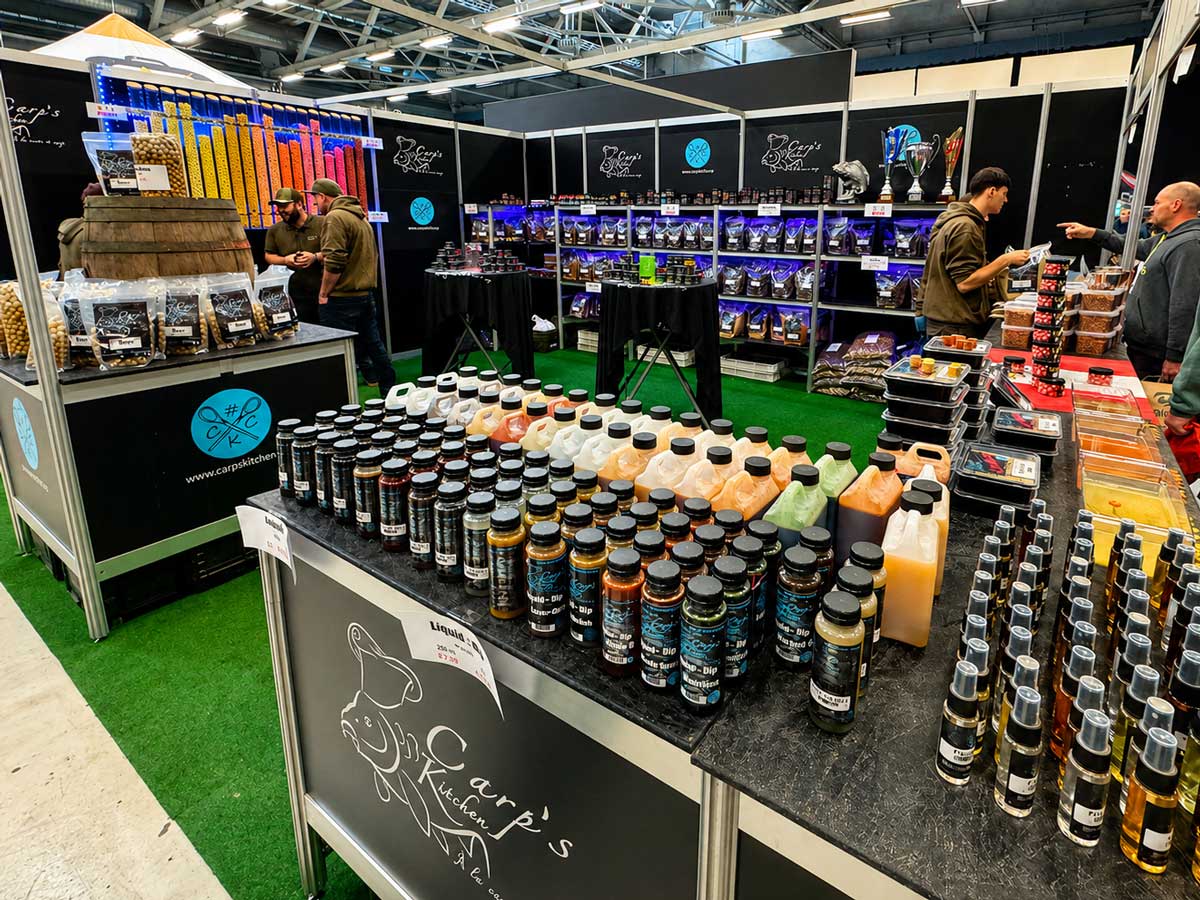
You do not choose carp bait by photo alone. You smell it, feel the texture, compare ranges side by side and ask the manufacturer directly what works when.
At Carp Austria in Arena Nova Wiener Neustadt, you can find boilie manufacturers, rolling-service providers, particle specialists, pellet producers, paste makers, liquid specialists and modern tackle brands for carp fishing in one place.
Aquaborne, Aqua Garant, Bait Perfection, Bait Service Straubing, Baitservice Austria, Baitlounge, Boilie Academy, CC Moore, Carp’s Kitchen, Dreambaits, Floppy Baits, Hirschbauer Baits, Maximum Baits, Mikbaits, MM Baitservice, M’NATURA-Baits, Nautika Baits, NIKL Carp Specialist, R&M Baits, Red Carp Baits, Supreme Baits, Watercraft Boilies and many more providers present their baits, new products and fair offers there.
Many manufacturers bring fair-exclusive ranges, new boilies, liquids, pop-ups, particle mixes and special hookbaits. Anyone who wants to know which carp bait really fits their venue gets direct comparison and advice from the people who make it.
It is the strongest place in Austria to see, smell, compare and buy carp baits in a single day.
Compare carp baits live
At Carp Austria, you will find boilies, pop-ups, wafters, particles, pellets, liquids, pastes and modern hookbait systems directly from manufacturers and brands.