Particle baits for carp – natural baits with strong attraction
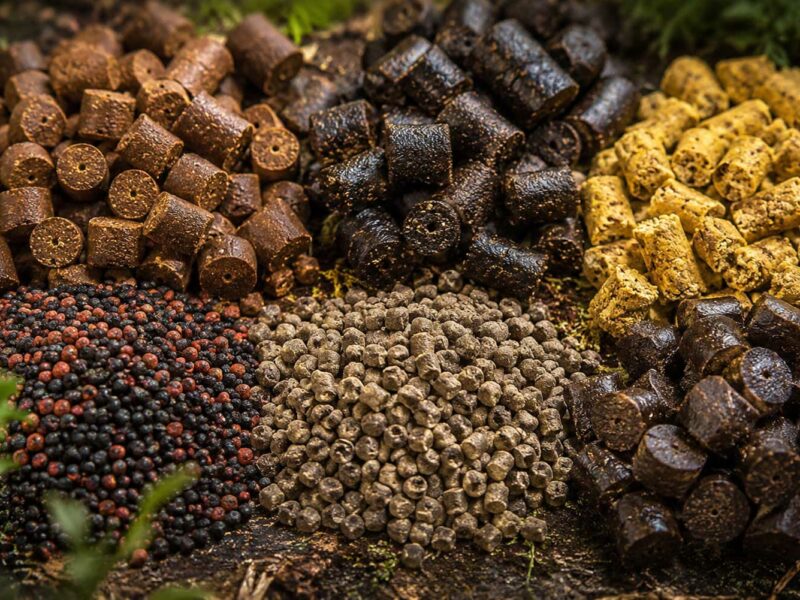
Particle baits are among the oldest and most reliable bait groups in carp fishing. Tiger nuts, hempseed, maize, chickpeas, maple peas, wheat and buckwheat are not artificially built baits, but natural food signals. That is exactly where their strength lies: under heavy angling pressure, carp may become cautious around obvious boilie flavours, while natural grains and seeds often remain much more familiar.
This guide explains which particles are genuinely useful, how to prepare them safely, when fermentation makes sense, which particles work as hookbaits and which rules matter for fish welfare. The key distinction: normal cereals are not automatically dangerous if they have not been boiled. Certain beans and legumes, however, require much stricter preparation.
What are particle baits – and why do they work so well?
In carp fishing, particle baits are seeds, grains, nuts, tubers and legumes used as hookbaits or feed. Unlike boilies, they are usually not industrially constructed baits, but natural food sources from supermarkets, feed merchants, fishing shops or agricultural suppliers.
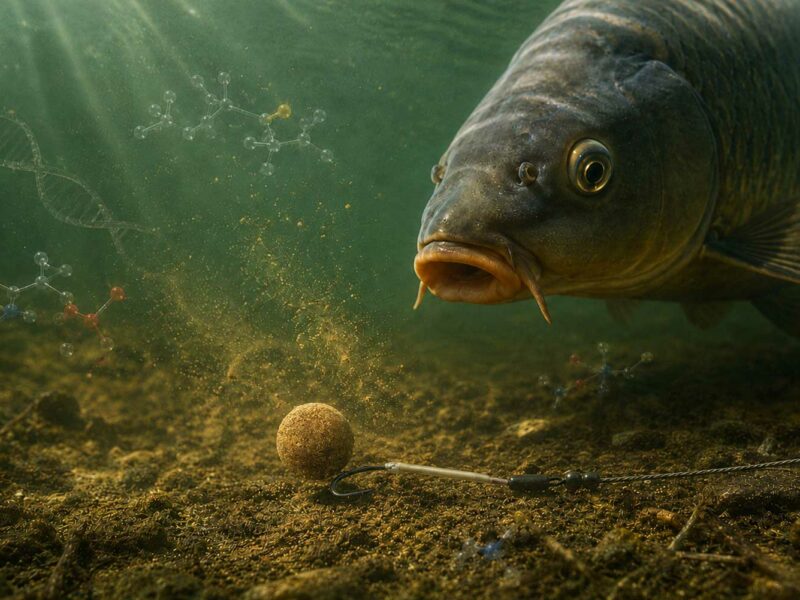
The biggest advantage is the natural food signal. Maize, hempseed, tiger nuts, wheat, snails and mussels resemble food sources that carp know from many waters. A carp can learn from negative experiences with a rig, line pressure or a baited-spot situation. The natural base food itself often remains attractive because it is not as clearly linked to a specific artificial flavour or bait pattern.
The crunch effect – acoustic and mechanical signals
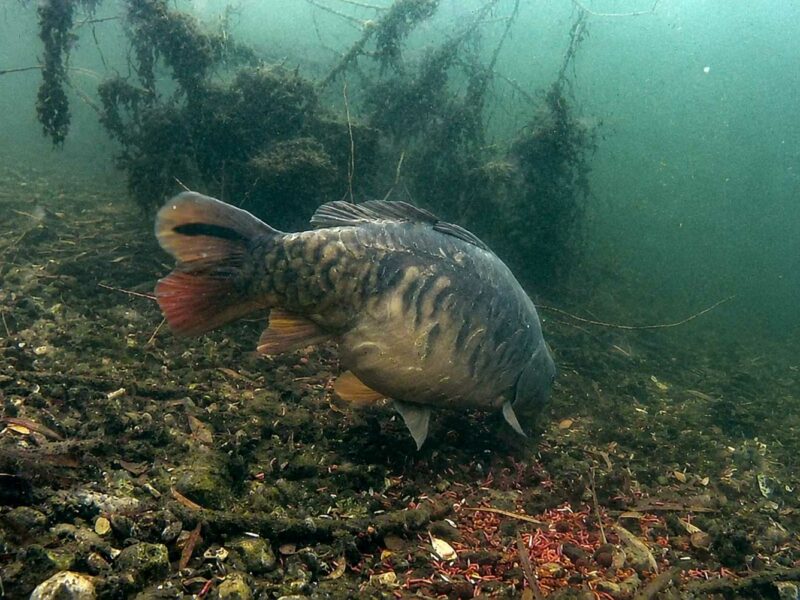
Carp crush hard food with their pharyngeal teeth: mussels, snails, hard grains and tiger nuts. This creates sound and mechanical signals that may be detectable near an active feeding spot. It is not a magic trigger on its own, but another sign of feeding fish and available food.
Tiger nuts, maize, snails and mussels naturally provide this firm structure. Combined with boilies, pellets or a matching hookbait, a carpet of particles can keep a baited spot active for longer than a boilie-only approach.
Particles as a catalyst for the baited spot
Particles are not always the strongest hookbait on their own. Their greatest strength is often the baited spot: they keep carp occupied, release natural signals and encourage the fish to search actively.
- Hempseed keeps carp on the spot for a long time without filling them too quickly.
- Maize is visible, cheap and much more selective than sweetcorn.
- Tiger nuts are hard, resistant to crayfish and strong as a selective hookbait.
- Chickpeas create clouding and absorb flavours very well.
- Fermented particles can release organic acids, free amino acids and intense food signals.
A baited spot becomes especially powerful when particles, boilies, pellets and hookbaits share the same basic signal: for example tiger-nut particles with a nutty wafter, or fermented maize with a slightly sour hookbait.
Overview – the most important particles at a glance
Do cereals have to be boiled or soaked for carp welfare?
The short answer: normal cereals do not have to be boiled to avoid harming carp. Wheat, barley, rye, oats and triticale have long been used as supplementary feed in carp pond farming. Fish farmers do not cook tonnes of cereals before feeding. Economically and practically, that would make little sense.
The important distinction is between fish welfare and feed efficiency. Normal cereals are not automatically dangerous if they are not boiled. Raw, whole or dry grains are simply not always used as efficiently. Carp can use cereals, especially in ponds where natural food is available. Soaking, sprouting, crushing, expanding, extruding or boiling can improve digestibility and feed efficiency.
For anglers this means: if you use small amounts of cereals for baiting, you do not need to boil everything out of fear. If you want maximum attraction, better usability, less waste and more soluble signals, preparation is still useful. Kidney beans, soybeans, horse beans and unsuitable lupins are different — there the issue is not only efficiency, but also problematic compounds.
What fish farming and science show
In traditional carp pond farming, cereals are supplementary feed. They mainly provide energy through starch. Higher-quality protein in near-natural ponds comes largely from natural food: zooplankton, benthos, insect larvae and other animal food sources. That is why cereal feeding in ponds is different from feeding a complete diet in intensive systems.
Studies and practical work on carp nutrition show that carp can use cereals, but raw or whole cereal starch is not always used with maximum efficiency. Mechanical processing such as crushing or grinding and heat treatment such as expanding, extrusion or boiling can make starch more accessible. This does not mean that every unboiled cereal is dangerous. It means processed cereal can be more efficient.
Cereals do not generally have to be boiled for carp, but preparation often makes them more usable.
What does soaking and sprouting do?
Soaking is useful for cereals and particles for three reasons: the grains absorb water, become softer and, under controlled conditions, may begin to swell or sprout. This changes their structure. Starch becomes more accessible, some components dissolve more easily and the feed starts working faster in water.
During sprouting, natural enzyme processes begin. Part of the stored nutrients is mobilised, and the smell, taste and structure of the grains change. Hempseed shows this clearly: when white shoots appear, hemp becomes much more active as feed. With wheat or barley, small root tips show that the grain is biologically active.
For anglers, soaking or sprouting is not just a fish-welfare dogma, but a practical tool. The mix smells stronger, works faster, combines better with liquids, spices or CSL and often becomes more interesting on the baited spot. With small amounts of cereal, you can stay pragmatic. If you want to build a high-quality particle spot, preparation gives a clear advantage.
Tiger nuts – the selective classic
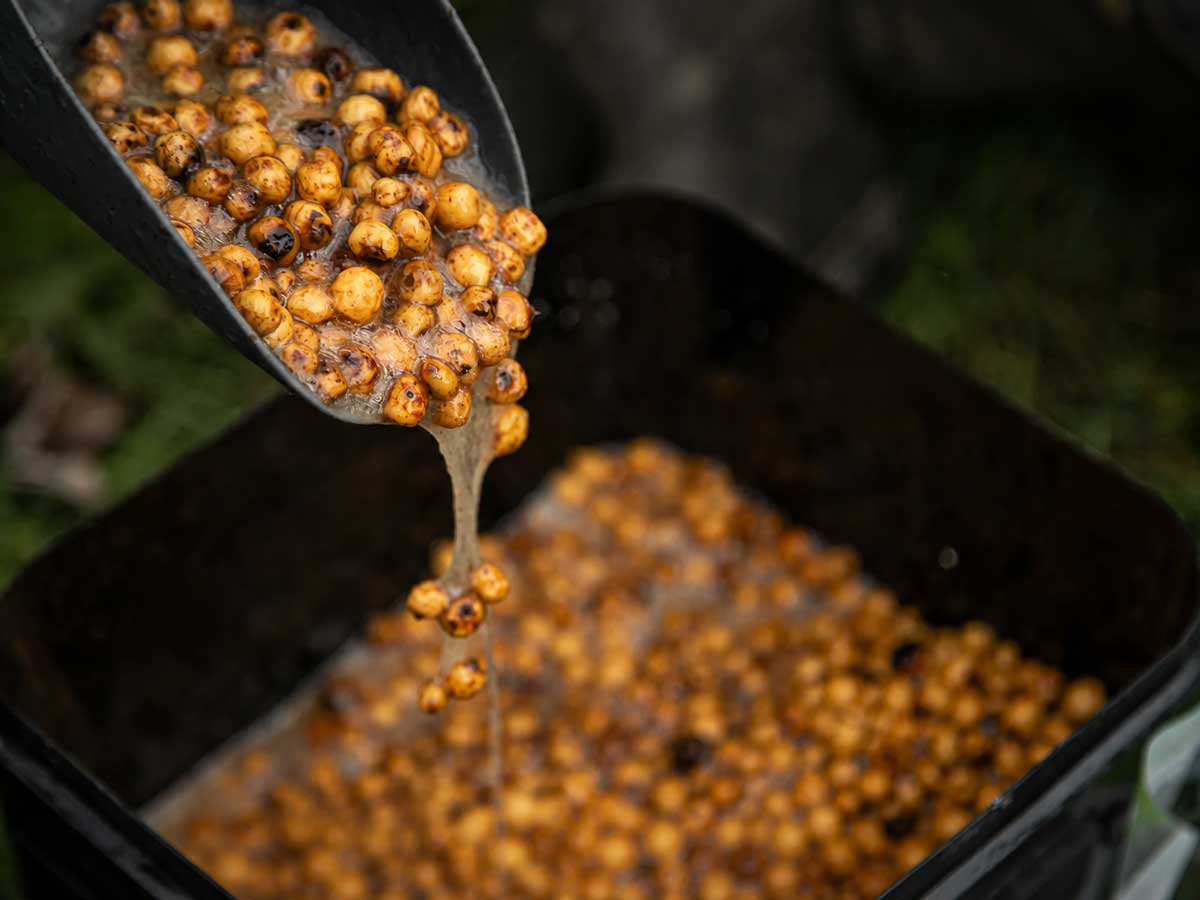
The tiger nut (Cyperus esculentus) is not a true nut. It is the tuber of a sedge plant. For carp anglers it has been one of the most important particles for many years because it is hard, sweet, stable and highly selective.
Why tiger nuts can be so effective
Crunch effect: when a carp crushes a tiger nut, a clear cracking signal is produced. This signal alone does not catch carp, but on an active baited spot it can create extra attention. Combined with other feeding fish, it becomes a natural stimulus.
Selectivity: tiger nuts are much harder than sweetcorn, wheat or many cooked particles. Small silver fish, gobies and crayfish find it harder to destroy them quickly. That is why tiger nuts can be valuable hookbaits on difficult waters.
Consistency: tiger nuts have a fairly neutral, sweet-nutty profile and absorb soaks, spices and fermentation notes well. If you fish the same mix over a longer period, you can build trust on a baited spot.
Preparing tiger nuts
Step 1 — soaking: soak tiger nuts in plenty of water for around 72 hours. They absorb a lot of water, so always use enough liquid. Sugar, molasses or betaine molasses can be added, but they are not essential.
Step 2 — boiling: after soaking, simmer the tiger nuts for 2–3 hours. Check regularly and top up water if needed. Boiling makes them more evenly prepared and easier to use.
Step 3 — cooling: leave them to cool in the cooking water. That water contains dissolved sugars, starch and natural aroma compounds and can be used as a soak or as part of a feed mix.
Fermentation: cooked tiger nuts can be fermented under control for a few days after cooling. A sour, fermented smell is normal. A rotten smell, visible mould or grey-white mould layers are a clear sign: do not use them.
Storage: fermented tiger nuts can keep for a long time if processed cleanly, fully covered with liquid and stored cool. Still, they must be checked regularly. If the smell turns bad, mould appears or the liquid smells rotten, the batch should not go into the water.
Sources: Carp Austria exhibitors, fishing shops, online bait shops, feed merchants and agricultural suppliers.
Hempseed – the long-working baited-spot magnet
Hempseed is rarely the classic hookbait. Its strength is the baited spot. The small black seeds split during boiling and show white shoots. That is usually when hemp is properly prepared.
Why hemp works: hempseed contains valuable oils, mucilage and an intense nutty-earthy aroma of its own. The small seeds keep carp searching for a long time without filling them too quickly. The fish keep turning over the bottom and later take the hookbait more naturally.
A light oil film on the surface can also show that the feed is working. Combined with maize, tiger nuts, pellets or small boilie pieces, hemp is one of the best foundations for a lively baited spot.
Preparing hempseed
Soaking: soak hempseed in cold water for 12–14 hours. Use plenty of water per kilogram, because the seeds swell significantly.
Boiling: bring it briefly to the boil and then simmer until the white shoots visibly appear. Do not overcook hemp, otherwise it becomes too soft and breaks down.
Storage: freshly cooked hemp can be frozen in portions. This is useful when you want fresh hemp available for spontaneous sessions.
As a boilie ingredient: hemp meal or ground hemp can be used in boilie mixes. It adds a nutty profile and opens the bait structure.
Maize and sweetcorn
Maize is one of the best-known carp baits. Still, it is important to distinguish between two forms: sweetcorn is soft, sweet, ready to use and very easy to fish. It catches reliably, but it also attracts silver fish, bream and smaller fish.
Maize is dried feed corn. It is larger, harder, cheaper and more selective. It does not have to be boiled for carp welfare, as cereal feeding in pond farming shows. For anglers, preparation is still useful because soaked or boiled maize works better, swells more, absorbs flavours and releases signals faster on the baited spot.
Bordeaux maize / red maize: red maize is used in much the same way as yellow maize. Its advantage is colour contrast. On a yellow feed carpet, a red grain stands out more and can act as an accent in a particle mix.
Preparing maize
Soaking: soak maize in plenty of water for 24–48 hours. The grains swell significantly, so always use more water than seems necessary at first.
Boiling: then boil for 30–60 minutes until well prepared. Leave it to cool in the cooking water so that dissolved components remain in the liquid. Boiling here is not an absolute safety rule, but a useful optimisation for digestibility, structure and attraction.
Fermentation: maize can be fermented after boiling. A sweet-sour smell is desirable. Mould, rotten notes or musty smells are clear reasons not to use it.
Cracked maize: broken maize pieces release components faster than whole grains. They work well in spod mixes, stick mixes or as a cheap addition to hemp and tiger nuts.
Giant maize: very large grains are highly selective. They are a good choice on waters with lots of bream, where smaller baits are constantly picked off.
Chickpeas – underrated and versatile
Chickpeas are underrated in particle fishing. They sink reliably, are large enough for a hair rig and absorb flavours very well. Compared with tiger nuts they are softer, but they offer a good presentation and visible clouding.
Use the cooking water: chickpea cooking water contains starch and protein and can be visibly cloudy. It can be used in a spod mix or as a soak base with CSL, betaine liquid or spices.
Preparation: soak for 12 hours, then simmer for around 20 minutes. Chickpeas should be soft enough, but should not fall apart.
As a hookbait: chickpeas work well on a hair rig. On waters with a heavy bream population, however, they may be picked off faster than tiger nuts or large maize.
Maple peas – the almost forgotten particle
Maple peas are field or feed peas and have long been known in the English carp scene. In many parts of continental Europe they are used less often. That can be an advantage when carp on a water have seen many standard baits.
Why they are interesting: after boiling and short fermentation, maple peas develop a sweet-nutty, slightly earthy profile. On waters with fewer bream and tench, they can work very well as both feed particles and hookbaits.
Preparation: soak for 12 hours, boil for around 15 minutes and then optionally ferment under control for 2–3 days. Fermentation should smell pleasantly sour, not rotten or mouldy.
Yellow and green peas: other pea varieties can work in a similar way. Different colours and textures add visual variety and curiosity to the mix.
Peanuts – intense natural aroma, but with care
Peanuts have a very intense oily-nutty aroma of their own. Roasted peanuts in particular give a particle mix a distinctive character. Still, they should not be used carelessly or in large amounts.
Raw dried peanuts should be soaked for at least 18 hours and then boiled thoroughly. Roasted peanuts have already been heat treated, but a short rehydration can help if you want to use them as hookbaits.
As a mix ingredient: a few roasted or prepared peanuts in a maize-tiger-nut-hemp mix are often enough. The nutty liquid spreads through the feed. Because of their fat content and digestibility, peanuts are better used as an accent than as bulk feed.
Wheat, barley, rye, spelt and oats
Wheat, barley, rye, spelt and oats are classic cereals in carp feeding. In pond farming they are used as supplementary feed because they are cheap and provide energy. They do not replace natural protein from zooplankton, benthos and other food sources in the pond.
For anglers, the important point is this: these cereals do not have to be boiled for safety reasons. As prepared particles, however, they work better. Soaking softens the grains, sprouting changes the structure, crushing increases the surface area and boiling or heat treatment can make starch more accessible.
After boiling, these grains become slightly sticky. That can help in a spod mix because the mix holds together better. They also absorb flavours, liquids and fermentation notes well. As hookbaits they are usually too soft and too small, but as feed they can be very valuable.
Preparation for anglers: soak for 12–24 hours, then optionally simmer briefly or sprout. Do not overcook, otherwise the grains fall apart. With larger amounts, cereals can also be crushed or combined with coarser particles such as maize and tiger nuts.
Rye brings a stronger aroma of its own, spelt feels nuttier, and oats become softer and can change the structure of a spod mix. All are mainly cheap bases for larger baited spots.
Lupins – use only sweet lupins
Sweet lupins are less common in carp fishing, but they can be interesting. They contain a lot of plant protein and, when prepared correctly, develop a mild, slightly nutty profile.
The distinction matters: use only sweet lupins. Bitter lupins contain much higher levels of alkaloids and should not be used as fishing bait. If bought from feed suppliers, it must be clear which type of lupin you are using.
Preparation: soak for 24 hours, boil for 20 minutes and then optionally ferment under control for 2–3 days.
Buckwheat – the triangular hidden gem
Buckwheat (Fagopyrum esculentum) is not a true cereal, but a pseudocereal. The small triangular grains have a nutty-earthy aroma and are less common in carp fishing than maize, hemp or tiger nuts.
That rarity makes buckwheat interesting. In small quantities it can add a different structure, darker colour and unusual food signal to a particle mix. Fermented buckwheat develops a more intense, spicier profile.
Preparation: soak for 12 hours and simmer for 15–20 minutes. It is available from health-food shops, organic stores and sometimes feed suppliers.
Horse beans – large legumes for the hair rig
Horse beans (Vicia faba) are larger and harder than many other legumes. They are not widely used in carp fishing, which can make them interesting on certain waters.
Like other larger legumes, horse beans should be fully prepared before being used as carp bait. Soaking and hard boiling soften the beans, improve usability and reduce harder-to-digest or antinutritional components. The cooking water should then be discarded.
Prepared correctly, they can work as hookbaits on a hair rig, especially where smaller particles disappear too quickly.
Soybeans – high in protein, but prepare them properly
Soybeans (Glycine max) contain a lot of plant protein and, especially when roasted, have a strong nutty aroma. Raw soybeans should only be used as carp particles after careful preparation.
Raw soybeans contain trypsin inhibitors and are harder to digest. Soak for 24 hours and boil for around 30 minutes. Roasted soybeans have already been heat-treated and can be used after short rehydration.
Kidney beans – dangerous raw or undercooked
Kidney beans are one of the particles where safety matters more than experimentation. Raw or undercooked kidney beans contain phytohaemagglutinin, a lectin that can be problematic for humans and animals. As fishing bait, they should therefore only be used after very careful preparation.
Mandatory rules for kidney beans:
- Soak for at least 12–24 hours.
- Discard the soaking water.
- Boil hard for at least 30 minutes; do not simply warm them through.
- Discard the cooking water.
- Never use raw, undercooked or slow-cooker kidney beans as bait.
Prepared correctly, kidney beans can be an eye-catching large particle. Because of the safety requirements, they are not suitable for careless preparation.
Birdseed mixes – a cheap particle base
Many birdseed mixes contain grains that are also interesting for carp fishing. Pigeon feed in particular can be a cheap base for larger particle amounts.
- Hempseed — often included in good mixes and strong for baited spots.
- Niger seed — very small, oily seeds for clouding and fine particle structure.
- Millet — small, slightly sweet grains, strong in spod mixes.
- Dari / milo / sorghum — small round grains, common in pigeon and particle mixes.
- Safflower — oily seed, often known as cardy in the carp market.
- Buckwheat — dark triangular grains with a nutty profile.
- Wheat, barley, oats — cheap base for baited spots.
- Rapeseed and linseed — small oily seeds for fine feed clouds.
The advantage of these mixes is the different grain size. Small seeds work quickly, medium particles keep the fish occupied, and larger particles remain on the spot longer. This layering makes a baited area come alive.
Cheap base mix: pigeon feed often contains maize, peas, hemp, wheat and milo. It is cheap, versatile and can be used as a base after soaking and optional boiling. Where silver fish are present in numbers, add more selective particles such as tiger nuts or maize.
Boiling or fermenting – what is the difference?
Dry particles work very differently on a baited spot from prepared particles. Starch, hard cell structures and less accessible nutrients are changed by soaking, boiling, light sprouting or fermentation. This does not make every bait better in every situation, but it can increase attraction and usability.
Boiling – fast, safe and controlled
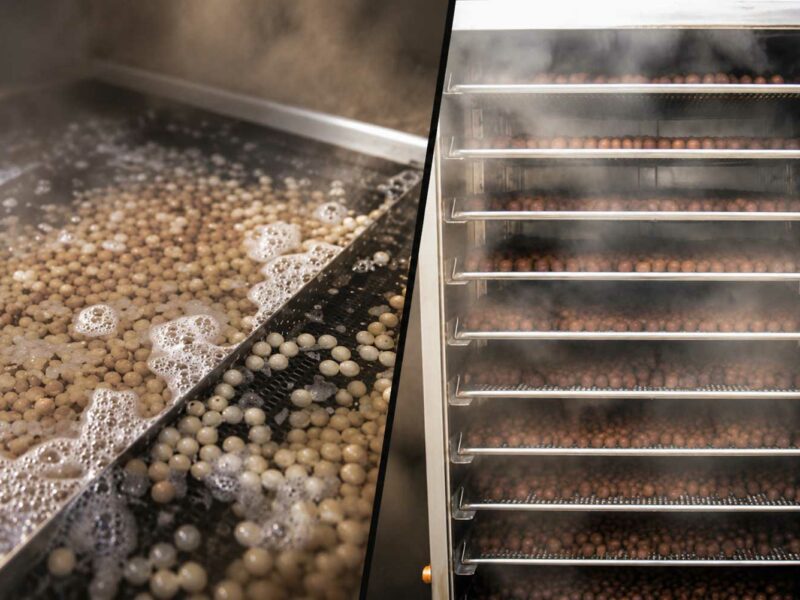
Boiling softens hard particles, makes them easier to use and makes problematic beans safer. At the same time, water-soluble components enter the cooking water. This water is often valuable for spod mixes, soaks or feed applications without PVA.
For short sessions, boiling is the easiest method: soak, boil, cool and store cleanly. With normal cereals, boiling is mainly an optimisation. With problematic legumes such as kidney beans, hard boiling is mandatory.
Fermentation – salt or sugar?
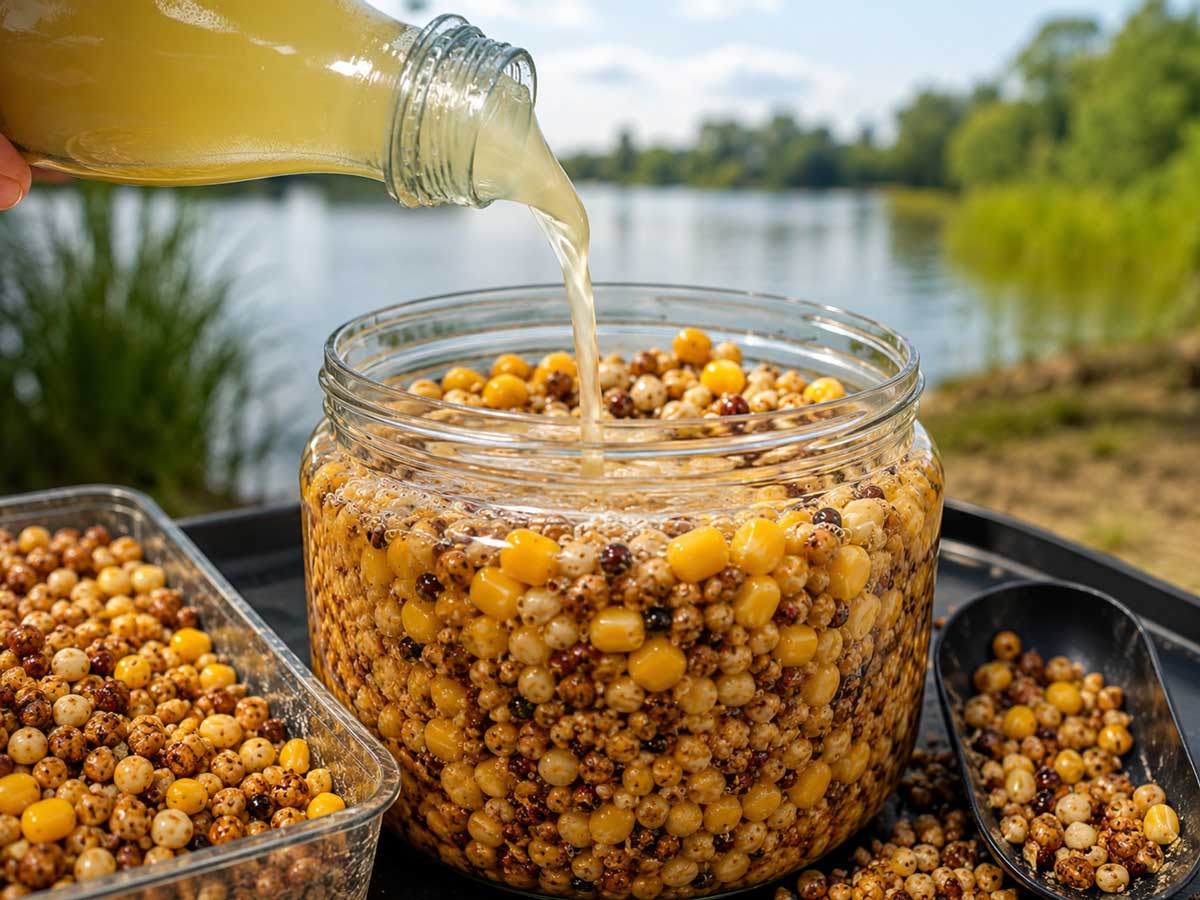
Fermentation changes the character of particles significantly. Organic acids, fermented notes, free amino acids and soluble signals are created. There are two main directions:
Sugar fermentation: sugar, molasses or sweet liquids can promote faster fermentation. The result smells sweet and sour and often starts working after a few days. Shelf life is more limited, so check regularly and store cool.
2–3% brine: brine can support a more stable lactic fermentation and better suppress unwanted rotting processes. This method is especially useful if you want to prepare a quantity for longer use. Even here, the particles must remain fully covered by liquid and must be checked regularly.
Light sprouting – what happens biochemically?
Between boiling and fermentation there is another option: controlled sprouting. When grains start to sprout in warm water, enzymes become active. Part of the starch can be converted into simpler sugars, proteins can become partly more accessible and the smell and structure of the grains change.
- Amylases can break starch down into more accessible sugars.
- Proteases can partly open up proteins.
- Sprouting processes create a more natural plant-based food signal.
White shoots are a good sign with hempseed. With wheat or barley, small root tips may appear. Strongly sprouted or uncontrolled fermented particles can be heated briefly before use to stop further sprouting and unwanted development.
Fermented particles – strong signals from natural fermentation
Fermentation can make ordinary particles much more attractive. During fermentation, compounds are created that carp can detect in the water:
- Organic acids such as lactic acid, acetic acid and, depending on the process, butyric acid.
- Free amino acids and peptides, which are water-soluble and can be interesting to fish.
- Fermented, sour food signals that resemble organic material on the lakebed.
- Changed texture, meaning particles work differently and release signals faster.
Butyric acid is one of the more noticeable signals from fermentation processes. It is not a miracle ingredient, but together with free amino acids, lactic acid, acetic acid and fermented plant material it can create a very interesting profile for carp.
Fermenting correctly
Basic principle: ferment cooked particles in a clean container and keep them fully covered with liquid. The particles must always stay below the liquid level, otherwise the risk of mould increases.
Sugar tip: household sugar speeds up fermentation, but it is not automatically the best attractor. Molasses, betaine molasses or CSL can be more interesting because they add soluble components beyond sugar.
Duration: maize often starts working after 3–5 days, tiger nuts after 5–7 days, while brine-based mixes usually take longer. Temperature, cleanliness, salt level and the raw material strongly influence the result.
Mould or fermentation: good fermentation smells sour, fermented or slightly alcoholic. Mould smells musty, rotten or stale and shows visible growth. Never use mouldy particles.
Boosting with fish sauce: a small amount of fish sauce can add free amino acids, salt and a strong marine profile to the cooking water. Use it sparingly, mix well and do not overdose it.
Boosting particles – increasing attraction with purpose
Freshly cooked particles already work well. With the right additions, however, you can change the character of a mix: more clouding, more sweetness, more acidity, more protein profile or more spice.
Oats: a handful of oats in a particle mix creates a fast cloud. It is cheap, visible and especially interesting in clear water.
Fish oil or fish sauce: fish oil is mainly useful in warmer water. Below about 10°C, oil spreads much less effectively. Fish sauce is more water-friendly, salty, rich in amino signals and can be used sparingly in cooking water or soaks.
Betaine molasses: molasses adds sweetness, dark colour and a fermentable profile. Betaine can be interesting as a feeding stimulant, especially combined with amino acids and natural extracts.
CSL / Corn Steep Liquor: CSL is a fermented maize product with a sweet-sour character. A little CSL in a particle soak can make the mix much more active.
Condensed milk: condensed milk creates a milky cloud and can be interesting in small amounts. It is better for short sessions than for long storage.
Spices: chilli, paprika, Robin Red, garlic, aniseed, fenugreek and cinnamon can give a mix a clear profile. On heavily pressured waters, an unusual spice signal can be an advantage.
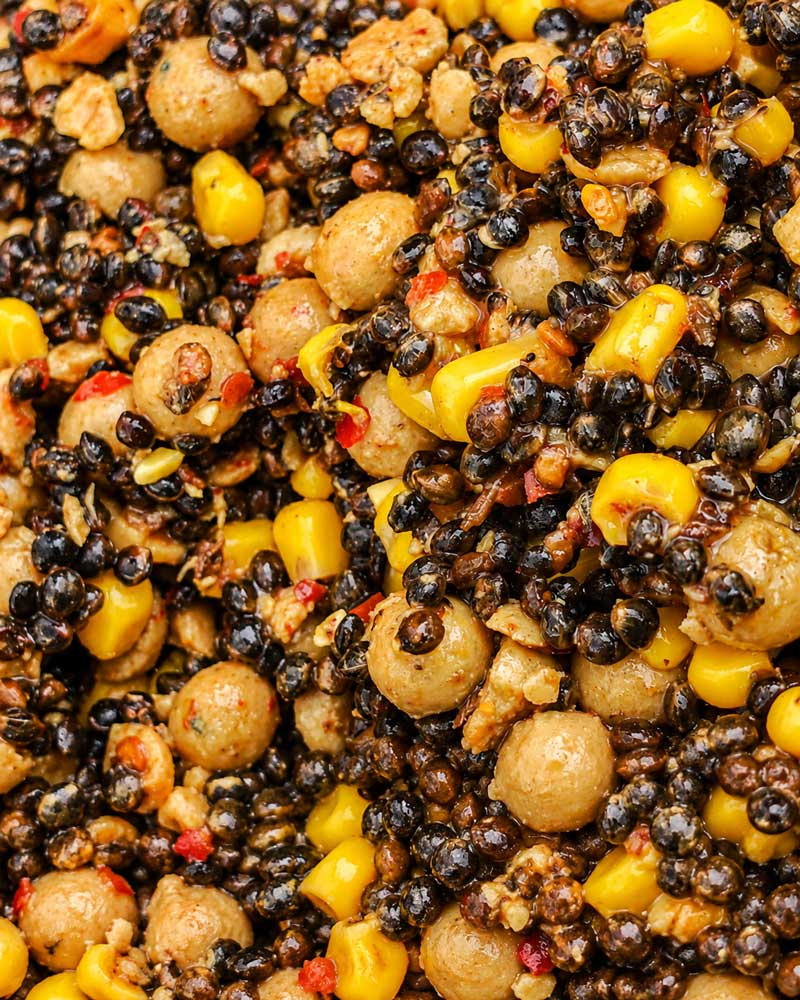
Pellets as a booster: a few halibut pellets, amino pellets or micro pellets in a hot particle mix partly break down and release extra attractors. The result is a mix of firm grains and an instantly active feed cloud.
Baiting with particles – techniques and tactics
The problem: particles do not cast well
Small and light particles such as hempseed, wheat or tiny seeds can only be thrown a limited distance with a catapult or baiting spoon. Wind makes this even harder. For precise long-range feeding, better methods are needed.
Frozen particle bombs: fill a cup with particle mix, add a little weight, top up with cooking water or feed liquid and freeze it. The frozen bombs cast well, sink quickly and release particles and liquid directly on the bottom.
Spod, Spomb and bait boat: for larger amounts and distances over 60 metres, spod, Spomb or bait boat are cleaner methods. The mix becomes especially strong with particles, micro pellets, broken boilies and a little liquid.
PVA bags and PVA mesh: for small, precise amounts of feed directly around the hookbait, PVA is a very clean solution. PVA is a water-soluble material that dissolves after the cast. PVA mesh is best for dry or only slightly damp mixes such as crushed boilies, micro pellets, small particles, stick mix or powdered attractors. Solid PVA bags are useful for compact mini feed packages directly around the rig. Important: PVA does not like wet, water-based mixes if the bag is not used immediately. Oily or explicitly PVA-friendly liquids are more reliable.
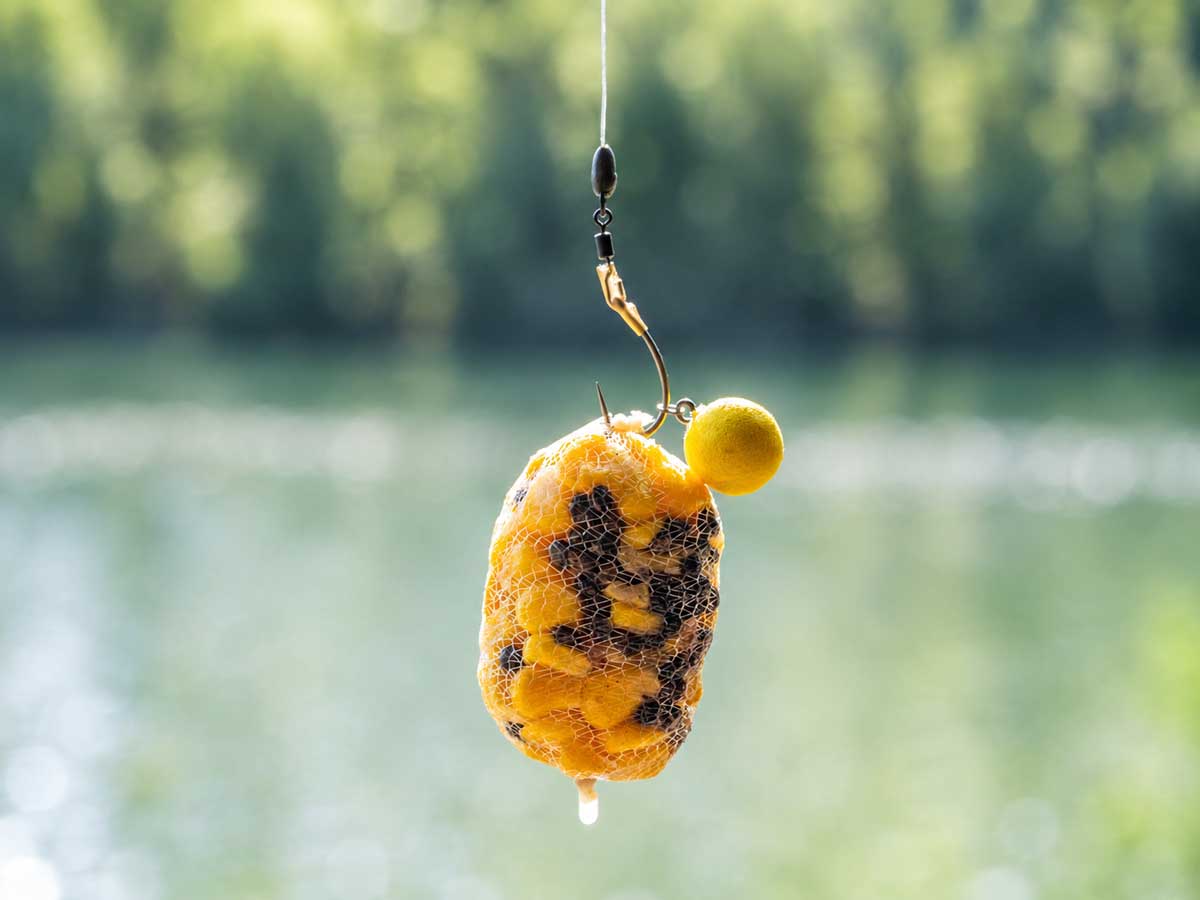
Hidden tip for wet particles in PVA: well-drained particle mixes can work in PVA bags or PVA mesh if they are mixed intensively with normal table salt. The salt binds free moisture and can help prevent the PVA from melting while filling or before the cast. This method is especially interesting for small amounts of maize, hemp, crushed particles or particle-boilie mixes directly next to the hookbait.
Important: the mix must not be dripping wet. First drain the liquid, then add salt, let it stand briefly and always test it on a small piece of PVA. This method is less reliable for longer storage because salt can attract moisture from the air. Salted particle PVA bags are safest when prepared fresh or stored only briefly. For longer preparation, oily or explicitly PVA-friendly liquids are usually more reliable.
Particle-baiting tactics
Wide area or pinpoint feeding: a wider particle area draws fish into the zone and keeps them occupied. Pinpoint feeding directly around the hookbait is useful when you know carp are actively feeding on the spot.
The hookbait in the feed: the hookbait should not lie isolated next to the feed. Carp searching through a particle carpet take a matching hookbait more naturally.
Use the right amount: particles fill carp differently from boilies, but too much is still too much. Once feed is in the water, you cannot remove it. In cold water, low activity or unknown stocks, start smaller.
Combining particles and boilies
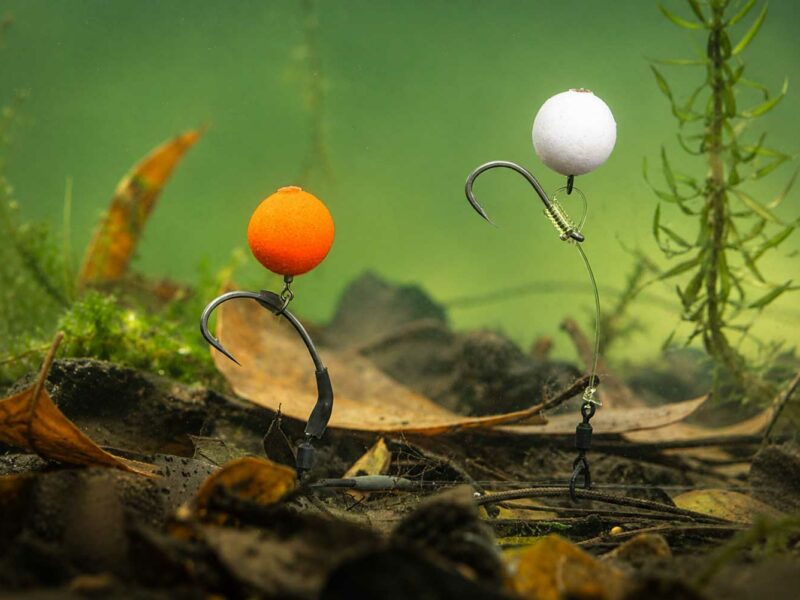
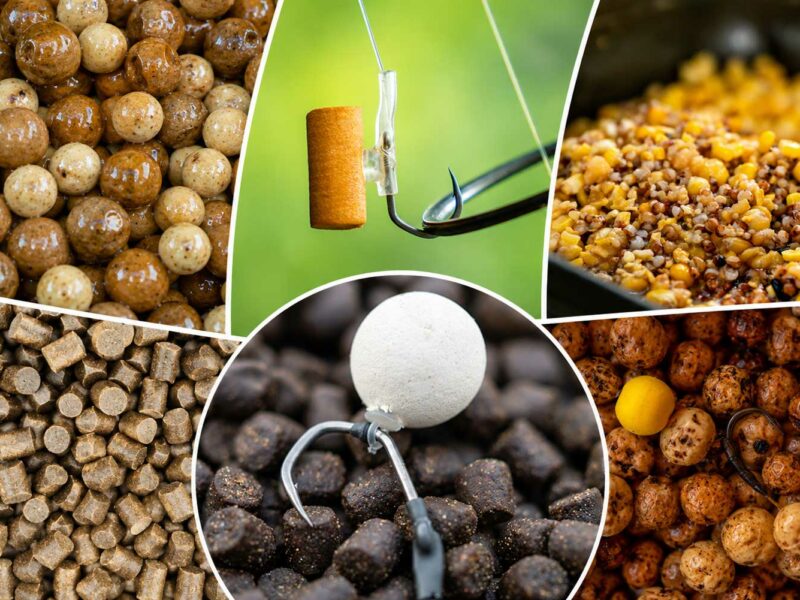
A strong combination is particles as feed and a boilie or wafter as hookbait. The particles keep carp on the spot and reduce caution while they are in feeding mode. The hookbait then appears as part of the food carpet.
A coherent signal profile matters. If you feed tiger nuts, a nutty wafter or tiger-nut boilie fits well. With fermented maize, a sour or buttery hookbait can work. With hemp and fishmeal, liver, krill or fishmeal hookbaits match the profile.
Micro pellets work immediately, larger pellets last longer, and particles keep the fish occupied. This layering keeps the baited spot active throughout the session rather than only for a short burst.
Particles by season and water type
Particles by water type
Gravel pits and old quarry lakes: these often hold mussels, snails and hard natural food. Tiger nuts, shellfish profiles, small amounts of hemp and precise baited spots are often better than large carpets of feed.
Heavily fished club waters: natural particles, subtle colours, fermented versions and less common grains such as maple peas, buckwheat or sweet lupins can be an advantage because they do not look like standard bait.
Rivers such as the Danube, Morava or Drava: hard particles are important. Tiger nuts, large maize, fake corn and robust rigs help against gobies, crayfish and current.
Pay lakes: very high angling pressure changes fish behaviour. A single hookbait, fermented particles, unusual combinations and small precise feed amounts can be stronger than another large standard baited spot.
Basic particle mix recipes
All-round mix for summer and autumn
For most water types, with good selectivity and long activity:
- 50% tiger nuts, boiled or lightly fermented
- 30% maize, soaked, boiled or lightly fermented
- 20% hempseed, freshly boiled
- Optional: molasses, CSL or a little betaine liquid
Autumn protein mix
For autumn, when carp actively build reserves:
- 40% tiger nuts
- 30% fermented maize
- 20% halibut pellets or fishmeal pellets
- 10% hempseed
- Optional: liver extract, fish sauce or krill liquid, used very sparingly
Anti-silver-fish mix
For waters with a heavy bream population:
- 50% giant maize or large maize
- 30% tiger nuts
- 20% chickpeas or large beans, fully prepared
- Hookbait: several maize grains, tiger nut or fake corn combination
Instant PVA mix with particles
For short sessions without an established baited spot:
- Micro pellets
- Broken boilies or boilie chops
- A small amount of hemp or crushed particles
- Hookbait: matching wafter, pop-up or tiger nut
Buy particles or prepare them yourself?
The big advantage of particles is the price. If you prepare them yourself, you get large amounts of feed for comparatively little money. Maize, wheat, barley, hemp or pigeon feed are often much cheaper from feed merchants than ready-made fishing products.
Ready-prepared particles from tackle shops are practical, clean and ready to use. For short or spontaneous sessions, they are a good solution. If you fish regularly or want to use fermented particles, preparing your own is usually cheaper and more flexible.
The most important point is not price, but safety: clean storage, avoiding mould, fully preparing problematic beans and regularly checking smell, surface and liquid coverage with fermented mixes.
Fish health – mistakes to avoid
Particles can harm carp if they are badly prepared, spoiled or used incorrectly. The most important correction: not every dry cereal is automatically dangerous. Normal cereals can be used in carp feeding. Certain beans, unsuitable legumes and spoiled material are far more critical.
- Raw or undercooked kidney beans: dangerous because of phytohaemagglutinin. Always soak, boil hard and discard the cooking water.
- Unsuitable or raw beans: soybeans, horse beans and other legumes should only go into the water after full preparation.
- Mouldy particles: never use them. Mould is not fermentation.
- Bitter lupins: do not use them. Only sweet lupins are suitable.
- Peanuts and beans: use only fully prepared and in moderation.
New basic rule: normal cereals such as wheat, barley, rye, oats or maize do not have to be boiled, but soaking, sprouting, crushing or boiling can make them more usable. Problematic beans and certain legumes must be fully prepared. Mouldy particles should never go into the water.
Scientific background – why particles work
The effect of particles cannot be reduced to one factor. Natural food signals, texture, soluble components, baited-spot dynamics and correct preparation all work together.
Natural mouth feel: many particles resemble natural or familiar food. Carp can learn to avoid certain dangerous situations, but maize, hemp, mussels and snails often remain interesting as base food.
Water-soluble signals: cooked, sprouted or fermented particles release more soluble components than dry grains. These can include sugars, organic acids, amino acids and other compounds that fish can detect in water.
Satiety management: small grains keep carp occupied for a long time without instantly filling them with large individual baits. This keeps the fish active on the spot and makes the hookbait feel more natural.
Cereals and digestion: carp can use cereals as an energy source. Utilisation depends on grain size, processing, natural food availability, water temperature and feed amount. Soaking, sprouting, crushing and heat treatment can improve usability, but with normal cereals this is not automatically a fish-welfare obligation.
Stomachless digestion: carp are stomachless cyprinids. Food is not pre-digested in a strongly acidic stomach, but used enzymatically in the intestine. That is why preparation, crushing, sprouting or heat treatment can improve the usability of particles.
Conclusion: particles are not cheap filler – they are strategy
Particles are much more than cheap feed. Used well, tiger nuts, hempseed, maize, chickpeas, maple peas, buckwheat and fermented mixes are among the most versatile tools in carp fishing. They can keep carp occupied for a long time, provide natural food signals and make the hookbait more convincing.
The key is not feeding as much as possible, but preparation, safety and strategy. Normal cereals do not have to be boiled out of fear. Prepared cereals, however, work better. With beans, mouldy particles and unsuitable legumes, there is no room for compromise.
Anglers who understand particles fish more precisely: with fewer myths, more knowledge and a baiting strategy that matches the water, the season and the level of angling pressure.
Compare particles, boilies and bait live
At Carp Austria you will find manufacturers, bait services and bait specialists for boilies, particles, pop-ups, pellets, liquids and modern hookbait systems.